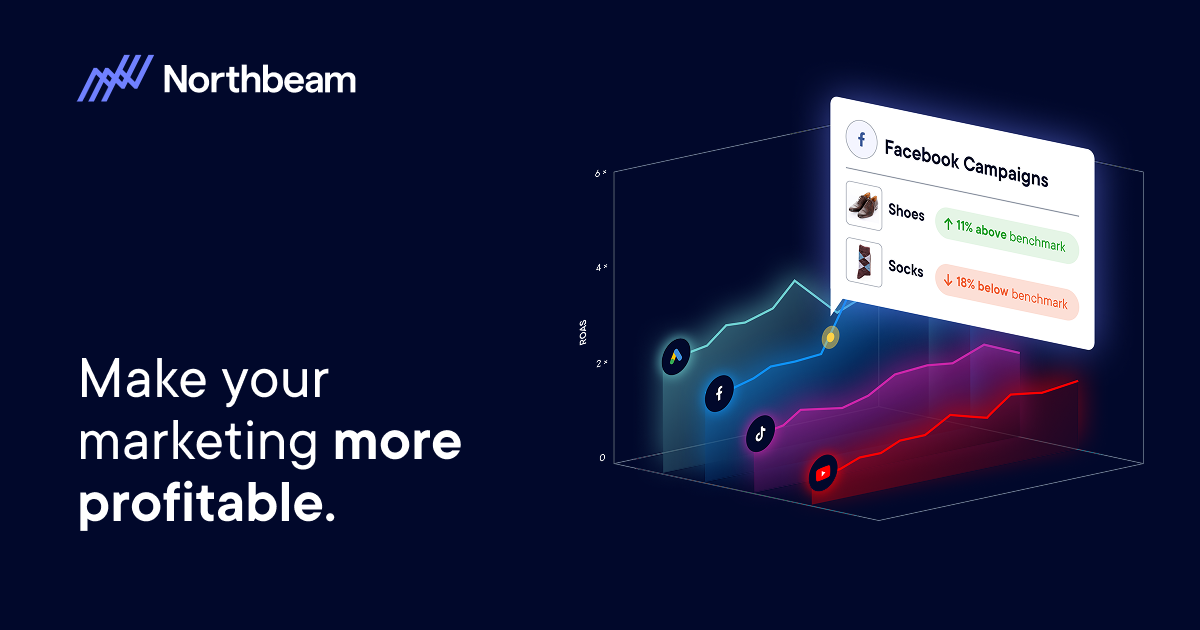
●BREAKING: Northbeam launches industry-first model linking cross-platform ad views to real revenue
●~$30M RAISED across multiple rounds led by Silversmith Capital
●HexClad & The Ridge among the brands measuring spend the Northbeam way
●Founded 2019 · San Francisco · ~89 strong
●MTA + Media Mix Modeling + Incrementality, under one roof
●BREAKING: Northbeam launches industry-first model linking cross-platform ad views to real revenue
●~$30M RAISED across multiple rounds led by Silversmith Capital
●HexClad & The Ridge among the brands measuring spend the Northbeam way
●Founded 2019 · San Francisco · ~89 strong
●MTA + Media Mix Modeling + Incrementality, under one roof
The Scene
It is 9 a.m. and somebody is about to spend $40,000.
A growth marketer at a kitchenware brand has three tabs open: Meta Ads Manager swears it drove the weekend's sales, TikTok claims the same conversions, and Google quietly takes credit too. Add it up and the ads delivered 240% of the revenue that actually landed. Everyone is winning. The bank account disagrees.
This is the daily comedy of modern marketing - every platform grades its own homework, and they all give themselves an A. Then the marketer opens a fourth tab. It is Northbeam, and it does the one rude thing none of the others will: it tells the truth.
Northbeam's promise rests on three pillars: accuracy, transparency, and education.
- Northbeam, "Our Story"
By The Numbers
Why brands trade four lying tabs for one honest one.
The pitch is not complicated. Platforms overcount because over-counting sells more ad space. The chart below is the problem Northbeam exists to fix - illustrative of the double-counting marketers face when each channel takes full credit.
Illustration: reported vs. actual revenue credit (representative, not client data)
Meta says92%
TikTok says71%
Google says64%
Reality (100%)100%
What You Can Do With It
Move budget like you can see in the dark.
For a growth team, Northbeam turns a morning of arguing with dashboards into a decision. You can see which channel is genuinely incremental and which is taking a victory lap on sales it never influenced. You can catch a creative going stale before the cost-per-acquisition tells you the expensive way. You can forecast a scenario - "what if we shift 20% from prospecting to retargeting?" - and get a modeled answer instead of a hunch.
And because so much of it runs on a first-party device graph rather than third-party cookies, it keeps working as the privacy walls go up. That's the quiet bet Northbeam made early: the cookie was always going to die, and the brands who'd already moved to first-party measurement would be the ones still able to see.
Modern marketing is more challenging and expensive than ever - more channels, privacy changes, and complex buyer journeys.
- Northbeam
Watch & Listen
See it - and hear the founder.
Tip: search "Northbeam demo" on YouTube for the latest product walkthroughs.