In 1958, Shelley Stewart walked into a clothing store in Shreveport, Louisiana, because he needed a tie. Stewart was Black, the city was segregated, and the salespeople ignored him. Then a white salesman named Cy Steiner came out of the back room and asked if he could help. Stewart bought the tie. More importantly, he noticed the salesman.
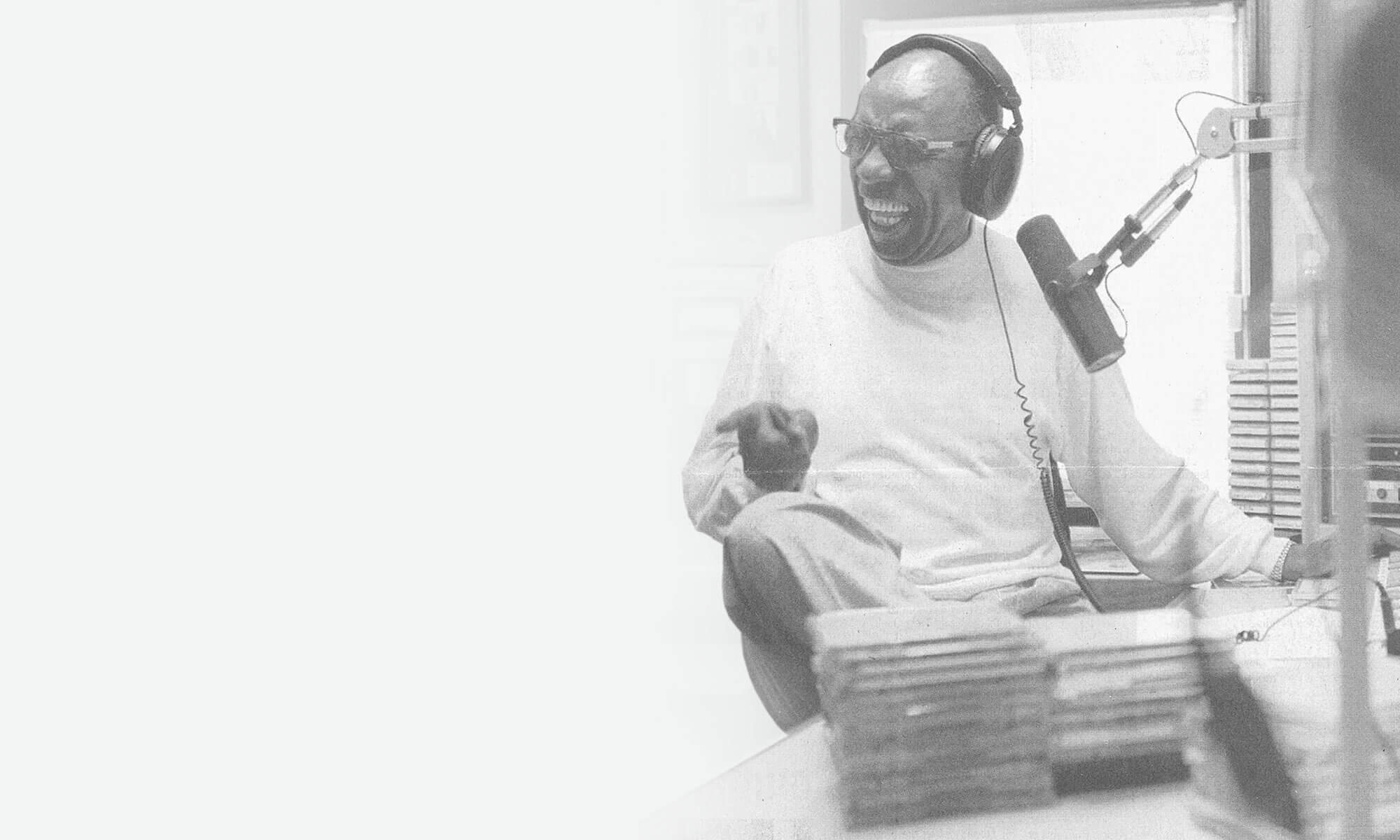
Stewart was already a magnetic radio personality, known to Birmingham listeners as Shelley the Playboy. He thought Steiner's ease with people might translate to radio advertising sales. It did. Nine years later, over a glass of wine and another handshake, they agreed to start an agency as equal partners.
There was one operational complication: Birmingham in 1967 was willing to hire the firm, but it was not ready to know that a Black man owned half of it. Stewart stayed out of sight. The company was called Steiner Advertising. The man with the famous voice became its silent partner.
“Birmingham wasn't ready for it.”Shelley Stewart, on keeping his ownership private
The invisible man had the essential skill
The irony is almost too neat. Stewart's value came from being heard. On WENN, he had learned how to build trust across a mass audience. He knew local business owners, knew the community, and knew that communication was not merely the act of buying time. It was the work of understanding who was listening and who had been left outside the conversation.
Stewart eventually made his ownership public in the early 1990s, after Steiner's death. The agency took the name o2ideas: an idea gets oxygen, breathes, and grows. In 2015, Stewart sold the company to four members of management - his daughter Sherri Stewart, Linda Payne, Howard Pearlstein and Bill Todd - while remaining an adviser. The transfer kept the firm independent, women-owned and minority-owned.
Today, o2ideas is a compact Birmingham shop offering strategy, advertising, branding, PR, web work, video, events, inclusion marketing and employer branding. Its public client list runs from hometown institutions to Honda, BBVA, Regions, Verizon, Chick-fil-A, The Home Depot and Mars Petcare. Worldwide Partners, a network of independent agencies in more than 50 countries, provides reach beyond the headcount on the office roster.
What does an idea cost?
One unusually candid case study supplies an answer: $60,000. BBVA had arranged for its brand ambassador Kevin Durant to appear at an elementary school in Austin. A less prepared agency might have returned with a nice event video and a large invoice. O2ideas planned the day as a content factory.
One production day, several jobs
BBVA shoot
The team mapped the footage before cameras rolled: a 30-second broadcast spot, 15-second social cuts, a two-minute web video, animation, stills and behind-the-scenes material. It called the method “sweating the assets.” The phrase is inelegant and the idea is excellent. Production becomes less expensive per useful object because each expensive minute has already been assigned several futures.
This is the agency's most copyable habit. Do not begin with deliverables. Begin with the scarce event - access to a celebrity, an executive, a factory floor, a customer - and list every channel that could plausibly use it. Then build the shot list backward. The savings do not come from a cheaper camera crew. They come from not having to assemble the crew twice.
The first thing to fail is usually the obvious message
Gateway, Birmingham's oldest social-services agency, had an awareness problem created partly by abundance. It helped people facing abuse, financial distress and other crises. Any message broad enough to contain everything became vague. Any message specific enough to explain one service excluded the rest. The service list was accurate and, as a story, it failed first.
O2ideas replaced the list with a shared destination: hope. “The Way to Hope” became the line across a new identity, website, television, online and cinema advertising, plus oversized banners on Gateway's own buildings. In the year the brand launched, contributions rose from $1,050,927 to $1,692,807 - a 61 percent increase.
At Vulcan Park & Museum, the obvious message was the collection. The museum needed to attract people to an Alabama auto-racing exhibition, including people who did not care about cars. O2ideas changed the subject from machines to the peculiar psychology of the humans willing to race them. The campaign brought more than 6,000 additional visitors, and the museum extended the exhibition.
For Honda Manufacturing of Alabama, the job was recruitment. Rather than describe assembly work, the agency staged it: a live build of a Honda Passport during the Honda Indy Grand Prix of Alabama. More than 16,000 people watched. Applications increased tenfold. In each case the change of mind was the same. Stop explaining the institution. Give the audience a human way into it.
What changed
Gateway went from cataloging services to naming a feeling. Vulcan went from objects to personalities. Honda went from job claims to a visible experience.
What did not
The underlying offer stayed put. O2ideas changed the entrance, not the building. That distinction keeps a campaign from becoming decorative strategy theater.
Spontaneity, prepared three weeks early
In 2017, Kevin Durant and the Golden State Warriors were moving through the NBA playoffs. BBVA sponsored Durant. If the Warriors won the championship, there was a cultural moment to claim. If Durant also won Finals MVP, there was a better one. The variables made the campaign feel like a gamble.
O2ideas removed the part of the gamble it could control. Three weeks before the Finals, it began developing congratulatory ideas with BBVA, other agency partners and ESPN. The team sent two versions: one for a championship, another for a championship plus MVP. Durant won both. The right commercial aired after the game.
That episode answers a useful question about what fails first in “real-time” work: usually, it is the fantasy that the team will invent, approve, produce and distribute a smart response after the news happens. O2ideas planned for two futures. The public saw timing; the agency had built a decision tree.
The clever part of spontaneous marketing happens before there is anything to react to.The o2ideas method, in one sentence
A four-step habit worth stealing
Name the business blockage. Low awareness, weak recruitment and confused messaging are problems. “We need a campaign” is an order for materials.
Find the human bridge. Hope connected Gateway's many services. Courage connected non-racing fans to a racing exhibit. Watching a car take shape connected young people to factory work.
Plan distribution before production. Decide which formats, audiences and channels need material while access is still available.
Prepare for reality to branch. Build the championship version and the MVP version. A contingency is often more valuable than another concept.
This model suits organizations with a real offer, access to their people and operations, and the patience to agree on a business problem before requesting creative. It is less reliable when leaders cannot grant access, when measurement is impossible, or when a broken product is being handed to communications for cosmetic repair. A story can reveal value and multiply attention. It cannot manufacture customer trust indefinitely from an experience that keeps disappointing them.
The useful limit
O2ideas' public results are campaign case studies, not controlled experiments. A tenfold application rise or a 61 percent donation lift can coincide with other forces. Copy the planning discipline and the audience insight, not the assumption that the same arithmetic will follow.
The market between boutique and behemoth
O2ideas occupies a defensible middle. It is small enough that senior people can remain close to the work, yet broad enough to combine PR, identity, digital, events and media around one problem. Its global network adds specialists and geography without the client automatically entering a holding-company maze. The tradeoff is obvious: a compact integrated shop will not have every capability sitting in the same building, and its model depends on collaboration working as advertised.
Its deepest differentiator, however, is not a service line. Lots of agencies make websites and press plans. O2ideas began when Stewart saw commercial talent in the only salesman willing to treat him like a customer. The partnership survived because the two men could imagine a market wider than the city's conventions. That makes inclusion less like a late corporate offering and more like the first piece of company machinery.
There is a temptation to turn a 59-year-old firm into a monument. O2ideas is more useful as a workshop. Its best public examples are practical, a little unglamorous and legible in numbers. Find the overlooked person. Replace the long explanation with the shared human truth. Make the expensive day produce more than one thing. Prepare the spontaneous moment. The methods are old enough to have lost their novelty, which may be why they are still worth copying.