The strangest luxury in the advertising business is not a Cannes trophy, a production trailer or a perfectly lit bowl of cereal. It is attention from the people whose names appeared in the pitch. Clients have learned the ritual: the senior team arrives to win the account, then a more junior team arrives to run it. Sullivan, an independent agency in Memphis, has built its clearest promise around interrupting that little disappearing act. Senior talent, it says, stays on every project.
That sounds like a staffing detail until you look at the assignments. A state health department needs to discuss more than a dozen vaccine-preventable diseases without sounding like a scolding pamphlet. A paper company needs to make a ream beside the printer feel newly interesting. The world's largest industrial-gases company needs one coherent digital identity after an $80 billion merger, then needs that identity to work across dozens of country websites. These are not simply requests for attractive objects. They are requests for compression: take the complicated thing, find its useful truth and make that truth travel.
The product is clarity, not decoration
Sullivan calls itself full service. In practical terms, that means research and positioning can flow into advertising, identity, websites, internal communications, media plans and measurement without being handed to a parade of unrelated vendors. Its customers range from hometown institutions such as the Memphis Grizzlies and University of Memphis to Hammermill, Tennessee's Department of Health and Linde. Healthcare, finance, industrials, hospitality, tourism and consumer brands all appear in the portfolio. The industries change; the recurring problem is a story with too many moving parts.
The agency's method becomes visible in the work. For Hammermill, the phrase “Unleash the Sheets” moved paper away from office-supply utility and toward creative possibility. Artists, designers and businesspeople demonstrated what an ordinary sheet could become. Strategy, television, web, digital and social did not each invent a separate premise. They worked from the same one.
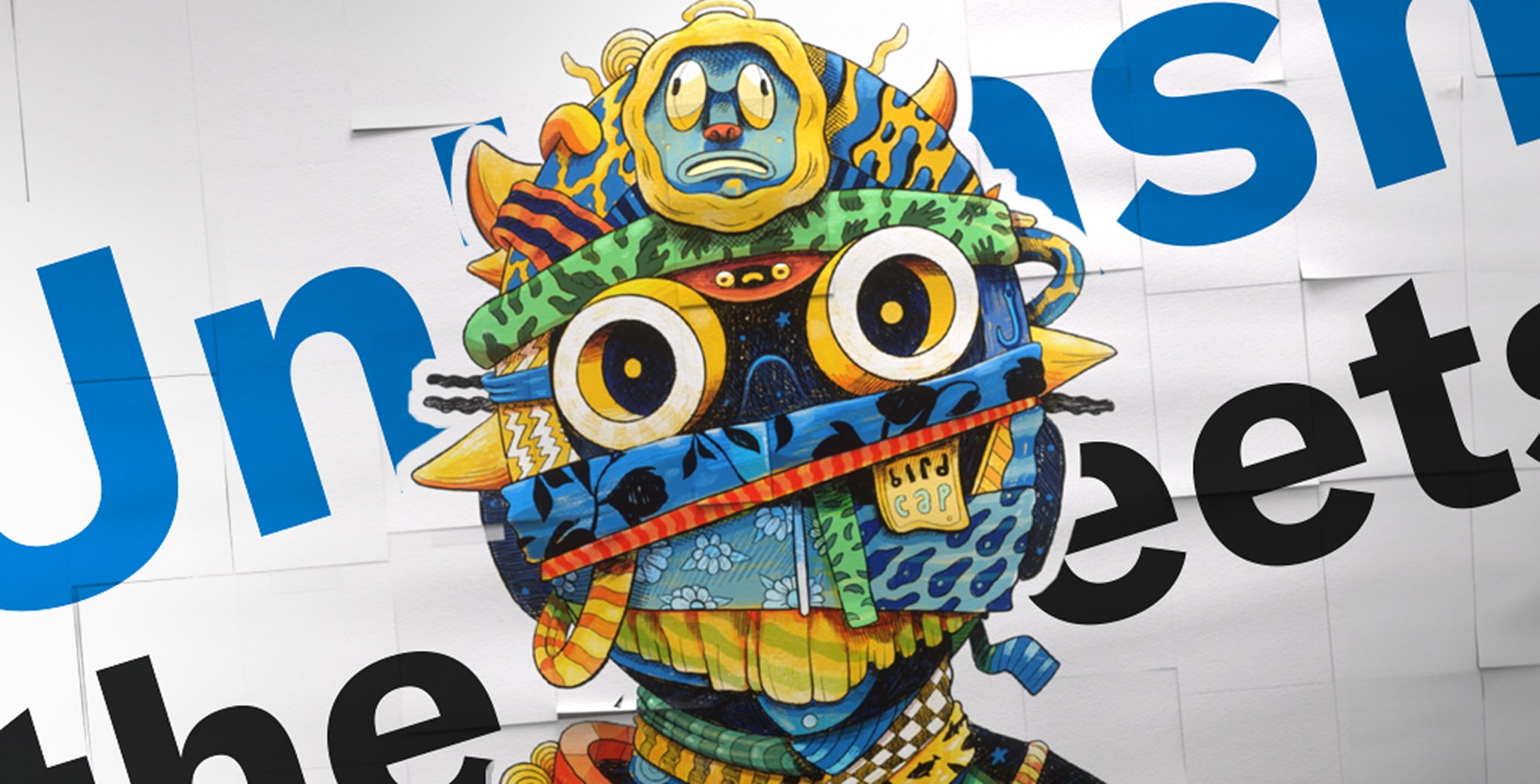
This is the part another marketing team can copy. Begin with the tension, not the deliverable. Decide what the brand can credibly own. Express it in one sentence sturdy enough to survive a billboard, a sales meeting, a website and a thirty-second spot. Then make each channel contribute something particular instead of repeating the same asset at different dimensions. It is basic enough to fit on a napkin and difficult enough to keep an agency employed.
“By keeping the idea big, the concepts ownable and the executions simple, you will build a compelling brand.”Keith Goldberg, executive creative director
The first thing to fail is usually the familiar thing
For public health, the familiar thing was fear. Vaccine messages often arrive wearing the emotional palette of a waiting room: warning, obligation, consequence. Sullivan's campaign for the Tennessee Department of Health rejected the doom-and-gloom reflex. It covered illnesses from influenza to HPV and meningococcal disease across broadcast, digital, social, print, transit and outdoor media. The work won a healthcare marketing award, and the agency says health departments elsewhere in the United States adopted it.

For tourism, the familiar thing was the checklist ad: food, attraction, sunset, logo. DeSoto County had a more specific constraint - a limited budget and two famous urban neighbors. Sullivan positioned the destination as “South of the Ordinary,” then found a visual language influenced by Mississippi photographer William Eggleston and executed by Houston Cofield. The client's willingness to choose a conceptual campaign over generic travel promotion changed what the budget could buy. The lesson was not that money ceased to matter. It was that a sharp idea reduced waste.
For the Memphis Grizzlies, the familiar thing was a seasonal slogan pasted onto ads. “House Rules” became an insider's code between team and fans, expressed online, inside games and through live experiences with contributions from players and supporters. It behaved less like a campaign laid over basketball and more like part of attending basketball.
A rooster explains the business model
Old Dominick Distillery has used a Dominique rooster named Nico since 1866. For a 2025 nationwide launch of four craft whiskeys, Sullivan did not discard the old bird in search of a fashionable identity. It made him live, breathe and squawk. Nico became the organizing character for broadcast, digital, print, outdoor and point-of-sale work delivered through a targeted media plan. The agency reports that awareness, engagement, traffic and purchase goals were exceeded; the campaign won a Gold Addy.

The rooster is a useful explanation of what clients purchase. Sullivan is not licensing software or selling an off-the-shelf campaign. It sells judgment, labor and continuity through projects and ongoing relationships. A public agency directory has listed engagements starting around $10,000 and hourly rates between $100 and $149, though Sullivan publishes no standard menu. The real economic claim is in the seven-year client relationship. A long relationship lets the agency retrieve an overlooked asset such as Nico instead of charging the client to rediscover itself from scratch every year.
One shop, several sizes of stage
Memphis is a lens, not a fence
Sullivan is headquartered in Memphis but describes a team distributed through Atlanta, Los Angeles, New York and other markets. That arrangement matters. It gives the agency access to people with national-account experience while keeping a point of view rooted in a city where brands are rarely abstract. Basketball belongs to civic identity. Whiskey comes with a family story. A documentary about the 1973 Memphis State basketball team also becomes a story about integration, grief and a divided city finding a common room.
In 2016, Brian Sullivan hired Keith Goldberg, who had helped create Capital One's “What's in your wallet?” campaign. Sullivan's explanation was unusually candid: “We wanted to hire somebody bigger than we are.” The line contains the useful form of ambition. Instead of pretending scale had already arrived, the agency hired experience that could widen the work. Today Goldberg is a partner and executive creative director; the leadership group also spans account service, strategy, product and operations.
The market position sits between a specialist boutique and a sprawling network agency. Sullivan offers the connected disciplines and multi-market reach of something larger, while selling direct access and continuity as an independent shop. Its stated values - bravery, candor, curiosity, inclusion and kindness - are less interesting as nouns than as constraints. Candor is what lets a senior adviser tell a client that the familiar approach is failing. Curiosity is what finds the rooster in the archive. Kindness is what makes a seven-year working relationship imaginable.
It works best for organizations with a real strategic knot: several audiences, regulated information, an internal culture to align, or a story that must travel across many channels. A company seeking only the cheapest isolated deliverable, unwilling to choose a distinct position or unable to give senior decision-makers access will capture less of the advantage.
The grown-ups are not the point
The point is what experienced attention makes possible. Someone notices that fear is the wrong emotional engine for a vaccine campaign. Someone protects a single idea as it moves from strategy into media. Someone recognizes that a nineteenth-century bird has more brand equity than a new logo. None of those decisions looks spectacular on a scope-of-work spreadsheet. Together they are the work.
Sullivan's portfolio is lively, but its most portable insight is almost severe: complexity does not require a more complicated message. It requires more disciplined thinking before the message is made. Put experienced people close to the problem, find the tension, choose what the brand can own and let one idea do a surprising amount of lifting. Then, if the rooster can talk, let him.