The price tag was the problem. When Niya Gupta first looked at cultivated meat, she could see a product for people who could afford to feel virtuous at considerable expense. She had spent years in agriculture. She knew that a clever way of making food still had to answer the question asked of every less clever way: what does it cost?
That objection is an unusual beginning for the co-founder and CEO of Fork & Good. Gupta did not arrive prepared to applaud any meat that emerged from a vessel. Her interest depended on whether the production could become efficient enough to matter beyond an expensive tasting. In 2023, she described an ambition to produce beef and pork as affordably as chicken.
It is an ambition with a large engineering project inside it. It also gives her story its shape. Gupta has moved from conventional agriculture to rooftop vegetables to animal cells. The things being grown have changed. The demand that they justify their inputs has followed her.
The family orchard had its own board of directors
Gupta’s connection to farming preceded her professional interest in it. Her mother’s family had mango orchards in India, and she returned to rural life during childhood visits. Later, while working on new farming models, she discovered that family expertise could be resistant to outside advice, even when the outside adviser happened to be a relative with an impressive education.
She recalled offering suggestions about mango collection, distribution and farm management. Her relatives were unconvinced. Their priorities included keeping the families who had worked with the orchards for generations engaged and supported. An optimization proposal had to contend with relationships that were older than the proposal.
Her family also wondered why someone who had attended prestigious institutions would choose farming. There is a recognizable parental arithmetic here: education goes in, a respectable office job ought to come out. Gupta was interested in the livelihoods and production systems behind the food everyone needed. That choice took her toward a business where a harvest could perish while an investor was still considering the pitch.
Two Harvard degrees, one stubborn subject
Her academic route included an economics BA at Yale and an MBA and MPA in International Development at Harvard. Before Fork & Good, she accumulated more than a decade in food and conventional agriculture, including work at McKinsey and Syngenta. The combination put business, farming and public policy within the same career.
She belonged to Harvard’s first Business School and Kennedy School joint-degree graduating class in 2011. Entrepreneurship had not been her original plan. Agriculture was already the subject she wanted to work on; starting companies became her way of doing so. Corporate venture work on agricultural technology for African markets helped direct her attention toward new production models.
In her reflections on the joint degree, Gupta described farming as inseparable from government: producer groups, grants, access to space and regulation all enter the picture. Alongside that sat the practical business work of interpreting accounts, evaluating investment and hiring. Her memories included long debates with classmates about policy and the tradeoffs involved in deciding what to pursue.
That is a useful education for a business whose product has to be grown, financed and permitted. An elegant idea still has several appointments to keep.
Growing more in the space you have
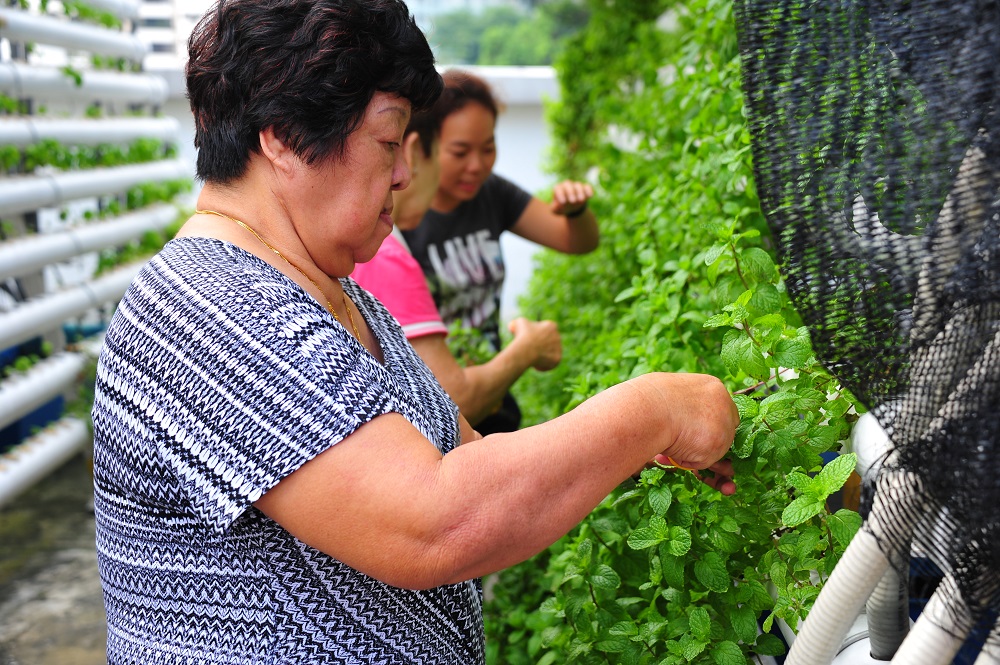
At ComCrop in Singapore, Gupta was a co-founder and CEO of a business growing herbs and vegetables on rooftops. She later told Harvard that she moved to her second venture after the first became profitable. The sequence matters: her next food business followed experience operating one that had to produce and sell a perishable crop.
The lesson she carried into her collaboration with Gabor Forgacs concerned density. A rooftop is a fixed amount of space. Increasing the useful harvest within it requires attention to inputs, growing conditions and the whole production system. The available footprint does not enlarge because the ambition does.
Fork & Good’s account of its beginnings describes Gupta recognizing a connection between hydroponics and cultivated meat. Vegetables could grow without soil; animal cells could grow without an entire animal. Both raised a practical question about obtaining more output with less feedstock and space.
Forgacs brought cell biology and biophysics to that discussion. Gupta brought the experience of growing food under commercial constraints. Their collaboration produced a patented approach to manufacturing cells. The rooftop and the laboratory were different settings for a shared production problem, giving her agricultural experience a specific job to do in the new company.
The advice was to stop. Then came the patent.
Gupta’s public account of joining the venture is cheerfully less tidy than a founder’s inevitable calling. She had advised Nigeria’s Ministry of Agriculture on feedlots and become interested in different ways of producing food. When she encountered Modern Meadow’s cultivated-meat work, the price was an obstacle she could not politely overlook.
Her initial advice was to abandon that route. Modern Meadow shifted its attention toward materials. Yet conversations with Forgacs continued, comparing cell culture with the efficiency of livestock. Together they worked on a methodology and co-authored a patent. Gupta joked that she had been “bullied” into starting the company and moving to New York.
Fork & Good was founded in 2018. The joke allows some daylight into a story that could otherwise become a solemn procession of credentials and technology. Agreement did not arrive fully formed. A skeptical participant became a collaborator when there was a production approach worth investigating. Her original objection remained useful: the new venture would still have to make economic sense.
A smaller vessel, a demanding benchmark
When Fork & Good emerged from stealth in 2023, it had opened a pilot facility in New Jersey. Gupta discussed a benchmark rooted in a familiar retail setting: pork at Walmart. She treated the prospect of a price premium cautiously.
The technical choices included muscle cells rather than stem cells, purpose-designed bioreactors and continuous harvesting. Each choice belonged to an effort to change the cost of production. The company had raised $22 million by that point, from investors including True Ventures and Leaps by Bayer.
There is a practical discipline in picking an ordinary shopping benchmark. It invites an awkward comparison. A shopper is free to leave the future on the shelf if another lunch is cheaper. Gupta’s stated ambition puts the burden of change on the production process, requiring the business to work toward an offer that customers have a reason to accept.
“My ultimate goal is to be able to grow beef and pork at the cost of chicken.”
Niya Gupta · 2023
The future makes an appearance at a pub
In January 2024, Fork & Good brought cultivated pork to an Irish pub in Davos. The dumplings included a blend of 30 percent cultivated pork and 70 percent conventional pork. Another version combined cultivated cells with plant ingredients. A meal is a more approachable introduction than a lecture about vessels.
The exercise moved the conversation onto the plate. A blended ingredient could be tested inside a recognizable dish, where taste mattered immediately. The event provided feedback from an international group close to the World Economic Forum gathering, while remaining a tasting rather than a commercial rollout.
By February 2025, Gupta was discussing first revenue from a joint development agreement with a global food manufacturer. Her company was working on cultivated pork as a complementary ingredient for other food businesses. A useful next question was whether those businesses could put it into products people already knew.
The Davos dumpling and the development agreement address different tasks. One asks whether a person enjoys a bite. The other asks whether a manufacturer can build a workable product around the ingredient. Both deserve attention; neither supplies the complete answer alone.
First scale-up target
100% cultivated biomass
Longer-term target
Commodity-pork benchmark
Company projections described in 2025. These are targets, not retail offers or verified current production costs.
Pork meets beef, New Jersey meets Abu Dhabi
In October 2025, Fork & Good acquired Orbillion Bio. The combination joined its pork capabilities with complementary cultivated-beef work. Orbillion founder Patricia Bubner became Fork & Good’s chief operating officer. Gupta’s circle of collaborators expanded along with the product range.
The transaction also connected customer relationships in different regions. Gupta described existing work in North America and East Asia and the opportunity to bring Orbillion’s European and Middle Eastern relationships into the business. The combined company established a subsidiary in Abu Dhabi Global Market, with plans for regional manufacturing and operations in the UAE.
Production continued at the Jersey City pilot plant. The geographical ambition therefore sat beside a specific operating base, rather than replacing it. The stated philosophy was to demonstrate economic viability at intermediate scale before pursuing larger expansion.
For Gupta, whose career already crossed several food systems, the acquisition brought together people and capabilities that could serve a wider set of manufacturers. The work became more geographically extensive. The commercial question stayed recognizable: what can the combined company produce that its customers find useful?
The next milestone has to happen again
Her priorities for 2026 centered on partnerships and repeatable commercial demand. Developing infrastructure while keeping an operation lean places considerable demands on a company. Gupta’s response was to emphasize collaborators, including work with Nutreco and Extracellular on the path toward efficient production at scale.
Repeatability is a useful word here. A successful experiment establishes something can happen. A food business needs it to happen reliably enough for another business to depend on it. Customer development then asks for more than an initial expression of interest: the product has to keep earning its place.
That is a demanding aspiration, even without a dramatic prediction attached. It asks production, price and customer use to arrive together. Gupta has been returning to those subjects since her farming days. They are also a way to assess the company’s progress without turning every new announcement into a forecast about what everyone will eat.
The future she is working toward has a mundane requirement: it must be useful again tomorrow.
Three paid agreements, and work still to deliver
In June 2026, Gupta reported three paid joint development agreements with large food companies, naming Luiten Food and Sigma Alimentos. She described Fork & Good’s model as licensing its integrated cell-manufacturing platform and selling ingredients, with attention directed toward fulfilling contracts.
She also described the move from research toward manufacturing, including a facility with validated processes and a quality management system. The claims mark a more concrete stage of the venture than the original debate over whether cultivated meat could be made affordable.
They also leave the business with work to do. Contracts have to be delivered. A promising ingredient needs consistent production. The company’s case rests on improving what food manufacturers can make and helping them manage supply uncertainty, with price competitiveness still central to the longer-term proposition.
Gupta’s story began with an objection to the cost. It has reached paying development relationships without retiring that objection. The question now belongs to customers as well as founders: how much useful food can this process deliver, and on what terms? A better lunch will eventually need a receipt.