Eran Baniel once had a problem that Shakespeare had thoughtfully left out of the script. Romeo spoke Arabic. Juliet spoke Hebrew. The families onstage belonged to communities whose divisions continued outside the theatre. Getting everyone into the same production required rather more than choosing a balcony.
In 1994, Baniel and Fouad Awad co-directed a production of Romeo and Juliet involving Jerusalem’s Khan Theatre and Al-Kasaba. The Montagues spoke Arabic; the Capulets spoke Hebrew. Paris audiences later encountered it at La Villette, with French surtitles. Three languages attended a play about the considerable trouble people have understanding one another.
Baniel had directed the Acre theatre festival, where he met Awad in 1989. Turning their connection into a production took years of work. There were actors to persuade, institutions to bring together and money to find. The eventual performance was the visible portion of a project whose most demanding scenes happened before anyone bought a ticket.
The project belongs near the beginning of Baniel’s business story because it makes the later turns less mysterious. A theatre director assembles people who possess different skills, loyalties and expectations. He asks them to invest time in something that does not yet exist. Then an audience decides whether the result deserves its attention. A founder might recognise the arrangement.
It would be convenient to call the production a tidy rehearsal for entrepreneurship. That would flatten a complicated undertaking into a career lesson. Its political circumstances mattered, and its participants had their own ambitions. But it establishes a recurring feature of Baniel’s working life: his projects depend on other people agreeing to make something together.
From stage lights to city walls
The theatre credits extend beyond that one production. For a 1989 staging of Maxim Gorky’s The Petty Bourgeois, Baniel shared the adaptation credit with Roger Smith and supplied the Hebrew version. His work included the language of a performance as well as the organisation around it. A sentence, like a cast, had to fit its setting.
Later, his business interests included Urban Lighting Architecture, also known as U.L.A. He co-founded and led the company, whose projects included lighting the walls of Jerusalem’s Old City. The change from theatre to architectural lighting has a pleasing practical continuity. Both ask what people will notice when the lights come on.
His record also includes co-founding Desk-Trainer and leading other companies. These ventures are a reminder that the route to Incredo was neither a straight march through food science nor a single inspired leap from the stage. Baniel accumulated experience in quite different businesses, with collaborations in Europe and the United States.
There is something useful about that untidy CV. It resists the retrospective trick of making every early job point towards the final one. Baniel was doing theatre work, lighting work and company building. The connection becomes interesting when the experience is carried forward, rather than when the earlier work is treated as a waiting room.
A father, a son, and an industrial detour
One of his recurring collaborators was his father, Avraham Baniel, an industrial chemist. In December 2007, Eran co-founded HCL CleanTech with Avraham and Arie Eyal. The company later became Virdia. Eran served as its first chief executive and subsequently worked in business development. The family partnership had entered the world of industrial chemistry.
Virdia developed technology for converting cellulosic biomass into refined sugars and lignin. This was sugar as an industrial feedstock, with applications beyond the confectionery counter. The venture required financing and industrial partners, rather than the appreciative applause that might follow a successful performance. Its chemistry had to operate outside a small demonstration.
In 2014, Stora Enso acquired Virdia. The acquisition is a concrete milestone in Baniel’s career, though it should not be mistaken for a statement about his personal fortune. A company transaction describes a company transaction. The more revealing fact here is that father and son had already worked together on bringing a chemical process towards commercial use.
That experience makes the next partnership easier to understand. Avraham could investigate a material and develop an approach. Eran could help organise a company around it. Neither activity completed the other automatically. Between an experiment and a customer sat a long list of questions about production, applications, partners and whether anyone would pay.
His father’s kitchen had another idea
Avraham’s next proposal concerned the sweetness people actually taste. Its origins reached back to wartime sugar rationing and an observation involving starch pudding: a little sugar in a viscous mixture could seem unexpectedly sweet. Decades later, the old observation returned as a question about how sweetness could be delivered more efficiently.
By the time DouxMatok was founded in 2014, Avraham was in his mid-nineties. Eran’s response to his father’s early experiments was refreshingly unceremonious. “I didn’t believe him at first,” he recalled. He brought people from the food industry to taste and evaluate the result. Family affection was permitted in the room; it did not get the deciding vote.
The two took an improvised sample to Strauss. Eran later described the favourable reaction and said he incorporated DouxMatok the following day. It is a compact founding anecdote, with an unusually sensible order of events: make a sample, let someone try it, and then get the paperwork involved. The bite preceded the business card.
The company’s proposition was to reduce sugar using sugar. Its approach paired real sugar with a carrier to improve the delivery of sweetness. That description sounds almost mischievous until the distinction becomes clear. The ingredient remains sugar; the work concerns how effectively its sweetness is perceived in a finished food.
For Eran, the commercial attraction was tied to familiar pleasures. A biscuit already has an audience. Chocolate already has admirers. The question was whether those products could be reformulated while preserving the experience people expected. Asking customers to enjoy a favourite food gives a developer a demanding brief: the memory of the original comes to every tasting.
“I didn’t believe him at first.”Eran Baniel, remembering his father’s sugar experiments
A biscuit is allowed to disagree
Baniel’s working day acquired a fitting ritual. In 2020, his phone prompted tastings at ten, noon and three. Petit Beurre biscuits served as a test vehicle. It is a rather good image of the former director’s second act: scheduled appointments with an audience small enough to fit on a plate.
Other milestones were less intimate. DouxMatok received Israel’s Prime Minister’s Innovation Prize for 2018. In 2019, it announced a $22 million funding round led by BlueRed Partners, with industrial investors among its backers. The money supported the task of moving a product towards the market. Recognition and financing added opportunities; neither could settle a question of taste.
The company worked with partners including Strauss, Givaudan, Puratos and the University of Reading through EIT Food projects. Those collaborations gave Baniel’s team access to development work and consumer testing, rather than simply sending an ingredient sample away and waiting for a verdict. A recipe could be adjusted with the people who understood the finished product.
A separate public marker arrived when Incredo Sugar received a special mention in TIME’s Best Inventions of 2020. The recognition was for the ingredient, rather than a personal award for Eran. That distinction suits the story. The company existed to put an invention to work in food, where the maker’s name need never reach the person eating it.
There is an appealing modesty in that business model. A theatre programme lists the director. An ingredient company can succeed inside somebody else’s packaging. Its contribution may be invisible to a customer who simply wants the next bite to resemble the last. The audience is still there, but the applause has become a repeat purchase.
The founder changes seats
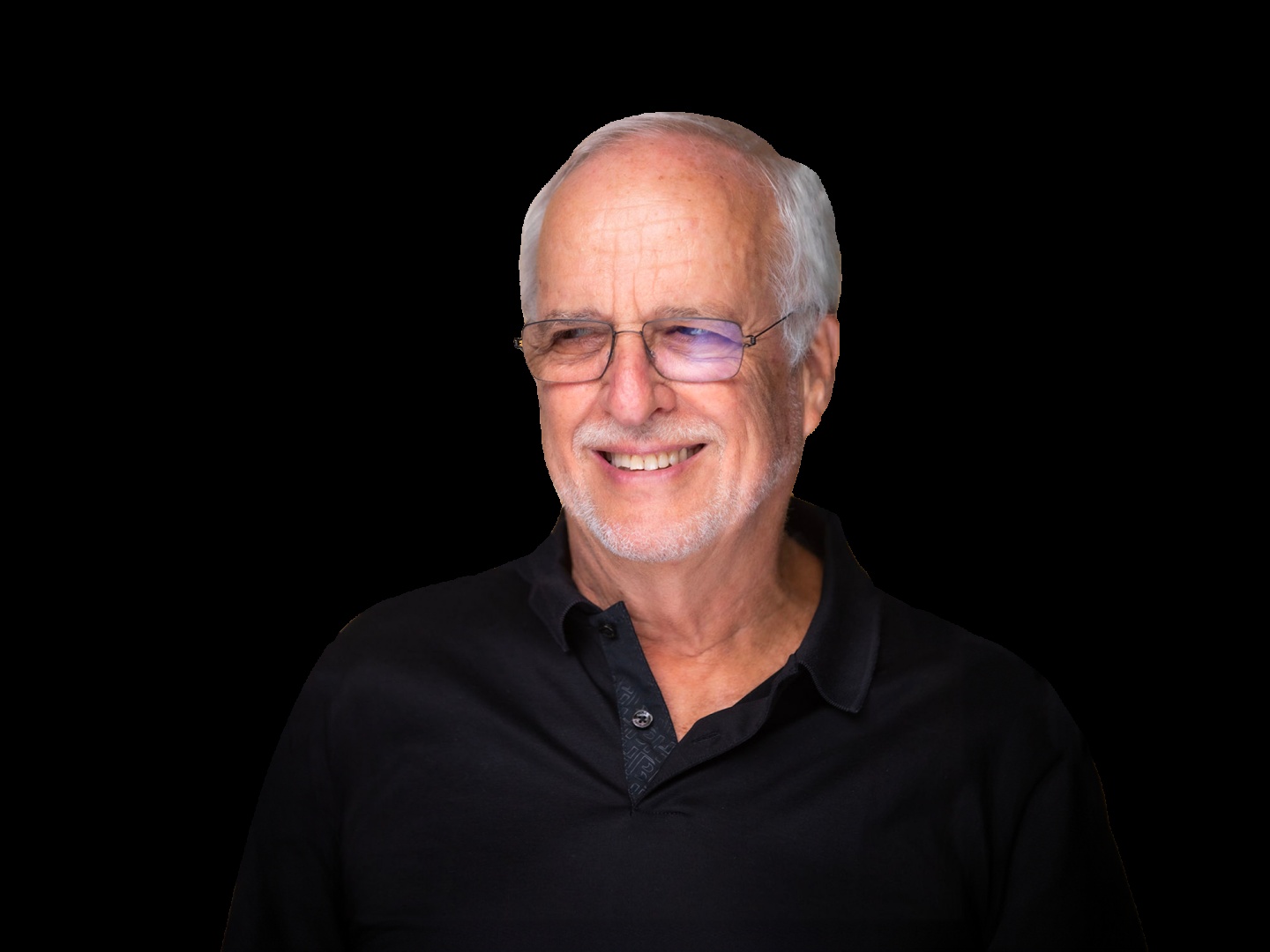
In 2021, Ari Melamud became chief executive of DouxMatok and Eran moved into the executive chairman role. The appointment brought experience in consumer goods and specialty ingredients to the company’s commercial expansion. Baniel remained involved while handing responsibility for running the organisation to another executive. A founder’s career can continue from a different seat.
In May 2023, DouxMatok adopted the name Incredo, matching its signature ingredient. It also announced a $30 million Series C round. The company said the funding would support research, product applications and commercial partnerships. Behind the simpler name remained the complicated work of getting an ingredient accepted and used by manufacturers.
Leadership changed again. In March 2025, Kelly Thompson was appointed CEO and Aldo Uva executive chairman. Uva subsequently became CEO as well. Incredo’s current board page lists Eran as co-founder, alongside investors and industry figures. The company he helped establish now has a leadership structure extending well beyond the original family partnership.
The succession is part of the personal story because founding and continuing are different jobs. Eran’s earlier transition at Virdia had already taken him from chief executive to business development. At Incredo, too, his title changed as the venture developed. The public record shows several ways to remain connected to work after its opening act.
The people beyond the laboratory
Baniel has continued reflecting on his father’s life. In a 2023 essay, he described sorting through the material Avraham left behind and returning to a Tel Aviv flat surrounded by things the family could not discard. The objects carried a career far longer than any one startup. For a son who had also been a colleague, a box of papers could contain both kinds of history.
His own career is similarly difficult to compress into one professional label. The theatrical collaborations, the lighting projects and the ventures with his father each involved creating a setting in which other people could contribute. The strongest connection is practical: persuading a cast, a partner or a manufacturer to participate requires understanding what each needs from the arrangement.
Incredo brought that work to an especially unforgiving setting. A consumer can listen politely to a presentation. A biscuit receives no such courtesy. Baniel’s story runs from two languages on a Jerusalem stage to the judgement delivered by a mouthful of something familiar. After years spent organising people around ideas, he found an audience that could answer without saying a word.