The purchase should have been unremarkable: a domain name for a new company. The company would help online businesses distinguish honest customers from fraudsters. Then the founders’ credit card was declined. Even before Forter had a website, it had acquired an unusually concise demonstration of the problem it intended to solve. Software had looked at people who understood fraud prevention and decided that their money was best kept at a distance.
There is a pleasing lack of dignity in this origin story. The future chief executive encounters the customer’s problem at the cash register. No elaborate experiment is required. A business can lose a sale while congratulating itself on avoiding a loss, and the disappointed customer is left to resolve the distinction.
Michael Reitblat, Forter’s co-founder and CEO, has built his working life around those judgments. The interesting question is how much ordinary life a system can understand before it labels someone suspicious. People move. They travel. Their payment details have histories that do not fit neatly into the place where they happen to be standing.
A friendship before the pitch deck
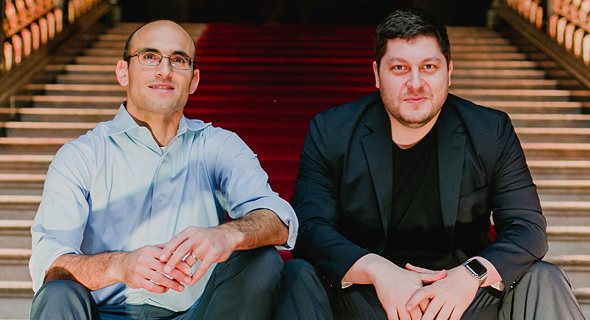
Reitblat and Liron Damri met at 15. Both graduated in 2000 from the Israel Arts and Science Academy, a boarding school whose mixture of studying and living together gave their friendship years to develop. Forter would come much later. The relationship had already survived adolescence before anyone had to discuss a funding round.
Reitblat grew up in Ma’ale Adumim after immigrating from Russia. His subsequent career included Israeli military intelligence, where cybersecurity and decisions made with incomplete information became professional concerns. Then came product work at Fraud Sciences, followed by PayPal after it bought the company in 2008. He later worked at Pango, with responsibility for product and international operations involving mobile-wallet technology.
This is a useful sequence for understanding him. He encountered the problem as an intelligence officer, a product builder and someone working on how people actually pay. When he, Damri and Alon Shemesh founded Forter in 2013, they brought experience of both the technical investigation and the everyday transaction.
- Graduates from IASA alongside future co-founder Liron Damri.
- Product work at Fraud Sciences, then risk work at PayPal.
- Product leadership at Pango.
- Co-founds Forter with Damri and Alon Shemesh.
The school connection remained active. Reitblat raised money from alumni and friends, hosted alumni events and joined the Israel Center for Excellence through Education’s Israeli board in 2021. A place that had helped form a friendship became somewhere he returned with practical support. The connection offers another view of a career usually described through companies and transactions.
The customer who looked wrong
Reitblat has had further opportunities to be his own inconvenient example. In 2020, after moving from New York to Austin, he described orders being rejected because his bank address remained in New York while his purchases and deliveries were in Texas. The person had stayed the same. The pattern had changed.
An early Forter customer, Jomashop, faced a more dramatic decision. Its system approved a $35,000 Rolex purchase from Nigeria, prompting an alarmed call to the founders. They stood behind the approval. The buyer turned out to be an American chief executive stationed there. A country and a price were poor substitutes for understanding a customer.
Reitblat’s explanation of the technology returns to context. A hotel connection, a work VPN and a foreign credit card might each invite suspicion when examined separately. Together, they can describe an entirely ordinary business trip. A filter that dislikes travel is liable to make a remarkably bad travel companion.
The judgment inside the checkout
Three clues. One person to understand.
- 01Payment detailsA card or wallet is part of the picture.
- 02Shopping contextA location or device can change for ordinary reasons.
- 03IdentityConsider the person behind the action.
Conceptual illustration of Reitblat’s approach, rather than a technical diagram of Forter’s system.
His international work also complicated easy categories. In a 2022 discussion of Asia, he explained that different countries required different models of legitimate shopping behavior. Customers in Singapore did not necessarily pay like customers elsewhere. Calling an entire region one market saved words and discarded useful information. The system had to learn the customers it was trying to welcome.
The expensive education in selling
Understanding a shopper did not automatically make Reitblat adept at understanding an enterprise buyer. In 2025, he spoke openly about Forter’s early difficulties entering the United States. The company hired unsuitable people and gave them tools that did not match the problem. When those efforts failed, the team began questioning whether the product had a market.
The lesson was painfully specific: the person buying the product had to be understood. A technical answer still needed to address somebody’s daily difficulty. Reitblat could know what his software did and remain mistaken about how to explain why another person should care.
“You need to deeply understand the person in front of you and their specific pain point.”
Michael Reitblat · on entering the US market, 2025
The commercial outcome eventually became easier to describe. In May 2021, Forter raised $300 million in a Series F round led by Tiger Global, at a $3 billion valuation. The round included new and existing investors, and Reitblat said the money would support talent, technology and international expansion.
That announcement gives the story a number people can remember. It leaves out the work of learning to sell, the wrong hires and the questions inside the company. Reitblat’s willingness to describe those errors makes the milestone more intelligible. The eventual result did not spare him the earlier confusion.
Backing people before the result
One leadership memory reaches back to his army service. A commander learned that Reitblat’s project was failing and told the team he supported them despite the outcome. Reitblat recalled that the confidence made him work harder; the project eventually succeeded. He later described trying to bring that encouragement to Forter.
The detail matters because the support arrived before there was a successful result to endorse. Anyone can approve of a team after it has delivered. The formative experience was being trusted while delivery remained uncertain, when an anxious manager might have chosen to take over.
When Reitblat received an EY Entrepreneur Of The Year New York award in 2021, he redirected the credit toward Forter’s employees, alumni and Damri. “However, it’s not a personal award,” he wrote. An individual prize became an occasion to talk about the people around him.
His public volunteer record provides a smaller-scale version of helping people build something. He mentored students through creating a business, from raising money to making and selling a product. The team, ArtUp, won a European young-entrepreneur competition in Lisbon in 2010. Long before the later financing rounds, there were school students learning what a business required.
When the customer sends an agent
Fraudsters give Reitblat an endless supply of difficult homework. In 2021 he admitted a slightly awkward professional fascination: “I feel almost bad saying that it’s interesting to see how creative fraudsters are.” Admiration for the ingenuity comes with the obligation to frustrate it.
By September 2025, he was discussing AI agents with investor Chris North on a London conference stage. The possibilities included booking flights and making reservations. The familiar problem of deciding whether an unfamiliar action should be allowed was gaining another complication: the visitor might be software doing legitimate work for somebody else.
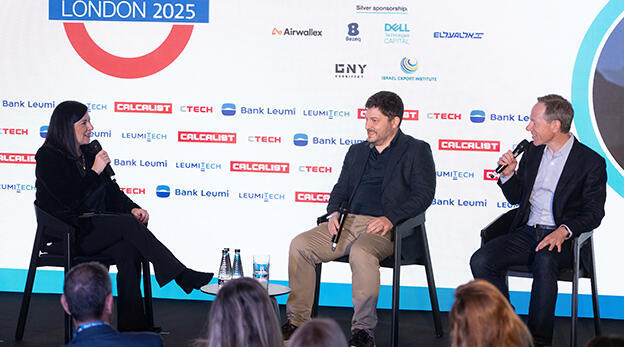
A MONTY panel published in September 2026 put him alongside Jason Lee of OpenAI and Kai Wu of Airwallex, with Kasey Lobaugh moderating a discussion of autonomous transactions. The conversation addressed the distance between the promise of agent shopping and its actual adoption, including the fraud already appearing in that activity.
Forter’s October 14, 2026 IMPACT agenda lists him for a founder session about retail’s future. The questions concern how brands will be discovered, how customers will delegate purchases and how trust will work along the way. These are questions with consequences for the person paying, even when that person has handed the browsing to an agent.
A shopping agent can carry instructions across the internet. The merchant still has to decide whether to act on them. Convenience creates another relationship to understand: a customer, the software representing them and a business being asked to accept the transaction. Reitblat’s old problem has acquired a new participant.
A summit is a poor place to stop
There is a mountain in Reitblat’s account of success. He has described climbing Kilimanjaro and later discovering that his guide had doubted he would reach the summit. He did reach it. He left the descent as another story, a modest concession to the fact that achievement does not tidy up every detail.
The anecdote fits a career in which the next task tends to arrive before the last accomplishment has settled. His stated ambition remains easier online commerce for legitimate customers. A rejected purchase can still make that ambition concrete in a way a valuation cannot.
The domain purchase remains the neatest opening to his story. It puts a founder on the wrong side of the screen, trying to do something ordinary and meeting a machine’s refusal. Years later, the job still requires understanding who is there, what they intend and whether the door should open. There is a customer waiting for an answer.
Follow the conversation
- Forter - company website ↗
- Michael Reitblat on LinkedIn ↗
- Michael Reitblat on X ↗
- Forter’s founding story ↗
- Forter’s blog ↗
- Watch: Nasdaq’s Cloud 100 interview ↗
- YouTube: Paris FinTech Forum interview ↗
- MONTY: autonomous transactions panel, 2026 ↗
- Reitblat on the challenges of entering the US market ↗
- Reitblat on leadership and his Kilimanjaro climb ↗
- The early watch order and the move to Austin ↗
- A conversation about local shopping habits and global fraud ↗
- The 2021 financing and Reitblat on fraudsters’ creativity ↗
- The school friendship and alumni connection ↗