Profile / Operator / Foster City, CA
Michael & the Quiet $2B Exit
A political science graduate walked into a payment gateway in 1998. Twelve years later he sold it to Visa.
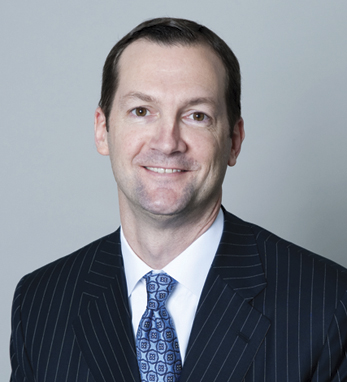
Walsh / circa 2011 / Foster City
A political science graduate walked into a payment gateway in 1998. Twelve years later he sold it to Visa.
There is a particular kind of executive who signs two of the most consequential checks in their industry and then declines to write a memoir about it. Michael Walsh is that kind of executive. He spent twelve years inside CyberSource, the Foster City payment gateway most internet shoppers will never name and could not live without. He arrived in 1998, when ecommerce was still a marketing word with a hyphen. He left after handing the keys to Visa for two billion dollars, and even then he stayed - running merchants and acquirers for the buyer because the work, presumably, was still interesting.
The shorthand on Walsh is that he was the CyberSource CEO who got bought. The longer version is more useful. He took over North American sales in 2000, ran global sales and services by 2004, became president and chief executive in January 2010, and closed the Visa deal by July. In between he engineered the $660 million acquisition of Authorize.Net in 2007, the deal that effectively bolted small-business payments onto an enterprise gateway and doubled the company's footprint. Two deals. Two and a half billion dollars. One political science degree from UC Irvine.
If that sounds like an unfair advantage, consider the more boring explanation: he stayed in one place long enough to see how it actually worked.
CyberSource sells the pipes. It is the gateway that sits between a merchant's checkout button and the card networks - tokenization, fraud screening, payment data vaulting, the parts of a transaction that consumers should never have to think about and merchants think about constantly. Under Walsh the product set widened to include risk management, multi-currency support, payment orchestration, and the unglamorous logistics of global tax and compliance. By the time Visa came shopping, CyberSource was processing for a quarter of all internet retailers in the United States.
The Authorize.Net acquisition is worth pausing on. In 2007, Authorize.Net was the dominant brand for small-business payment processing and CyberSource was the dominant gateway for the enterprise. Buying it meant inheriting both ends of the merchant market - the corner shop with a Shopify storefront and the multinational with a global cart. Most enterprise software companies have looked at that move and failed. Walsh, who was head of global sales at the time, helped execute it cleanly. The two brands were preserved. The customer bases were not collapsed into each other. Three years later, that combined footprint is what Visa bought.
By spring 2010, Visa had decided that ecommerce risk was a problem worth owning rather than reselling. Walsh, six months into the CEO chair, ran point on the negotiation. The agreement closed at roughly $2 billion. In a contemporaneous interview, he kept the message simple. "This deal is about driving growth in ecommerce and delivering value to merchants and financial institutions in the ecommerce ecosystem," he said, which is the kind of sentence that says nothing and everything at once.
He was more revealing on the question of independence. "Both companies are aligned around the fact that the openness of the CyberSource platform has been a key to our success, and we're committed to maintaining that approach." Translation: Visa was not buying a gateway in order to close it. Merchants would still get to route to other networks. Other gateways would still get to do business with Visa. The product would survive its acquisition - which, in software, is the only promise that counts.
That promise has largely held. Fifteen years later, CyberSource is still the brand merchants integrate, still publishes APIs developers use, and still anchors Visa's merchant-services strategy. The 900-person headcount in Foster City is recognisable to anyone who saw the org chart in 2010. Continuity at this scale is a kind of achievement on its own.
By joining forces with the world's foremost payments company, we will have the opportunity to utilize Visa's regional expertise and global presence to drive international adoption of CyberSource in key geographies. - Michael Walsh, on the Visa acquisition
Sales and business development. The standard Bay Area apprenticeship for a future enterprise CEO.
Walks into a payment gateway during the first ecommerce boom. Does not leave.
Two years in, takes the largest revenue region.
Promoted out of the region; now owns the worldwide book.
Helps engineer the deal that doubles CyberSource's footprint and bolts SMB onto enterprise.
Inherits the chair. Then makes one phone call too many.
The deal closes six months into the CEO tenure.
Stays on. Takes over Visa's Americas merchant business in addition to running CyberSource.
Backs a then-young fraud-prevention company. The pattern, by now, is unmistakable.
Most tech-executive stories are built around departures - the moment someone walks out of one company and into a bigger title at another. Walsh's is the opposite. He stayed at CyberSource long enough to see the entire ecommerce stack get reinvented twice and Visa decide it could not afford to keep watching from the sidelines.
Continuity matters in payments. A platform that processes a quarter of US internet retail cannot be reinvented every eighteen months without breaking somebody's checkout. The CyberSource that Visa bought in 2010 is recognisably the CyberSource that exists today - same merchants, same APIs, same Foster City address. The mergers happened around it. The product kept shipping.
That is the story under the headline numbers: not the size of the deals, but the steadiness required to make them happen without anyone noticing.
Walsh's public footprint, in the way of long-tenured operators, is light. He sits on Forter's board, where the company has gone on to raise hundreds of millions in subsequent rounds. He advises in adjacent payments and risk businesses. The day job, by every public account, was the work of building CyberSource - which is, after twenty-plus years, still happening.
Political science at UC Irvine. The least likely background in the room at a payments conference.
Started at Merrill Lynch. Moved to Oracle. Landed at CyberSource. The arc of a 90s sales career, run backwards from finance to software.
Joined as a salesperson. Became CEO twelve years later. The promotion path was a staircase, not an elevator.
Six months from CEO appointment to a $2B sale agreement. The two numbers do not usually appear in the same sentence.
Named an Irish America honoree - a nod from Dublin's diaspora magazine to a Silicon Valley operator.
About 900 people in Foster City still work on the platform he ran. The headcount survived the acquisition.