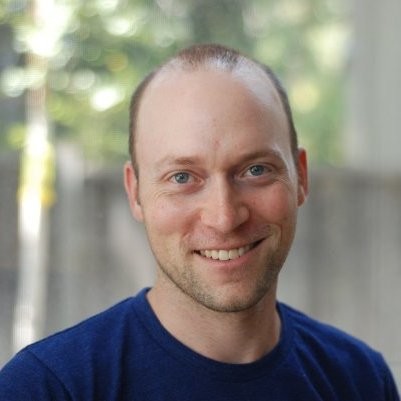
He Got Banned by AOL at 15. Then He Built the Future of Finance.
There is a specific kind of mind that looks at a locked door and sees a software problem. Alex Rampell has had this mind since at least 1996, when, at 15 years old, he built a program called AlwaysOnline to keep himself connected to the internet despite AOL's aggressive disconnection timers. Tens of thousands of people downloaded it. AOL banned it. Rampell kept going.
That pattern - spot the friction, build the bypass, get cut off, build something better - has repeated itself across three decades and seven companies. He sold shareware screensavers for $5 each as a kid and used the proceeds to pay for college. He co-founded FraudEliminator while still figuring out Silicon Valley, turned it into SiteAdvisor, and watched McAfee hand over $75 million for it in 2006. He built TrialPay into a payments engine processing over $300 million in transactions for Facebook, Zynga, and Gap, then sold it to Visa in 2015. He sat across from Max Levchin at an Allen & Company conference - their conversation a product of Rampell having studied Russian in high school, which made him stand out in a room full of people trying to sound interesting - and they co-founded Affirm.
Affirm is now on the NASDAQ. TrialPay was absorbed by Visa. FraudEliminator became part of McAfee. TXN was acquired by Envestnet. Yub, the offline affiliate network he span out of TrialPay while simultaneously running TrialPay itself, was picked up by Coupons.com. He did not build these companies in sequence. He built several of them in parallel, which tells you something important about how his brain works.
The battle between every startup and incumbent comes down to whether the startup can get the distribution before the incumbent can build the innovation.
- Alex RampellIn October 2015, Andreessen Horowitz brought him in as a General Partner - the first hire in years who came as a serial founder rather than a domain specialist or a deal-doer. He was given fintech. He proceeded to lead investments in Mercury, Plaid, OpenDoor, Wise, and Earnin, among others. By 2024 he was running a16z's $1 billion Apps practice, which extends beyond fintech into B2B and B2C software at every stage from seed to growth.
His board seats read like a map of where financial technology is actually happening: Rocket Companies, Wise (LSE: WISE), Sentilink, Propel, Branch, Brightside, Capitolis, Descript, Divvy Homes, Earnin, Flock Homes, FlyHomes, Loft, Point, VGS, and - in a nod to the breadth of his portfolio - Super Evil Megacorp, the gaming studio with possibly the most honest name in corporate America.
Distribution Beats Innovation. Until It Doesn't.
The Core Bet
Every startup in financial services is running against the clock. The incumbent has distribution - millions of customers, trust, regulatory relationships. The startup has innovation - a better product, a smarter model, a lower cost structure. The question is never which one has the better idea. It's whether the startup can capture enough of the market before the incumbent copies the product well enough to keep its users. Rampell backs founders who close that gap before the clock runs out.
This framing explains most of what Rampell has backed. Mercury gave startups a better bank account before the banks built decent API access. Plaid connected fintech apps to traditional bank data before banks opened their own developer portals. Wise built a currency transfer product that banks simply didn't care enough to compete with properly until Wise had a decade head start. Affirm let people split purchases before credit card companies thought of it as something worth offering clearly.
The recurring pattern: a segment of financial services that incumbents have neglected because it's too small, too inconvenient, or too far from their core revenue model. A startup that takes it seriously. And a window - sometimes years, sometimes only months - before the incumbents notice and respond.
Non-Consensus Right
Rampell's filter for a good bet: the market thinks it's wrong, and it turns out to be right. Consensus bets produce consensus returns.
Distribution Window
The startup's innovation is temporary. Distribution - built through product, trust, and network effects - is durable. Back founders who know the difference.
Financial Neglect = Opportunity
The parts of financial services that serve the underbanked, the unbanked, and the inconvenient have been left behind by technology. That gap is closing fast.
Founder Fuel
The best founders are driven by revenge or redemption - a grudge, a previous failure, a market that dismissed them. That emotional charge sustains founders through the hard parts.
From Screensavers to Sand Hill Road
Began writing and selling shareware software. First sale: MiniScreenSaver at $5. Built a catalog. Earned enough to pay for college.
Created AlwaysOnline to beat AOL's disconnection timers. It was downloaded tens of thousands of times. AOL banned it. He'd already moved on.
Harvard University - Applied Mathematics and Computer Science. Also played varsity squash. Studied Russian (which would prove consequential).
Co-founded FraudEliminator (first consumer anti-phishing company) and DidTheyReadIt (email read tracking) with Chris Dixon - before read receipts were common.
FraudEliminator merged with SiteAdvisor, acquired by McAfee for ~$75M. Co-founded TrialPay, a transactional advertising and payments platform.
Coined the term "O2O" (online to offline) - a concept that would define an entire category of tech investment for the next decade.
Co-founded Affirm with Max Levchin. The buy-now-pay-later company would go on to IPO on the NASDAQ (AFRM).
Yub (offline affiliate network, spin-out from TrialPay) acquired by Coupons.com. Rampell was simultaneously CEO of both.
TrialPay acquired by Visa for ~$116M. Joined Andreessen Horowitz as General Partner, leading fintech investments.
TXN (transactional data company) acquired by Envestnet. A quiet exit, but another one.
Appointed to Rocket Companies (NYSE: RKT) board. Leads a16z's $1 billion Apps practice. Active across fintech, B2B, and consumer software.
The Companies He Backed
A partial look at where Rampell has led investments and taken board seats - a map of financial infrastructure being rebuilt from scratch.
| Company | Sector | Status |
|---|---|---|
| Affirm | Buy-Now-Pay-Later / Consumer Credit | IPO (NASDAQ: AFRM) |
| Mercury | Business Banking | Active |
| Plaid | Financial Data Infrastructure | Active |
| Wise | International Money Transfer | Public (LSE: WISE) |
| OpenDoor | Real Estate Technology | Public (NASDAQ: OPEN) |
| OpenInvest | ESG Investing | Acquired by JPMorgan Chase |
| Quantopian | Quantitative Investing Platform | Acquired by Robinhood |
| Rocket Companies | Mortgage / Fintech | Public (NYSE: RKT) |
| Sentilink | Identity Fraud Prevention | Active |
| Propel | Financial App for Low-Income Americans | Active |
| Earnin | Earned Wage Access | Active |
| Capitolis | Capital Markets Optimization | Active |
| Rival | Music Technology | Acquired by Live Nation |
Alex Rampell in Conversation
Selected interviews and talks where Rampell lays out his thinking on fintech, venture, and what makes founders worth betting on.
The Things That Don't Show Up on a Pitch Deck
At the Allen & Company Sun Valley conference - the billionaire summer camp where deals get made over tennis courts - Rampell found himself talking to Max Levchin. He credits his high school Russian as one reason the conversation went deeper than surface level. Levchin, who had been at PayPal and then Slide, was thinking about what to build next. Rampell had been thinking about credit and payments. The conversation turned into Affirm. Not immediately - these things never work immediately - but it turned into Affirm.
There's a specific kind of intellectual confidence that comes from having shipped real products, watched them get adopted at scale, and still gotten things wrong. Rampell has that quality. He's been the person on the other side of the table that VCs were pitching, and now he's the one asking questions. The shift in perspective informs how he evaluates founders who are still in the stage he once occupied.
He describes himself as "an optimistic skeptic" - which is about as accurate a two-word characterization of a good venture investor as you're likely to find. The optimism is necessary to write the check. The skepticism is what protects the portfolio.
You want to be non-consensus right. Consensus bets produce consensus returns.
- Alex RampellHe sits on the board of Super Evil Megacorp. He has not offered a public explanation for why they named it that. No explanation is required.
He is fluent in Russian and Japanese. He plays squash. He runs and cycles. He has three interests that don't obviously connect - math puzzles, financial services disruption, and sports that require long-term consistency to improve - and they connect perfectly once you know him.