A gas pipeline is an unusual item to find in a Silicon Valley investor’s biography. It is also a useful place to begin with Nick Shahiar. In the 1990s, his work took him into a consortium of European and Asian government bodies and multinational companies, organized around a roughly $260 million pipeline between former Soviet republics. The assignment involved energy ministers, negotiations, and infrastructure. A startup pitch would have required considerably less plumbing.
Shahiar is also known as Nader. Based in Atherton, California, he has held executive responsibilities in technology companies and investment organizations, with international energy projects occupying a substantial chapter in between. Horizon Group identifies him as its president and CEO and as managing partner for Fund II. His professional affiliations include the Band of Angels, the Silicon Valley investment network.
Put those roles beside one another and a career comes into view that is broader than an investment title suggests. There are enterprise networks and power plants, technical education and commercial responsibility. There is also a basketball court. Each belongs in the picture; none needs to explain away the others.
A career measured in connections
Shahiar’s education began in engineering. He earned a bachelor’s degree in electrical engineering and a master’s degree in electrical and computer engineering. His studies included the University of California, San Diego, the University of Michigan, and San Diego State University. He also completed management programs and courses at Stanford. Technical study and management training sit together in this background, preceding work that crossed both disciplines.
Among his technology assignments was Siemens, where he held several senior management positions. His responsibilities included running a data communications business unit with a worldwide remit and bringing products to market. That combination matters: managing an international business involves the product itself and the organization required to sell and support it. The word “communications” in this chapter describes an actual business, rather than a pleasant line on an executive skills list.
At Group Bull, he became CEO of the Asian regional division. His work there included national enterprise projects, strategic alliances, and joint ventures. The scale and setting differed from those of a young company seeking its first customers. He was working inside established technology organizations, with responsibilities extending across markets and partner relationships.
Other names in his professional history include Infineon and Comtech. His background spans management, technical work, and executive leadership. Read together, these assignments show how much operating experience preceded his investment roles. The later title is one chapter in a longer working life.
Areas of work, rather than a dated sequence.
These are connections in a literal sense as well as a professional one. Enterprise networking connects organizations through technology. A joint venture connects organizations through an agreement. An investment connects capital with an undertaking. The comparison offers a way of reading Shahiar’s career, while the particulars of each job give it substance.
The later title is one chapter in a longer working life.
The pipeline was a real pipeline
The energy chapter began in the 1990s. Shahiar took a leading role in establishing a consortium involving European and Asian governments and multinational companies for the gas pipeline project. His responsibilities included meeting energy ministers and negotiating terms. In a biography otherwise populated by technology employers, this is a change of scenery substantial enough to deserve its own paragraph.
A consortium introduces another kind of organizational challenge. Participants bring their own institutions, responsibilities, and reasons for being involved. A project must acquire an agreed shape before it can become a functioning piece of infrastructure. Shahiar’s role placed him at the point where the technical undertaking met the negotiations needed to advance it.
The pipeline carried a reported project value of about $260 million. That figure describes the project, rather than a personal investment or a measure of individual wealth. Its significance here is the scale of the undertaking. It puts an international infrastructure assignment alongside the enterprise technology work already in his career.
Approximate value of the international pipeline project in Shahiar’s biographical record.
He also established a joint venture working with Mitsubishi on two combined-cycle power plants. The venture grew to 200 staff. Its assignments covered design, implementation, and testing, with plant capacities of 600 megawatts and 450 megawatts. These are specific operational details: an organization with people in it, undertaking work on physical projects.
The power plant chapter places another emphasis on his résumé. A partnership is only part of the arrangement. Design, implementation, and testing identify work that must happen after the partnership exists. The staffing figure gives that work a human scale. Two hundred people are a considerable distance from a two-person startup, although both require an organization that can get things done.
Those energy assignments give the biography a different geography and rhythm from a conventional account of Silicon Valley investing. European and Asian government participants, energy ministers, multinational partners, and power generation projects occupy the same career as communications businesses. The scope is interesting enough without turning every assignment into a heroic expedition.
Two tables in Silicon Valley
At Horizon, Shahiar’s responsibilities moved into investment leadership. The organization’s team listing identifies him as president and CEO, with a managing partner role for Fund II. His earlier personal biographies describe him as president of Horizon Ventures in the San Francisco Bay Area. Across those descriptions, investment management joins the executive and project work that came before it.
Horizon’s team also includes Lester Chen, whose background includes founding GCI Software and selling it in 2006. That is another operating-company career in the investment organization. For Shahiar, the institutional setting is distinct from the angel network with which he is associated. A leadership position at Horizon and membership of the Band of Angels represent different relationships.
The Band brings together former and current technology executives who invest in early-stage companies. Members collaborate on due diligence and make individual investment decisions. Its emphasis on the experience of its members supplies context for Shahiar’s affiliation: this is a network in which earlier professional work has a place alongside capital.
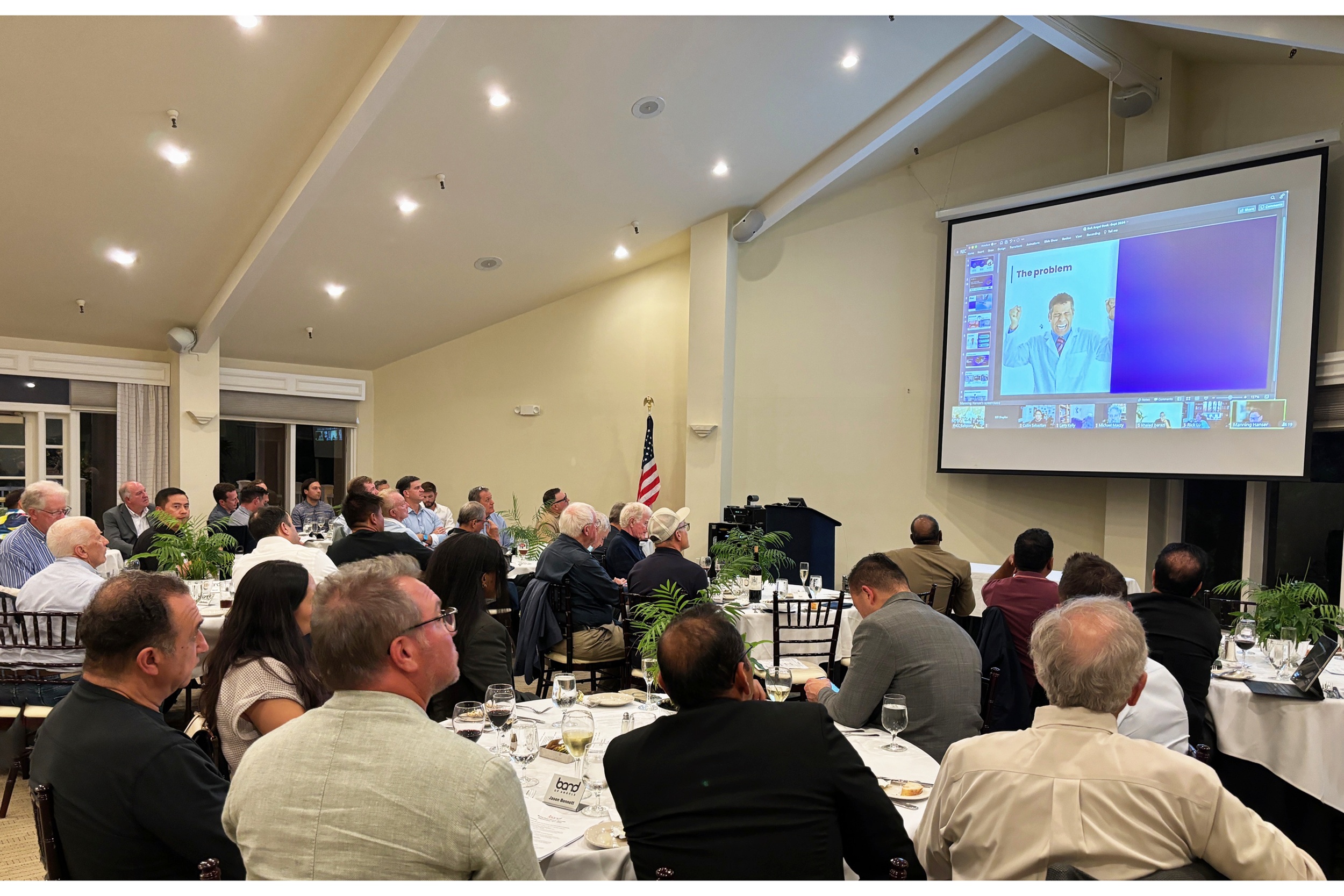
The distinction is worth preserving when looking at a person’s record. An investment group has a collective history. Membership places someone within that group; the individual biography supplies its own achievements and responsibilities. Shahiar’s record has enough specific material to stand on that basis.
There is a useful continuity in the different settings. At Siemens and Group Bull, his roles concerned operating technology businesses. In the infrastructure chapter, they concerned organizing projects and partners. At Horizon, the responsibility concerns investments. The work changes, while the record retains its emphasis on organizations, technical undertakings, and commercial arrangements.
It is tempting to make a career like this look inevitable once its chapters have been collected on a page. The more interesting reading leaves the turns visible. A communications business, a pipeline consortium, a power plant joint venture, and an investment organization are different assignments. Their presence together makes the career distinctive.
A basketball court belongs in the picture
Then there is the sporting life. In the 1970s, Shahiar played on Iran’s national youth basketball team. He continued to follow basketball, and his interests also included martial arts: he holds a black belt and competed successfully in statewide championships. These details give the biography a setting beyond an office or negotiating room.
A national youth team appearance belongs to a particular period of life. A black belt records another kind of participation. They are personal details with their own interest, alongside the executive positions and project figures. There is no need to dress them up as a secret formula for business success. Basketball can remain basketball, which is quite enough work for a sport.
Shahiar also enjoys spending time with family. His corporate biography describes a life in Silicon Valley with his wife and three daughters. Away from the professional titles, this places him within the ordinary geography of a family as well as the professional geography of the Bay Area.
His public community appearances include the fifth annual Nowruz Gala organized by Pars Equality Center in March 2015. Mina and Nader Shahiar were identified together in coverage of the celebration at the Marriott Waterfront hotel in Burlingame. The gathering marked the Persian New Year, adding a social setting to the record of his working life.
Mina and Nader Shahiar also appear among sponsors listed by Moms Against Poverty. The listing offers another concrete connection to Bay Area community activity. It sits alongside the gala appearance without requiring a grand declaration about his motives. The documented connection itself is the detail.
Return, finally, to the investment table. The person seated there has a history extending into technology businesses, international infrastructure, engineering study, and sport. Shahiar’s current title provides an introduction. The route to it provides the story: several kinds of work, across several settings, accumulated over a career with room for a few unexpected turns.