Before Ken Xie had a public company to run, he had customers who could page him when their networks went wrong. While studying at Stanford, he found work connecting businesses to the internet. Installation led to follow-up calls. Follow-up calls led to a monthly fee. Eventually, he recalled, he was supporting 20 to 30 companies. It was a useful education in what people will pay for: a connection that works, and someone who answers when it stops.
The arrangement had a pleasing lack of ceremony. There was no need to persuade customers that computer networking might someday matter. Their computers were already having opinions. Xie was close enough to the daily irritations to notice a second problem. Getting a business online created a need to protect it. Protection, in turn, could make the connection slower. A service call had become a product question.
That question followed him through three security companies. SIS, his first, began with software firewalls in 1993. NetScreen pursued dedicated hardware. Fortinet, which he co-founded with his brother Michael in October 2000, widened the inspection to the content travelling over the network. Across those ventures, the recurring difficulty was almost impolite in its simplicity: how do you examine more traffic without making everyone wait?
The professor’s son takes a detour
Xie grew up in Beijing with two professors for parents. Their ambitions for him made sense in the household he knew: study, earn a doctorate, become an academic. His own early plan involved professional volleyball. He trained for years before choosing university, entering Tsinghua in 1981. Engineering offered another outlet for an old interest. He recalled building a radio at seven and enjoying the practical business of taking technology apart and making it work.
He came to the United States in 1990, initially to Ohio State, before finding his way to Stanford. He already had bachelor’s and master’s degrees from Tsinghua; he also earned a master’s in electrical engineering at Stanford. The academic route was available. So was the less orderly education taking place among customers, classmates and nearby companies.
His parents were disappointed when the company displaced the doctorate. Years later, election to the National Academy of Engineering helped reconcile the choice with their expectations. There is a small family comedy in that outcome. He had wandered away from the approved career and eventually returned with a credential that academics could appreciate. The route was unconventional; the engineering had remained.
A firewall needs a better engine
A firewall decides what network traffic to allow. Asking it to do that on a general-purpose computer meant sharing the limitations of that computer and its operating system. Xie’s response was to design a system specifically for the job. An application-specific integrated circuit, or ASIC, puts selected work into dedicated silicon. Think of the difference between a kitchen that can cook anything and a production line arranged for one demanding recipe.
NetScreen brought together complementary expertise. Xie understood security. Yan Ke, a Tsinghua classmate working at Cisco, understood networking. Feng Deng brought hardware and chip expertise. Their common university background helped connect them, but the division of skills made the team useful. Knowing the same people gets a meeting started. Knowing different things gives the meeting somewhere to go.
They built the prototype alongside paid jobs. Xie described working a full week, taking Stanford classes and spending another 20 to 30 hours on the venture. The founders agreed on milestones and on when they would leave their employers. They quit in October 1997, after roughly a year of prototype work. The familiar startup leap had quite a lot of scheduling underneath it.
- 1993SISProtect the connection
- 1996NetScreenSpeed up the inspection
- 2000FortinetLook deeper inside
Credibility was harder to manufacture than a prototype. The founders each contributed $50,000 and assembled an initial $1 million round with angel investors. Early customers included a small local business Xie already knew through consulting. The team offered the reassurance that they would turn up quickly to fix problems. A young hardware company had to sell confidence in the people as well as confidence in the box.
Juniper acquired NetScreen in 2004 for approximately $4 billion. By then, Xie was already working on Fortinet. The chronology matters. The sale was a significant outcome for a business he had helped create, but his next company had begun four years earlier. The next technical problem had arrived before the previous company’s exit.
The interesting part was inside the connection
A permitted connection can still carry something dangerous. That was the opening for Fortinet. Checking who could enter a network was only part of the task; inspecting what came through required additional work. In an explanation years later, Xie compared the change to air travel: admitting a passenger with a ticket and examining the luggage are different jobs. The second job makes the machinery more complicated.
Ken and Michael Xie founded the company together, and Fortinet launched its first product in 2002. Its early approach combined network acceleration with the processing needed for deeper content inspection. Xie also made an early commitment to international sales, describing a launch across three regions rather than a US-only start. The commercial ambitions were broad even while the product was young.
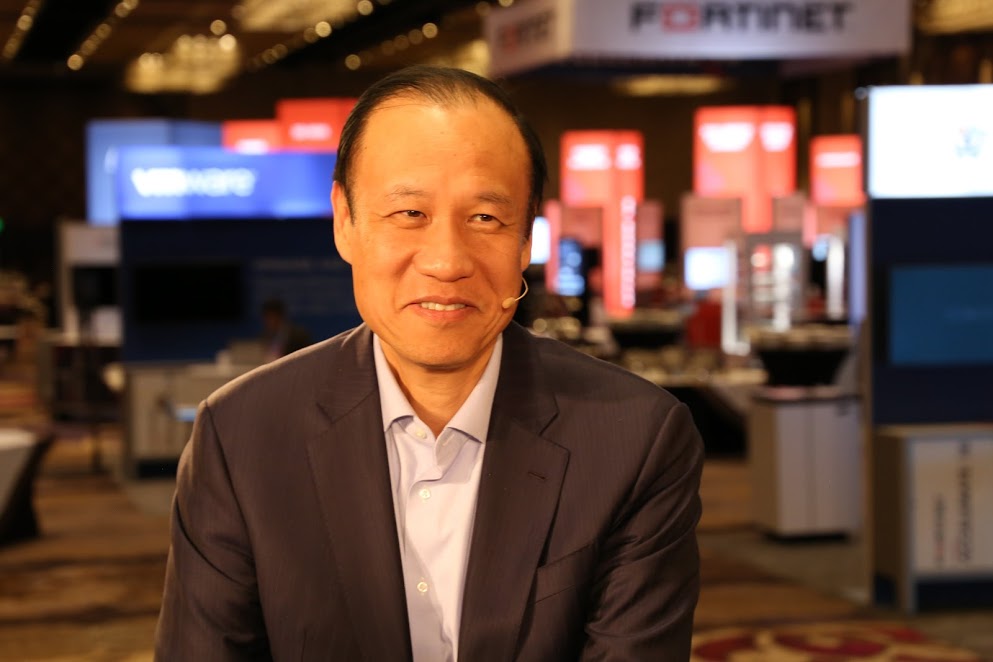
There had been a brief excursion into venture capital between building companies. Xie ran Jedi Venture, then decided that competing for investments suited him less than making a product. He returned capital. It is an unusually practical answer to the question of what a successful founder should do next: try the alternative, discover which work you prefer, and go back to it.
“My passion, however, has always been to build a better product.”
Ken Xie · 2010
Fortinet gave that preference a long working life. The company went public in 2009. Ken remained CEO; Michael became president and chief technology officer. Their partnership divides the work between Michael’s deeper technical focus and Ken’s broader view of the business. Both are engineers. Their relationship also gives the company a continuity that predates its incorporation papers.
Silicon does not read the quarterly calendar
Custom chips require money before they produce much evidence of wisdom. The design work comes first. Production and volume come later. Xie has repeatedly defended that sequence, explaining that the economics improve as the same design ships in greater quantities. A chip programme cannot be wished into existence at the end of a disappointing quarter. It needs a company willing to keep paying while the useful part is still ahead.
In 2010, he described a preference for building Fortinet over the long term and said product investments could take three to five years to show their benefits. The company’s later investments in its own processors followed that logic. There is an obvious tension here: a public company reports frequently while important engineering work finishes infrequently. Keeping those two clocks in the same room is part of the CEO’s job.
The chip is only one piece. FortiOS, the company’s operating system, and the Security Fabric connect a wider collection of security functions. In 2021, Xie was describing the integration of networking and protection across users, devices and locations. In 2022, the discussion included the complexity created by distributed work and a shortage of security skills. Faster inspection still mattered. So did whether a team could manage what it had bought.
The work has acquired more moving parts
In November 2023, Xie set out three areas of focus: secure networking, secure access service edge, or SASE, and security operations. In everyday language, those cover connecting and protecting networks, delivering secure access to applications wherever people work, and helping teams detect and respond to threats. The vocabulary has multiplied since his consulting days. The customer still wants the system to work without acquiring a second job administering it.
Fortinet reported $6.80 billion in revenue for 2025, up 14 percent from the previous year. In the second quarter of 2026 it reported $2.05 billion, up 26 percent year over year. These are measures of the company under Xie’s leadership, rather than a score for any individual engineering choice. They do establish the scale on which those choices now operate.
Two 2026 developments bring the story back to its central tension. Fortinet announced a collaboration with Intel to develop its next security processor, SP6. In August it announced the acquisition of Virtue AI, adding capabilities for testing and protecting AI systems. One investment extends the dedicated-chip approach. The other addresses software that introduces a new set of things to inspect, govern and defend.
A company built around making its own technology also has to decide when to buy expertise. Virtue AI makes that decision visible. Continuity does not require repeating every early method. It requires knowing which problem is worth carrying forward. AI applications and autonomous agents put more behaviour inside the system; protecting them asks more of the security machinery around them.
Still an engineer, with a larger audience
Xie’s work has also moved beyond the product catalogue. He represents Fortinet in the Cyber Threat Alliance and participates in the World Economic Forum’s cybersecurity work. His 2013 election to the National Academy of Engineering recognised contributions to cybersecurity systems and services. He subsequently directed a $100,000 foundation gift to the academy’s Independent Fund, supporting its work in engineering leadership and public understanding.
There are competing forms of visibility around the family. His daughter Jaime became known for fashion and the Netflix series Bling Empire. Ken’s public appearances tend toward interviews, earnings discussions and explanations of network architecture. Both careers involve an audience, though an ASIC is unlikely to improve its prospects by changing outfits.
The pager has long since ceased to explain the scale of his working life. It still explains something about its direction. A customer had a problem, Xie had to understand it, and solving it exposed another problem further down the line. Three companies later, the internet is faster, the things connected to it are more varied, and the inspection takes more ingenuity. There remains plenty to keep an engineer occupied.
Keep following the connections
- Fortinet leadership
- Ken Xie on X
- LinkedIn profile
- Watch: theCUBE interview
- The early years: 2010 interview
- Product building and venture capital
- Long-term engineering
- Fortinet’s three areas of focus
- 2025 financial results
- 2026 second-quarter results
- The Virtue AI acquisition
- National Academy of Engineering
- Fortinet blog