The whiteboard belonged to her daughter. Sash Sunkara used it to sketch the vision for her company, sitting in a playroom where a future in enterprise software was unlikely to be the main attraction. Neena Dye, then 11, understood a different calculation: leaving a large corporation to start a business would mean fewer family vacations in Hawaii. The board could accommodate a business plan. The household would have to accommodate the business.
That small domestic detail gives Sunkara's career a useful scale. RackWare, the cloud software company she co-founded and led as CEO, concerned itself with the complicated machinery behind large organizations. At home, the consequences were easier to count. A parent's time is a finite resource, even when her professional specialty is making computing resources more flexible.
There is something pleasingly unceremonious about the borrowed board. The founding furniture came without a conference-room booking. Sunkara was already an experienced technology executive. She had worked on networking hardware, managed product roadmaps and helped build another startup. The idea in that playroom rested on years spent understanding what happens when a promising design encounters an actual business.
The engineer in the business meeting
Sunkara earned a bachelor's degree in electrical engineering at California State University, Sacramento, graduating with honors. Her early career at Hewlett-Packard included developing networking switches and routers. These are the parts of computing that get considerably less applause than an attractive app, although the app would have a rather quiet afternoon without them.
She also learned that good work and a warm welcome could arrive on different schedules. Recalling an HP chip-development organization, she described being its only woman and encountering resentment despite the quality of her designs. Her response was to keep contributing and let accomplishments build her confidence. That advice came with a sober acknowledgment: some colleagues would respect her, and some would remain less welcoming.
Her subsequent jobs enlarged the range of problems on her desk. At Brocade Communications, she became vice president of program management, responsible for carrying out the company's roadmap. She co-founded server-virtualization company 3Leaf Systems in 2004, serving as chief business officer. Marketing, business development, customer support and operations were all within her remit. Later came marketing leadership at QLogic's Network Solutions Division and Mellanox Technologies.
The progression matters because running a company requires an ability to move between disciplines. A design can be technically sound and commercially awkward. A sales promise can be commercially attractive and technically alarming. Sunkara had worked on both sides of those conversations before RackWare required her to make them agree.
- HPNetworking switches and routers
- BrocadeProduct and strategic roadmaps
- 2004 · 3LeafCo-founder and chief business officer
- QLogic / MellanoxMarketing and business development
- 2009 · RackWareCo-founder with Todd Matters
The customer already owned the problem
Sunkara and Todd Matters started RackWare in 2009. Cloud computing offered companies a tempting proposition: computing capacity available when needed, without owning every piece of hardware themselves. But established enterprises already had applications, databases, networking arrangements and years of investment. Moving those systems was a practical question with an expensive answer if everything had to be rebuilt.
Sunkara's attention settled on that existing investment. She wanted customers to move applications while preserving much of their configuration, then retain the freedom to move again. The company developed migration capabilities, cloud-based disaster recovery and management across environments. Her case for the product began with the customer's circumstances, rather than a demand that the customer adopt an entirely new way of working.
In explaining the approach, she returned to a simple preliminary task: establish what the organization already has. Some companies, she said, were unsure which applications they were running and reluctant to touch old systems. An inventory sounds modest beside a cloud strategy. It is also difficult to move a thing responsibly when nobody has quite established what the thing is.
When the partner disappeared
The financing story began in the aftermath of 2008, when investors were cautious about adding commitments. RackWare found a strategic partner willing to finance development for a different use of the technology. A small team built a product. Then the partner was acquired, and an acquisition clause allowed the relationship to end.
By 2011, Sunkara and Matters had software and limited cash, with the next source of funding gone. They pursued customers, including a Department of Defense contract, and used revenue to keep operating. The episode makes an unusually concrete account of early entrepreneurship: the product survived the arrangement that had paid for its creation.
Venture financing followed in 2013. Another $2.3 million round arrived in 2014. Sunkara described a preference for enough capital to execute the roadmap with a small team. Both founders had experienced startups with larger financing demands. Their decision was deliberate, shaped by what they had already seen.
An engineering habit survives the job title
Todd Matters offered a revealing description of his colleague in 2017. He said she brought the logic and order of engineering to sales and marketing, and emphasized her persistence and memory. His phrase, tenacity and perseverance
, is less glamorous than the usual vocabulary attached to founders. It also sounds more useful when a prospective customer needs another technical explanation.
That account gives the career changes a continuity. Engineering, product management and commercial leadership can look like separate occupations on a résumé. In Matters's description, Sunkara carried a way of thinking between them: observe carefully, remember what happened, work through the problem. It helps explain how someone trained in electrical engineering could take responsibility for disciplines with fewer equations and just as many complications.
There is a temptation to treat the CEO title as a departure from technical work. In Sunkara's case, the public record contains a more specific connection. She is named alongside Matters and Aniket Kulkarni as an inventor on US patent 10,628,199, granted in April 2020. It concerns restoring and powering off computing workloads according to policy triggers.
The patent describes ways to save a workload and restore it in a different computing environment while retaining its operating state. A cost threshold, inactivity or a schedule can inform those actions. Beneath the administrative wording lies a familiar business concern: keep useful computing available, and control what happens when it is moved or stopped.
Capital with an assignment
In September 2016, RackWare announced a $10 million Series B led by Signal Peak Ventures, with participation from Kickstart Seed Fund and Osage Venture Partners. Sunkara identified jobs for that money: product development and expansion of sales, marketing, partnerships and customer support. It was a financing event with a staffing plan attached.
The company had also begun building relationships with larger technology businesses. IBM's relationship with RackWare provided an avenue into enterprise accounts. At IBM InterConnect in February 2016, Sunkara and Matters were scheduled to explain managed migration services using RackWare technology. A related hands-on workshop let participants work through sample migrations into SoftLayer.
That is an instructive setting for a founder whose subject is infrastructure. The demonstration has to survive contact with the user's environment. A polished account of cloud adoption is one thing; showing people how a workload moves is another obligation altogether. The workshop's premise brought the conversation down to an action someone could try.
Ask what happens after the announcement
Sunkara's public commentary often examined the practical consequences of large technology decisions. In 2018, she said about 80 percent of RackWare's clients had a multi-cloud strategy. Their combinations varied: different providers served different needs. Her description suggested a customer world less tidy than a contest with one eventual winner.
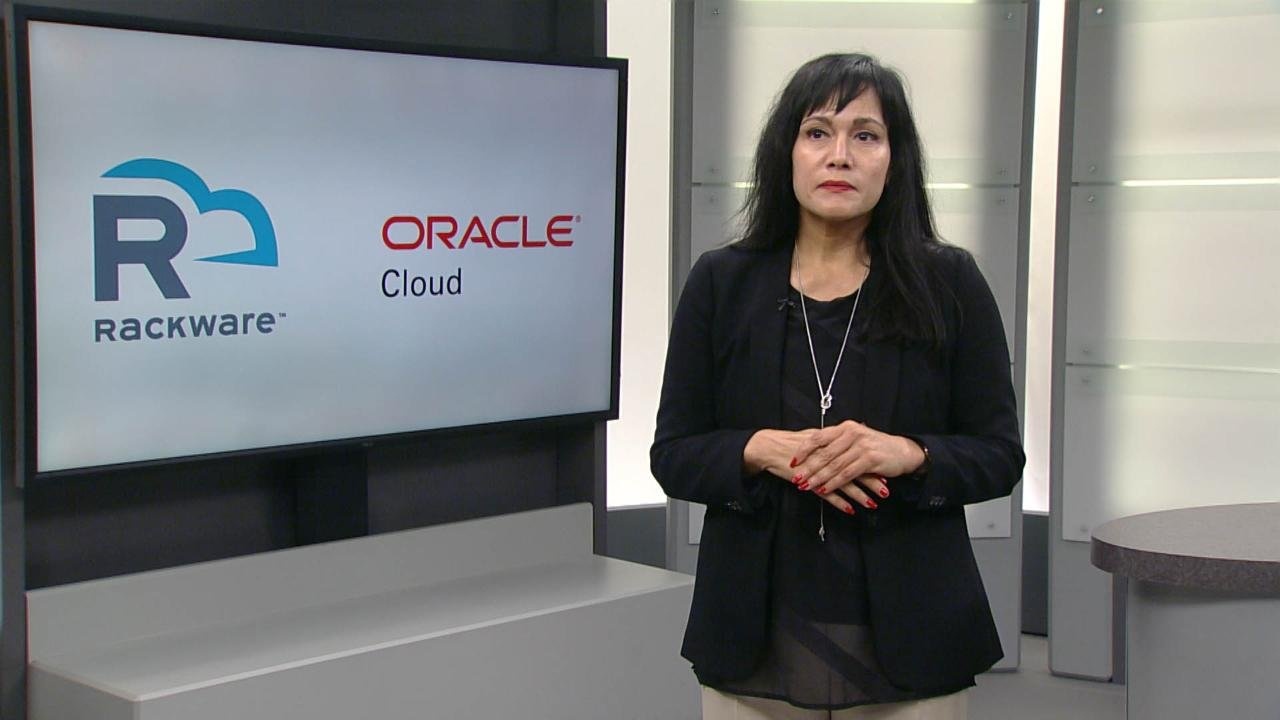
When discussing Google's infrastructure investment in March 2019, she asked whether its cloud could handle enterprise storage, networking and applications. More data centers mattered, but customers also needed features and support appropriate to the systems they actually ran. Her attention remained on the work required of the customer after an announcement had finished attracting attention.
She made a related argument about the Pentagon's proposed single-vendor JEDI cloud contract in January 2019. Concentrating everything in one cloud, she argued, increased risk when technology could support several providers. Later that year, writing about MySpace's reported data loss during migration, she stressed governance and workload protection. Across these interventions, the question was consistent: what might a system's owners lose, and how would they keep operating?
Who gets to enter the room?
Her interest in access extended beyond applications. In January 2019, Sunkara described prioritizing gender and ethnic diversity in RackWare's recruiting and internship program. She spoke with students at universities and high schools about cloud careers, making a point of encouraging young women. She connected representation to the perspectives a company could bring to decisions.
Her stated hope was ambitious and specific: four times as many women in the industry within ten years. It was an aspiration she expressed in 2019. The practical work she described was more immediate: recruit, offer internships, speak to students and help people picture themselves in technical roles. Someone who had been the only woman in a development group was thinking about who might join the next one.
“It is a different adventure everyday!”
Sash Sunkara, on what motivated her in 2015
In 2015, asked what motivated her, she spoke about her children, her product and her team. Those answers give a warmer picture than a sequence of financing rounds. They also place family and company in the same sentence, where they had been all along.
Her daughter eventually interned at RackWare and saw the board meetings, staffing demands and work of bringing in revenue. Neena's account changed from resentment to pride as the company's demands became visible to her. Published by Sunkara in 2016, it preserved the discomfort as well as the affection. The borrowed whiteboard had been easy to share. Understanding what followed took longer.
Continue the conversation
- Sash Sunkara on LinkedIn
- RackWare's website
- Not Like the Other Moms - Neena Dye's account, shared by Sunkara
- The applications customers already own - a founder interview
- The early financing story - Sunkara in conversation
- Sunkara on women in cloud computing
- RackWare's 2016 Series B
- Todd Matters on Sunkara's engineering approach
- Sunkara on confidence and contribution
- Her 2018 view of multi-cloud adoption
- What enterprise customers need from Google Cloud
- Her 2019 view of the JEDI contract
- Her essay on MySpace's migration mistakes
- Women of Influence 2015