At midnight in Palm Springs, Nic Baird had something else to celebrate. He was at a bachelor party when DeepAI integrated with Koah, the company he was building. In his own brisk account of the episode, the setting, hour and customer sit next to one another like entries in a ship’s log. Somewhere between the party and the product, a new career was taking shape.
Getting there had involved a rather less direct itinerary than Silicon Valley tends to put on a slide. Baird had been a competitive sailor, a national champion, a Yale student and a Stanford coach. He had tried computer science and failed CS50. He had taken jobs in operations and consulting, then worked inside a community of founders before becoming one himself. The CEO of Koah had accumulated several plausible answers to the question of what he did for a living.
The family business was wind
His first answer came early. Born in Newport, Rhode Island, and raised sailing in St. Petersburg, Florida, Baird grew up with a father whose occupation made professional sailing look like a reasonable ambition. Ed Baird won the America’s Cup at the helm of Alinghi. Nic’s older brother, Ty, became his training partner. At home, sailing had both a family history and someone available to race against.
By 2013, Nic had won the U.S. Junior Singlehanded Championship and its Smythe Trophy. The following year, Sailing World included him among Gary Jobson’s Junior All-Stars. He raced for Shorecrest, sailed out of the St. Petersburg Yacht Club and hoped a sailing team would be central to college. That wish, at least, required no subsequent revision.
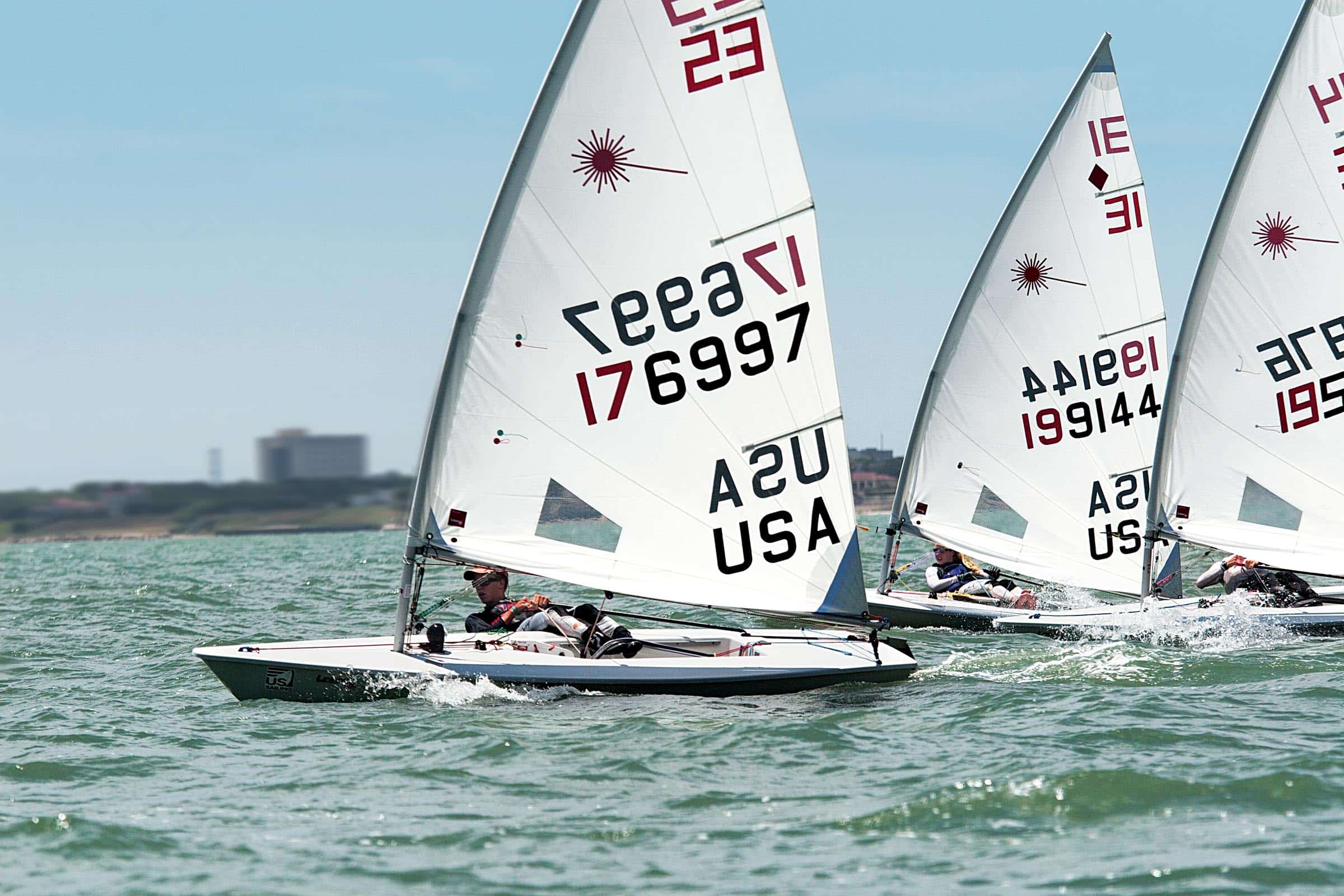
He arrived at Yale and earned All-American skipper recognition in each of his four seasons. His college roster offers a pleasantly unpolished detail: among his favorite things about Yale were Old Campus architecture and the sailing team. Hobbies included windsurfing. Even his time away from sailing could involve another sail.
An individual trophy, several pairs of hands
In May 2019, Baird became College Sailor of the Year. His senior season included a team-racing national championship, fourth at singlehanded nationals and second in the coed championship. Yale also took the Fowle Trophy for the best overall collegiate team. It was a substantial finish to a college career that had already included a team-racing national title as a freshman.
The coed result contained a close miss worth remembering. Yale recovered from sixth after the first day to finish five points behind the College of Charleston. In A division, Baird and crew Sonia Lingos-Utley finished second, three points behind the winning boat. Championships produce neat final standings; the races beneath them can be considerably less tidy.
When Baird discussed his individual award, he gave the team a share of it. His coaches described someone who worked seriously at both sailing and academics. He graduated with majors in history and political science, and earned a place on the 2018-19 collegiate All-Academic sailing team. The professional sailing career he envisioned had a credible foundation. He had spent years getting good at something with a very visible scoreboard.
of the Year
Koah
Series A
The coach at the back of the classroom
Stanford hired Baird as an assistant sailing coach in 2019. That placed a Yale graduate on a different campus, with a job to do and courses within reach. He took advantage of the arrangement. Alongside coaching, he audited classes, returning to computer science and trying Arabic. He also sat in on nine business-school courses, including negotiation, behavioral economics, market research and hiring.
Stanford’s sailors were collecting their own results during his coaching tenure. The program won its first ICSA Match Race National Championship in fall 2019. In 2021, it finished in the top five at each of the three national championships, including second in the coed event. Baird’s job was now to help other people make the decisions he had spent his college years practicing.
The hourly rate he remembers for coaching is $14. It is the sort of number that survives a career change because it tells the story more efficiently than a job title. A college sailing champion could be an expert on the water and an interested beginner in a classroom, all before the end of the same working day.
“I put myself in a box”
Nic Baird, recalling the limits of thinking of himself only as an athlete
That is how he later described an early assumption that programming belonged to a different sort of person. A friend had taught himself from YouTube; Baird had mentally assigned himself to sport. His account of unlearning the distinction is unusually candid. He had to become willing to ask for help, change his surroundings and tolerate being inexperienced. A familiar strength could make an unfamiliar activity harder to begin.
A community before a company
Work in startups developed alongside the sailing years. Baird moved through sales and operating roles, became a chief of staff, and spent time in consulting. Eventually he found South Park Commons. His relationship with the organization changed: he worked on its staff, became a member, and later returned as a founder whose company it backed.
In 2024, he announced that South Park Commons would support his next venture with Mike Choi and Herrick Fang through its founder fellowship. At that point the team was exploring several ideas, including professional networking with AI and advertising made for AI applications. The uncertainty was still visible. A company name did not mean every decision had been made.
There is a revealing continuity in that changing relationship with South Park Commons. He got to see a founder community from the inside before asking it to support his own project. The organization became an employer, a place to explore, and an early backer. For someone assembling a new professional identity, those are quite different kinds of encouragement.
His description of the journey had more surprise than triumph in it: sailing coach, part-time startup operations, chief of staff, consulting, venture capital, software founder. He seemed amused by the sequence himself.
“All I can say is... keep learning.”
Nic Baird, announcing South Park Commons’ backing
The app worked. The arithmetic needed work.
Koah’s eventual direction emerged from the team’s own difficulties building consumer apps. Baird described one screenshot app with a proposed $4 monthly subscription and a paying conversion rate of roughly 1%. The product could attract users while struggling to pay for their activity. Every interaction with a model had a cost attached.
They heard similar concerns from other consumer founders. Advertising offered another way to fund usage, but a banner dropped into a conversation was an awkward guest. The opportunity was to build a commercial message around what someone was actually trying to accomplish, while giving the application developer a revenue stream.
The resulting company connected AI publishers and advertisers. Its September 2025 launch described deployments in products including Liner, Luzia and DeepAI. A $5 million seed round led by Forerunner supported the work. In February 2026, Koah announced a $20.5 million Series A led by Theory Ventures, with Forerunner and South Park Commons participating.
Round sizes shown on the same scale. Koah’s funding, not personal wealth.
The advertisement has to listen
Baird’s writing offers a clue to what he finds absorbing about the problem. He describes AI users in terms of tasks: goals, constraints and decisions that develop across a conversation. Someone planning a trip can reveal a budget, a schedule and preferences over several messages. The useful commercial suggestion has to take that unfolding task seriously.
That creates an awkward measurement problem. Baird has used his own e-bike research as an example. Claude helped him understand specifications and trade-offs and identify a shop to visit. He expected the purchase might happen there. The assistant could influence the choice without getting the final click. His business has to contend with that gap between helping someone decide and receiving credit for the sale.
It also leaves him with a three-party negotiation. The person using the app wants a useful experience. The publisher needs enough revenue to support it. The advertiser needs a result worth paying for. Improving one side while exhausting another would make a fragile arrangement. Baird’s ambition is for many kinds of AI applications to have a way to remain available, including those serving audiences too specific to become enormous companies.
- 01The person
Does this belong in my conversation?
- 02The publisher
Can this help pay for another answer?
- 03The advertiser
Does this reach someone it can help?
An editorial reading of the trade-offs Baird describes.
A new kind of waiting room
By September 2026, Baird was announcing advertising built for coding terminals. Koah’s format places interactive ads in the pause while a coding agent executes a task, with keyboard controls for the developer. The proposal carries a small irony: someone who once regarded programming as other people’s territory was now building a business around time spent waiting for software to write software.
The next month brought an expanded crew. David Vespe joined to lead engineering, Jason Morse to lead operations and partnerships, and JR Santosdiaz to build sales. Their backgrounds included earlier generations of advertising at companies such as Google and AdMob. Baird was gathering experience around a surface whose commercial conventions were still being worked out.
His own route gives him a practical acquaintance with unfinished plans. There was a sailing career, a classroom he thought he did not belong in, work around other founders, and then a company. The midnight integration in Palm Springs belongs to that same sequence: a small, specific event that makes a long detour feel worthwhile. Baird had spent years learning how to sail a course. He also learned to choose another.
Follow the next tack
More from Baird, his company and his conversations on building.