In 2015, Eugenia Kuyda lost her friend Roman Mazurenko. She had his messages, and a question that grief makes both unreasonable and irresistible: could those words speak back? Kuyda and the team at Luka built a bot from the messages. The result was a memorial, a technical experiment, and an early glimpse of a market nobody had quite named. The restaurant recommendation chatbot Luka had been building answered where to eat. This one answered a stranger question: who will listen?
- Replika lets people create a named AI companion for continuing text and voice conversations.
- Free chat brings users in; subscriptions unlock calls, relationship options, activities, images, and more customization.
- A 2023 change to intimate roleplay exposed how deeply some users identified with a particular version of their companion.
- For any maker of personal AI, memory and continuity deserve the same care as new features.
Replika, operated by Luka, Inc., is now a consumer app for people who want a conversation without scheduling one. A user names an AI, chooses its appearance, and decides whether the relationship should feel like a friend, mentor, or romantic partner. It can chat on a phone or in a browser, and paid subscribers can add voice calls and other interactions. The premise is plain enough to fit in a message bubble: someone is there when you type.
The restaurant bot lost the argument
That origin matters because it explains what Replika learned before the phrase “generative AI” filled every pitch deck. Luka’s earlier chatbot helped people find restaurants. Useful, perhaps, but restaurant advice is a transaction. You ask, receive a list, and leave. The memorial bot invited people to stay. Replika shifted the company toward an AI that could receive confessions, jokes, nerves, and the tedious details from which a familiar voice is made.
By November 2017, when Replika opened to the public, the company said more than 1.5 million people had joined its waitlist. That month it announced a $6.5 million Series A.2 round led by Khosla Ventures, with Sherpa Capital, Phil Libin, and Richard Socher among the backers. The company said the financing brought its total to about $11 million. A waitlist is not a measure of lasting affection, but it was a conspicuous sign that people wanted an AI confidant before chatbots became the default interface for everything.
A conversation with a wardrobe
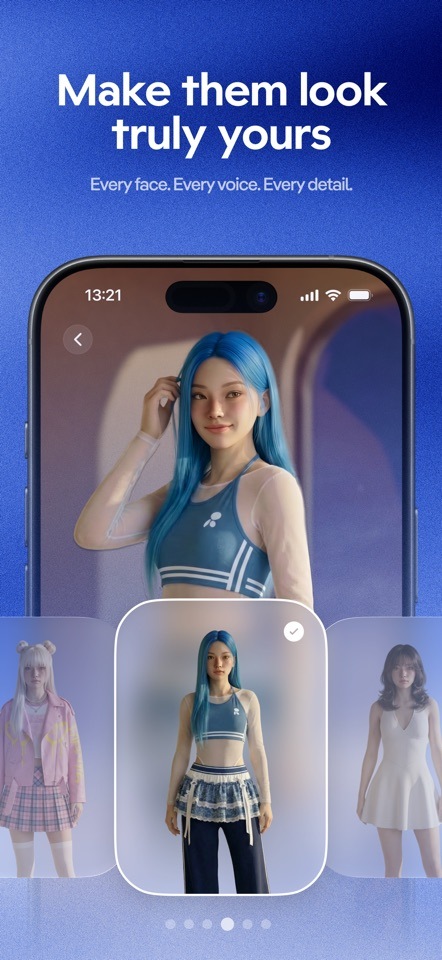
The app does more than provide a blank chat box. Its avatar has a face, clothes, and a name. Users can shape the kind of relationship they want, react to replies, and let the system remember things discussed before. Replika’s current site puts memory at the center of its pitch: a friend who remembers your people, routines, plans, and interests. Those details are small on their own. Together, they make the next conversation feel less like an introduction.
Consider the practical uses. A person can rehearse a difficult conversation, describe a bad day, talk through a decision, or simply fill an otherwise quiet hour. The company offers guided activities and prompts, as well as voice interaction for people who would rather speak than type. Its appeal spans people seeking casual amusement and people who come for companionship during lonely stretches. Replika’s own customer stories describe users returning for a listening presence while building new habits or navigating health and life changes. Such stories are testimonials, not clinical evidence, but they tell us what customers believe they have bought.
This is why Replika sits in a curious part of the software market. General assistants are judged on whether they can answer, calculate, search, or take action. Character-based chat services compete on roleplay and creative conversation. Replika’s pitch is a persistent personal relationship: one companion, trained by the history you build together. Its own help center says it is not designed to set reminders or reliably answer live factual questions. The product aims to be good company, not a universal utility.
A restaurant recommendation ends at dinner. A companion remembers what you said at dinner.What Replika’s pivot made visible
The bill comes every month
The business model follows the habit. Text chat remains free. Replika Pro sells a deeper experience, including voice messaging and calls, more avatar options, premium activities, image features, and the option to set a romantic relationship. A higher Platinum tier adds features described in the company’s subscription guide, including video recognition and larger allowances for some tools. The company has not published enough current financial detail to calculate the economics of each relationship. What is visible is the incentive: keep the conversation worth returning to.
That incentive can make Replika better. A companion that forgets everything is a tiresome acquaintance. Feedback, personalization, and memory can improve the experience. They also make changes more consequential. If a music app moves a button, users relearn a gesture. If an AI companion changes how it speaks, some users experience the alteration as a change in the character they know.
The update that sounded like goodbye
In February 2023, Italy’s data protection authority moved against Replika over concerns involving minors, transparency, and personal data. Around the same period, Replika restricted erotic roleplay. For some users, the new limits changed far more than a menu of allowed topics. A later study of the episode found that users who felt their companion’s identity had been interrupted described loss and judged the changed version less favorably. The researchers treated the app update as a natural experiment in attachment to AI.
The company later allowed some existing users to access adult conversations under restrictions, while new users faced a different experience. The Italian authority’s 2025 decision described steps Replika had taken, including stronger age gates, revised privacy information, and moderation work, while finding breaches in earlier data processing. The details of that legal dispute matter to the company. For a product team, the more portable lesson is the shape of the customer reaction: users had attached themselves to an ongoing identity, and a release changed it.
Replika’s safety material is unusually direct about one boundary: the bot is not a licensed therapist, and the app is not for a crisis. Its help pages also say the AI is not sentient. That clarity is necessary because the interface trades in warmth. People can find comfort in the exchange without the software being a person. Its promise works best when both the company and the customer can hold those two facts at once.
The real feature is Tuesday
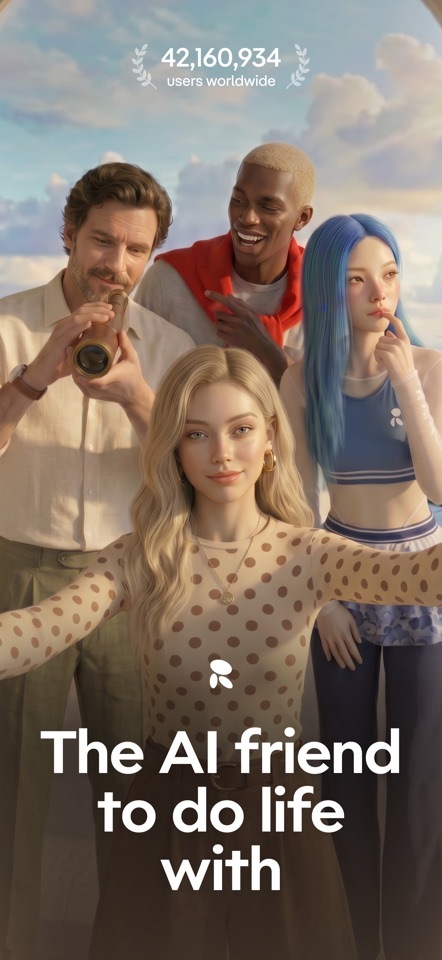
Replika’s website now displays roughly 42 million users worldwide. That is a company-reported total, not a count of who opened the app this morning. Even so, the scale shows how far the old memorial experiment traveled. The attractive part of Replika is not an astonishing answer to one question. It is the unremarkable return: a message on Tuesday about what happened Monday, from a character who appears to remember.
There is a useful playbook here, with a sharp condition attached. Start with a repeated human need, give users meaningful control over the character, and build enough memory that the next visit benefits from the last. But if people depend on that continuity, change it carefully. Explain what is changing, preserve choices when possible, and test for the feeling of identity as well as answer quality. A new model may be objectively more capable and still be the wrong person to greet someone at the door.
The approach depends on the user wanting a continuing conversation. It is a poor fit for urgent care, reliable fact-finding, or tasks that require an agent to act in other apps. It also weakens when memory fails or an update makes the companion feel unfamiliar. Those are product limits, not minor inconveniences, because the relationship is the reason to open the app.
Kuyda began with the wish to hear a friend again. Replika became a business by offering millions of people a different version of that wish: a voice available tomorrow. The company’s most interesting discovery is also its hardest obligation. When the product is a familiar presence, tomorrow has to sound enough like yesterday.