A six-year-old, a borrowed phone, and Sherlock Holmes walk into a kitchen. It sounds like the start of a small joke, but it became a useful product demonstration. Karandeep Anand's daughter had taken his device and begun talking to a Holmes character, using the conversation to invent mystery stories of her own. She was not watching a detective solve a case. She was helping one make a case worth solving.
For Anand, the scene captures the promise inside Character.AI more neatly than a technical diagram could. A character can be a conversational partner, certainly, but also a doorway. Step through and there may be a plot, a voice, a world, a game, or an invitation to improvise. The text box is merely the front door. No one praises a house for its hinge.
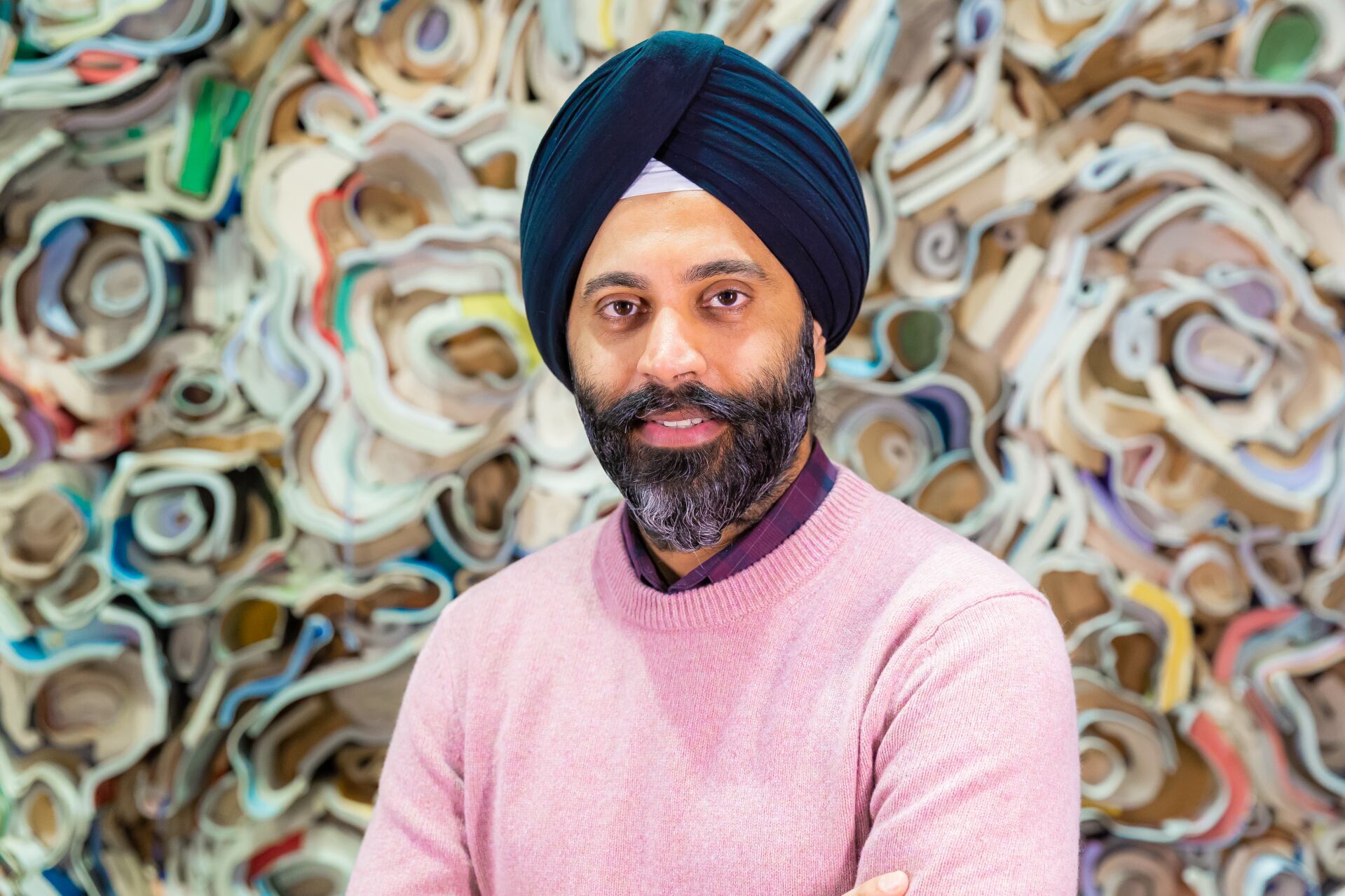
Anand became Character.AI's chief executive in June 2025, after roughly nine months advising its board on product strategy and user experience. He arrived with the résumé of a practiced platform operator: 15 years at Microsoft, product leadership at Facebook and Meta, then the top product job and presidency at Brex. The sequence runs from software infrastructure to global networks to financial operations. His current canvas is odder and more intimate: characters that answer back.
The platform apprenticeship
Anand studied databases and data mining at the International Institute of Information Technology in Hyderabad. At Microsoft, he eventually led product management for Azure cloud and developer-platform initiatives. It was an education in hidden machinery: the services, interfaces, and choices that let other people build. Platforms are peculiar products. Their success is measured partly by what strangers manage to make on top of them.
He moved to Facebook in 2015 and worked across payments, gaming, analytics, commerce, infrastructure, Workplace, and business products. By the time he led Meta's business-products group, its reach extended across more than 200 million businesses and products including Ads, Messenger, Instagram, Workplace, and WhatsApp. The scale is the sort that turns an edge case into a crowded city.
Brex brought a different discipline. Anand joined as chief product officer in 2022, helped build the AI-powered Brex Assistant and Empower spend-management platform, and later became president. He also encountered a familiar sickness of successful product organizations: too many worthy ideas occupying the calendar at once. The remedy was not a more decorative roadmap. Brex moved toward three or four major releases a year, each organized around no more than three big themes.
Cloud and developer platforms, including Azure product strategy.
Workplace, commerce, payments, and products for more than 200 million businesses.
Chief product officer, then president; fewer releases and sharper operating themes.
Chief executive, building a wider interactive-entertainment platform.
The lesson travels well. Focus is not austerity for its own sake. It is how customers notice that a team has made a decision. “Every company strives to build great products,” Anand once wrote, “but not every company succeeds at building great customer experiences.” He was discussing enterprise software, where mediocrity has often dressed itself in a lanyard and called the meeting mandatory. His point was plainer: people do not surrender their taste when they arrive at work.
“The best products are the result of a bold vision - you have to truly believe that there is a different and better way of doing things than what the world has seen before.”Karandeep Anand, writing at Brex
Four verbs and a universe of nouns
At Character.AI, the product has been teaching its makers what it wants to become. It began as a place to role-play with AI characters. Users stretched characters into stories, stories into worlds, and worlds into a mixture of image, voice, video, and play. Anand has compressed that evolution into four verbs: Chat, Read, Watch, Play.
The order matters less than the motion. A passive audience receives a finished object. An interactive audience is forever reaching for the handle. Character.AI's recent experiments make those handles visible. Its Books format turns public-domain novels into playable narratives. Its Series format offers short vertical dramas, then keeps the cast available for conversation after an episode ends. Lorebook gives a character structured knowledge about the people, places, and events inside its world.
The ambition is to make the character persistent across forms. A figure you meet in a chat might appear in a video, inhabit a book, remember the rules of a fictional town, and become the center of somebody else's remix. Traditional media franchises do this through sequels, licensing, and large production budgets. Software proposes a cheaper, stranger route: let the audience participate in the continuity.
Anand calls the destination a platform for AI entertainment: somewhere people can chat, watch, read, listen, play, and create around characters and stories they care about. This language places Character.AI somewhere between a game studio, a fan-fiction archive, a social network, and a toolbox. It also reveals the durable idea beneath the fashionable one. The artificial intelligence can generate. The community supplies taste, attachment, and the gloriously specific desire to know what a side character did after lunch.
Fans are not a rounding error
Anand's public writing has increasingly focused on fragmented fandom. The old entertainment machine hunted the largest possible blockbuster. The newer one must also understand smaller obsessions: the overlooked relationship, alternate ending, fourteen-second clip, or secondary character with a devoted constituency. Niche is no longer a waiting room on the way to mass culture. It is often where culture lives.
This explains the emphasis on creator tools. Character.AI has introduced audience insights, following, leaderboards, model guides, and world-building aids. These features sound less cinematic than video generation, but they may matter more. A medium becomes an ecosystem when creators can learn what resonated, gather an audience, and make the next thing with greater fluency.
The concept echoes Anand's platform apprenticeship. Azure gave developers infrastructure. Meta gave businesses distribution and communication tools. Brex gave companies an operating layer. Character.AI aims to give storytellers and fans a harness for characters and worlds. Different users, same underlying question: what can another person build because this product exists?
“Our goal is to create the platform for the future of AI entertainment - a place where people can chat, watch, read, listen, play, and create around the characters and stories they love.”Karandeep Anand
The operator meets the unknown
Character.AI reported 20 million active users, many of them young, spending substantial time inside a medium whose conventions are still wet paint. The company must improve models, memory, discovery, creator economics, multimodal tools, and business models while setting clear boundaries for different ages. Each subject could consume a strategy off-site and several innocent whiteboards.
Anand's response has mixed speed with limits. Soon after taking the role, he promised work on memory, model quality, search, character creation, audio, and video. The company later restricted open-ended character conversations to adults while continuing to offer younger users more structured creative formats. Anand has framed that choice as accepting responsibility even when it costs engagement. A platform that wants to host imagination also has to decide where improvisation ends.
Meanwhile, the technical center of gravity has shifted. Character.AI no longer treats building a proprietary frontier model as the whole mission. It can use strong open models and compete through characters, experience, multimodality, community, and the connective tissue between them. The move is less romantic than declaring a race toward general intelligence, but perhaps more legible to a product leader. A model is an engine. People buy a journey.
This is where Anand's career becomes useful rather than merely impressive. He has seen infrastructure mistaken for experience, distribution mistaken for affection, and volume mistaken for progress. He has also learned to turn a vague promise into an operating cadence. Character.AI's opportunity is enormous because the form is unsettled. Its danger is exactly the same.
A story with handles
The most compelling version of interactive entertainment may not resemble a better chatbot. It may resemble a story that notices you. A book can admit your choices. A show can let you question the cast. A character can carry a world's lore from one format into another. The audience stops being a pair of eyes and becomes a source of decisions.
The kitchen-table Sherlock Holmes anecdote lingers because it makes all of this modest. A child wanted to invent a mystery, and conversation lowered the drawbridge. No elaborate toolchain was required. No course in prompt engineering interrupted snack time. The interface understood enough of the game to keep the game moving.
Anand now has to turn millions of moments like that into a coherent company. The Microsoft years say he understands foundations. Meta says he understands scale. Brex says he values focus and hard numbers. Character.AI will test whether those skills can serve something less tidy: the human appetite to enter a story, rearrange the furniture, and invite a favorite character to stay for one more scene.
The product lesson: watch what devoted users are already bending a product into. Their improvised behavior may be the clearest draft of the next roadmap.