Jordi Torras had a small administrative problem, the sort that can consume an unreasonable amount of a perfectly good afternoon. His billing settings showed the right information. His payments told a different story. For someone who had spent years building software to improve customer service, this was an inconveniently useful experiment.
In September 2026, he described handing the matter to an AI agent. It checked the records, opened a support conversation and explained the discrepancy. When the human representative suggested changing the settings, the agent pointed out that they were already correct. It stayed in the conversation while the representative investigated, answering the periodic checks that someone was still there. Torras stepped back in for authentication when required.
Eventually, the representative confirmed a correction to a separate billing record. The next payment would be the real test. The episode gave Torras a concrete example of something he now wants businesses to understand: fluent conversation is only one part of service. Someone, or something, must have access to the records and permission to finish the work. A beautifully phrased instruction to revisit the wrong settings remains an instruction to revisit the wrong settings.
Before the chatbot, there was a consultancy
Torras was born in Sabadell and studied computer science at the Autonomous University of Barcelona. The route from technical work to running a company began with his brother Pep. Together they built SBD, a Barcelona professional services business that had about 200 consultants by 2004 and was acquired by France’s Alten Technologies. It was an education in selling expertise, hiring people and turning technical ability into something customers would buy.
He also went looking for a more formal business education. In an account for EADA, he explained that technical knowledge had left gaps in finance, innovation management and human resources. The Euro*MBA supplied a broader view of leadership and international markets. He later took Harvard Business School’s Leading Professional Service Firms program in 2004. The distinction matters: this was executive education, alongside an MBA earned elsewhere.
The early Inbenta did consulting and worked with other companies’ software. A company selling people’s time can tailor each assignment to the client. A company selling a product must decide which requests belong in the product at all. Torras would come to regard that loss of flexibility as the price of building something that could serve many customers. The choice sounds tidy in retrospect. While making it, a founder still has payroll.
A question is more than its keywords
Inbenta began in 2005. Its eventual focus was an everyday failure of company websites: the answer existed somewhere, but the search box could not connect a customer’s words to it. A business might organize information in its own vocabulary while the customer used an entirely different one. Everyone could be spelling correctly and still fail to communicate.
By 2011, the team was questioning whether integrating third-party keyword search could solve that problem. Search specialists and computational linguists worked together on searching by meaning. The move toward proprietary software turned a services business into a software subscription business. Linguists belonged beside programmers because the difficulty involved language as well as code.
Torras’s explanation of innovation in 2019 was practical. Build a prototype promptly, test it against real needs, learn, and repeat. He also insisted on structured, documented software. Speed was useful only if the resulting product could still be maintained. It is a less cinematic prescription than the lone inventor’s revelation, but a customer with a broken search box is unlikely to demand a more cinematic one.
California was a decision, not a slogan
In 2012, Torras joined a Barcelona Chamber of Commerce trade mission to Silicon Valley. He decided to move there with his family. Inbenta had been financed through the proceeds of its consulting work; international expansion meant taking a product shaped in Spain into markets with different commercial expectations. For language software, France and Brazil were natural early directions because of their linguistic connections.
The move also made the founder’s own life part of the expansion plan. Selling internationally from a distance and relocating a household are different commitments. California put him nearer the market he wanted to enter. By 2019, Inbenta’s footprint extended across Europe, the United States, Latin America, Japan and Australia.
In January 2023, Inbenta announced $40 million in funding led by Tritium Partners, with Melissa Solis as CEO and Torras as founder and chief innovation officer. At that point, its technology served more than 250 brands in 35 languages. Those are company milestones rather than a valuation of its founder. They also mark a change in the story: the business Torras started was entering a phase with another person in the chief executive’s chair.
The exit had an awkward silence
A successful exit is usually presented as a final scene. Torras’s description of leaving Inbenta lingered on the following morning. He had lost daily contact with the busy working environment that had organized years of his life. The financial and professional milestone came with a sudden absence of familiar colleagues and conversations.
Writing at the beginning of 2024, he described finding a new rhythm through teaching at EADA and ADEN. Executive education brought him into contact with leaders from other industries. It also opened a route into advising businesses on deploying AI, work that had been harder to pursue while running his own company. He could examine problems beyond one platform’s product roadmap.
His faculty biography records the Inbenta chief innovation officer and board role from December 2022 to August 2023. His work now includes directing AI for Business programs at EADA and ADEN. The chronology gives the familiar founder title some useful context. Inbenta is an essential part of his career; teaching, consulting and a new company explain where his attention has gone since.
“Fun fact: I play bass guitar in a blues band!”Jordi Torras
An AI talk, with the paperwork left in
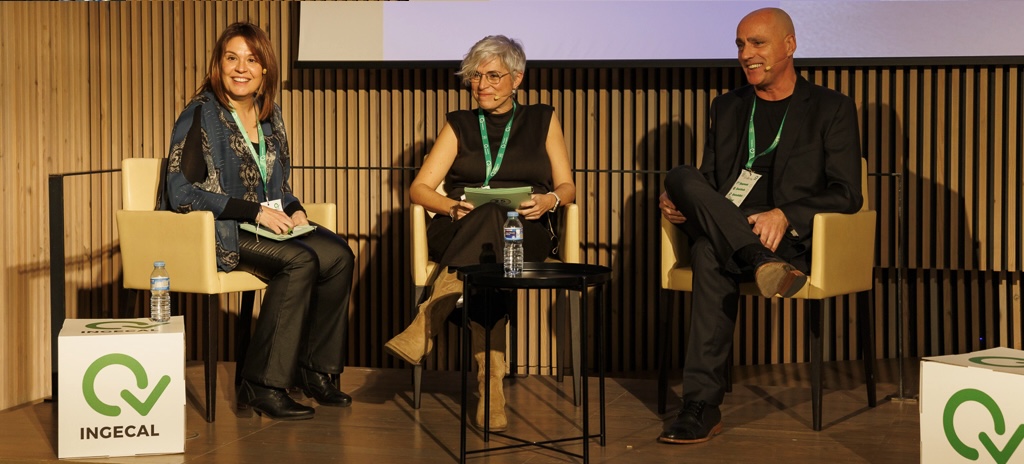
At an Ingecal event in 2025, Torras brought an unusually grounded story to a discussion of artificial intelligence: getting a small business through ISO certification. He recalled having to learn what the process demanded and finding people who could help. Later came another certification challenge, this time around information security. The lesson was about method, support and doing the work.
He also named HAL 9000 as his favorite fictional AI. The attraction, in his telling, was that HAL appeared as a voice and a camera lens rather than a humanoid machine. It is an apt choice for someone whose products live in language and interfaces. Fortunately, enterprise customers tend to ask for a somewhat more cooperative implementation.
There is another useful detail outside the classroom: Torras plays bass guitar in a blues band. It is a modestly revealing counterpoint to the public speaking and founder biographies. A bass player can be heard without constantly demanding to be watched. The analogy is tempting for software intended to keep operations moving, although the band membership itself is the fact; the metaphor belongs to the listener.
A new company with an old place-name
In 2026, Torras founded Guanta. The name comes from the creek and castle near Sentmenat, outside Barcelona. The company also takes a visual cue from the guanta, a spotted rodent whose name supplies a second connection. An AI business with a castle and an animal in its naming story has at least escaped the obligation to sound like a new detergent.
Guanta’s stated purpose is to put AI inside controlled, measurable business processes. Its premise is that the useful unit of work extends beyond a person chatting with a model. Repeated administrative steps, internal systems and decisions have to connect. The company describes a product and a specialist team intended to help make those connections.
Torras calls the people who move information between spreadsheets, documents and inboxes “human middleware.” His argument is that much apparently manual office work contains a software process waiting to be built. For Guanta, he sets out three concerns: automating the process, making its actions visible and adapting to the customer. These remain his aims for the business, rather than proof that every workflow can already be handed over.
- 01AutomateConnect the steps
- 02ObserveSee what happened
- 03AdaptFit the customer's work
The question after the answer
The recent Torras is as interested in dependability as capability. In October 2026, he wrote about being asked to choose another model because the selected one was at capacity. For an occasional experiment, that is an irritation. For a company organizing work around an AI service, it raises questions about continuity, quality and who knows when a fallback has occurred.
His proposed availability target for critical workflows starts at 99.95 percent, with the requirement varying by the consequences of failure. Simple arithmetic makes the concern tangible: in a 30-day month, 99.50 percent availability permits three hours and 36 minutes of downtime; 99.95 percent permits 21 minutes and 36 seconds. These are illustrations of percentages, rather than measurements of anyone’s experience.
That same month, his podcast conversation with AI governance and privacy specialist Francesc Aguilera examined how organizations choose uses, decide acceptable risks and keep people accountable. It fits the questions running through his new work. Who can act? What can they change? How will anyone know what happened?
The billing episode offers a suitably small ending. A record needed correcting. An assistant kept the conversation moving. A person with access confirmed a change. After years spent helping software understand what customers meant, Torras is building around what follows. The answer has to survive contact with the office.