Sylvain Perron had helped make the software complicated. Then he had to explain it. At Protorisk, where he became chief technology officer, customers using a financial risk-management tool kept asking how to get things done. The requests were repetitive. The work of answering them was repetitive, too. An analyst could express a need in ordinary language; the computer required instructions. Perron occupied the gap between the two.
There is a particular indignity in building a machine to do useful work, then becoming its interpreter. Perron began wondering whether the machine could handle more of the translation itself. The internal project that followed became the starting point for Botpress. A business concerned with the future of human-computer interaction began with something considerably less glamorous: another question in the morning.
That beginning still matters. Today, Perron is Botpress’s co-founder and CEO, working on the systems businesses use to build and operate AI agents. The vocabulary has changed over the years. The basic grievance is easy to recognize. Software offers people an extraordinary number of things to do, then asks them to become reasonably accomplished students of the software.
A library book, then a different syllabus
Perron grew up in Dolbeau, in northern Quebec. A computer arrived in his life when he was ten; a programming book in his elementary school library supplied a way into it. He began writing C++ as a child. It was a demanding choice of introduction, rather like deciding to learn cooking by opening a restaurant.
He went to Quebec City for university, studying software engineering at Université Laval. He left before completing the degree. His account of the decision is characteristically practical: during his third year, carrying substantial debt, he read that Google would no longer require a degree for programming jobs. He decided to enter the workforce.
The move put him among customers whose problems resisted tidy classroom boundaries. Financial software could contain the necessary functions and still be difficult to use. More features added more possibilities, and more possibilities could leave users lost. Perron’s early work supplied a durable question: how much of the burden of understanding should belong to the person using the machine?
“For me, it’s a way to solve problems.”
Sylvain Perron, on entrepreneurship
The project leaves the building
Perron has described entrepreneurship as something his interest in solving problems led him into. He did not begin with a lifelong determination to own a business. Programming let him turn ideas into working things; doing that at a larger scale eventually required other people. The company followed the work.
In January 2017, he released Botpress as an open-source project on GitHub. The timing placed it amid growing enthusiasm for chatbots, but the project already had a concrete purpose. Developers needed usable tools for creating conversational software. Perron had encountered the absence of those tools himself.
Opening the code invited people outside his own workplace to decide what it could become. The audience now included developers with different customers, different systems and different ideas about a useful conversation. A local frustration had acquired a public working life.
- 2017Botpress goes public on GitHub.
- 2023The cloud platform launches; the product is rebuilt around LLMs.
- 2025A US$25 million Series B funds further infrastructure work.
- 2026Botpress Desk brings AI and human support into one workspace.
Friends with a taste for difficult problems
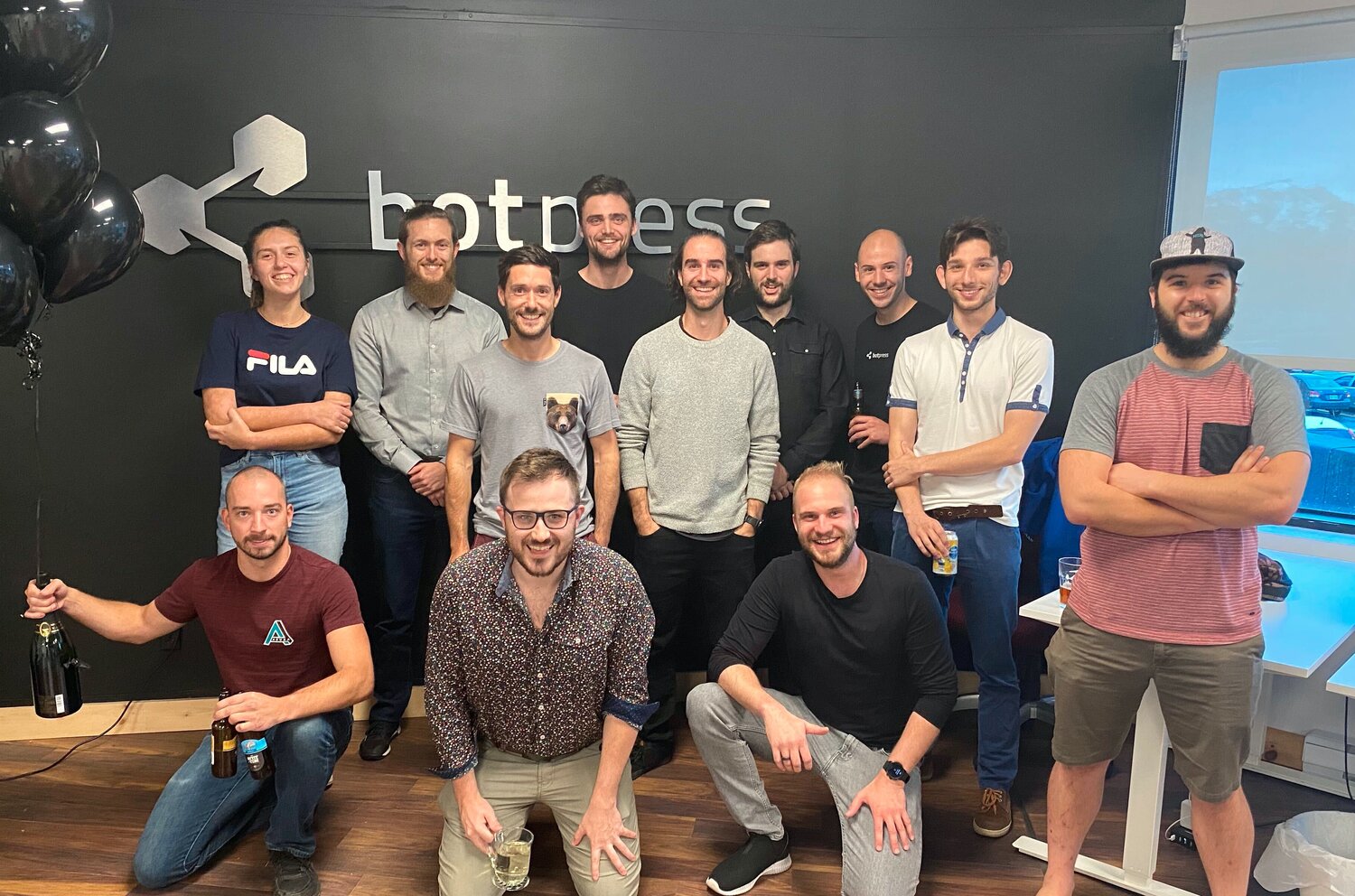
Some of the people who helped turn Botpress into a company knew Perron before there was much company to speak of. François-Xavier Darveau remembers meeting him in college, working on hacks and taking part in hackathons together. They later pursued separate projects. As Botpress gained traction, Perron called.
Darveau’s recollection is an invitation between people with a history of making things together. Perron wanted help building a company that could scale. Darveau had his own dissatisfaction with the state of chatbots. Their earlier habit of solving problems together had found a new address.
Another developer, François Levasseur, remembers being recruited through an appeal to technical curiosity. Perron summarized familiar development work as moving data into a database, retrieving it, and putting it on the front end. Then he described the harder problems waiting at Botpress. Levasseur remembers being unable to resist the challenge.
These accounts give the CEO a more particular shape than the usual collection of executive adjectives. He could make an invitation sound like an interesting assignment. For an engineer bored with familiar work, that can be persuasive. The promise carries its own obligation: once people arrive, the problems must remain worth their attention.
Letting other people build
By 2021, Botpress reported that more than 100,000 developers had used its tools and that its GitHub repository had passed 9,000 stars. The figures described an audience much larger than the original internal project. They also suggested how much depended on people Perron would never personally recruit.
The company announced a $15 million Series A led by Decibel, with Inovia Capital participating. Its plans included further investment in the developer community and additional tools for conversational applications. Advisors included people with experience at software businesses such as InfluxDB, Algolia, Snyk and HackerOne.
That same year, Botpress formed a partnership with Mila, the Quebec AI research institute. Perron welcomed the opportunity to collaborate on natural-language-processing research. His ambition connected a research problem to a product problem: advances in understanding language needed to reach developers who were trying to build something useful.
The distinction matters in his story. A founder can be fascinated by what a model is capable of and still spend much of his working life worrying about the tools around it. Someone has to turn a technical possibility into an application that another person can actually operate.
His public developer accounts give that interest a less ceremonial form. On npm, the handle slvnperron is attached to utilities for working with AWS services as well as Botpress packages. His GitHub gists include a TypeScript table-domain extractor from 2024 and older examples for customizing web chat. These are small pieces of a working programmer’s world: logs, data, interface behavior. They make a useful companion to the funding announcements. The ambition to change how people use software has always required attention to how software is put together.
When the foundation changes
In 2023, Perron discussed rebuilding Botpress around large language models. The decision meant revisiting an existing conversational AI platform as the capabilities underneath it changed. His discussion ranged across accuracy, consistency and lessons from moving to an LLM-first approach. A new foundation brought new possibilities and new practical questions.
The company launched its cloud platform that year. By June 2025, it was announcing another financing round: US$25 million in Series B funding, led by FRAMEWORK, with participation from Inovia Capital, Deloitte Ventures, HubSpot Ventures, Decibel and existing investors. The intended uses included platform development, global customer support and expansion of engineering and commercial teams.
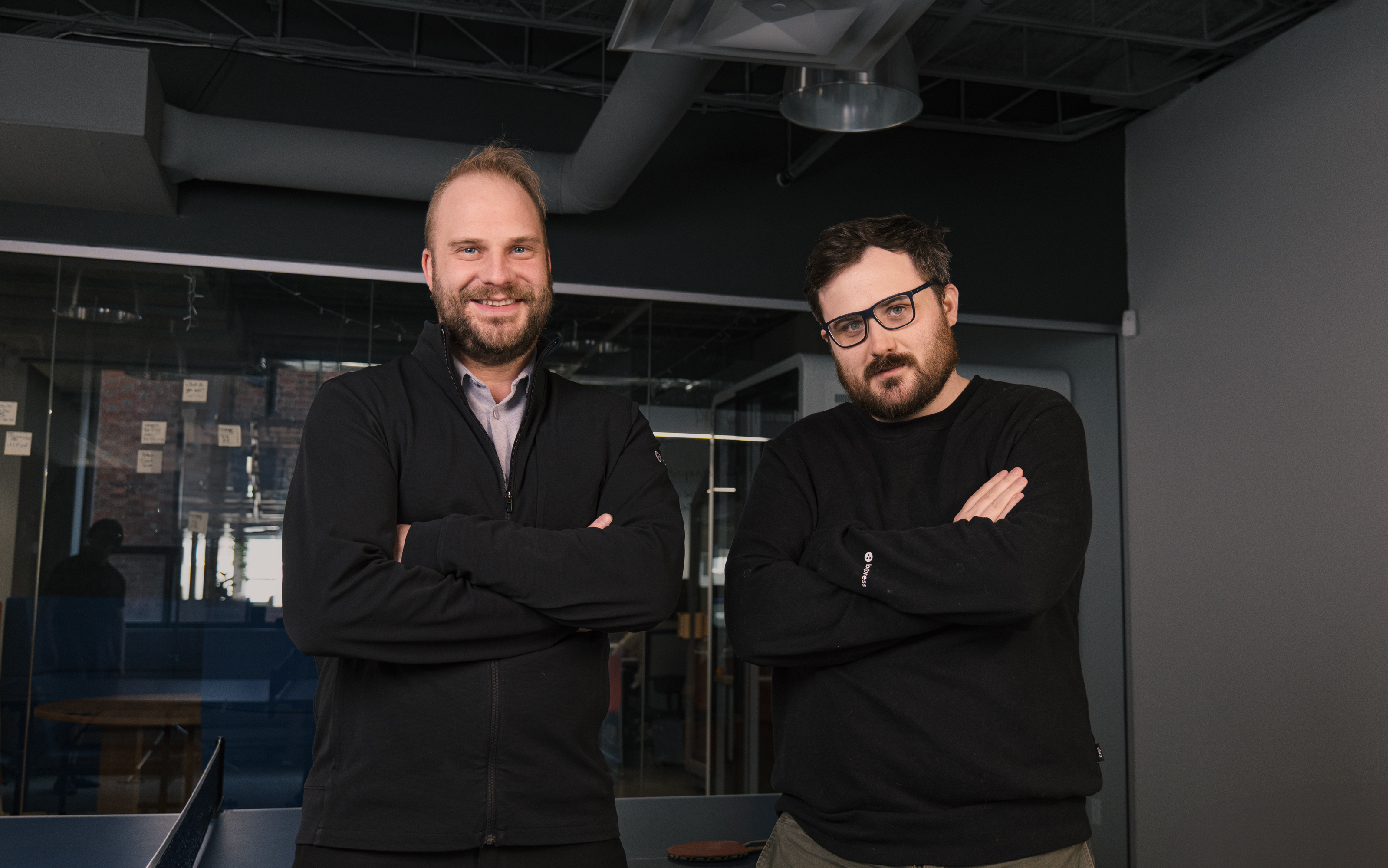
Perron’s explanation for the financing concentrated on the machinery between a language model and a business system. Better models could reason about more things, but companies still needed ways to control agents, connect them to existing tools and run them dependably. He wanted the funding to extend that work.
He also argued for keeping visual tools and programmatic control together. Some teams begin with templates; others need to connect an agent deeply to their own systems. In his view, a deployment works better when the people responsible for its results can participate in shaping its behavior.
There is a continuity here with the original project. At Protorisk, the difficulty was getting from a customer’s request to the operation that would satisfy it. The later platform work concerns what must happen around that operation so a business can rely on it repeatedly.
Back to the support queue
Botpress introduced Desk in June 2026. The helpdesk puts AI agents and human support staff in a shared environment, with access to the conversation’s context. Perron’s argument concerns what happens when automation reaches the edge of its competence and a person takes over.
A handoff can lose information. It can also lose an opportunity to improve the next answer. Desk is designed to keep the AI involved as a human investigates and resolves a ticket, allowing that work to inform subsequent assistance. The aspiration is a support operation that accumulates useful knowledge rather than repeatedly starting over.
For Perron, this makes the human part of the system consequential. A difficult customer question can reveal something the existing automation does not yet know. The design question becomes how to preserve the value of the person’s work after that particular conversation ends.
Company-reported figures for a 14-month period, published by Perron in October 2026. These describe product feedback and delivery, not agent accuracy.
In October 2026, Perron took the argument further. He described customer conversations as information about the company itself: where documentation fails, which capabilities people want, and what might cause them to leave. He reported that Botpress had identified 254 distinct product issues through fourteen months of support conversations and shipped 101 fixes.
The point is more intimate than the language of infrastructure suggests. Customers explain where a product falls short in the course of trying to use it. A company that can retain and act on those explanations has a way to learn. Perron’s own business began with the same raw material: people asking questions.
There are smaller continuities, too. He has named VS Code as his preferred editor and expressed a preference for its dark theme. “I only dress in black,” he once said. Even the wardrobe, apparently, has a consistent interface.
Behind the successive versions of Botpress sits a programmer’s impatience with avoidable work. Perron has spent years expanding the scope of a question he encountered close up. A person can say what they need. How much more can the computer do to understand them?