Two copies. That was the first-week sales report for a piece of PDF software Peter Steinberger had put on a makeshift website. He had adapted a WordPress template, hosted the page on GitHub and asked people on Twitter which payment processor to use. It was an economical launch, in both money and ceremony. The buyers arrived anyway. For a developer who had taken a PDF engine from client work and made it into a product, two customers were proof of something more useful than a polished pitch: another person had the same problem.
The product became PSPDFKit. Steinberger spent more than a decade building the company around it, then stepped away. In 2025, a new personal inconvenience caught his attention. He wanted to talk to an AI agent on his computer while he was away from the keyboard. WhatsApp was already in his pocket. So he connected the two. That experiment became OpenClaw, an open-source personal agent that people could message through familiar chat apps and run on machines they controlled.
The subjects could hardly look more different. One keeps documents steady across screens; the other can act on a changing computer. The working method has a recognizable rhythm. Steinberger uses a thing, finds the missing piece and makes it. Then he puts it where others can try it. His career, from PDF pages to a lobster mascot, is a study in what happens when a developer treats his own annoyance as a product brief.
A business hidden in the page number
Steinberger grew up in Austria and studied at TU Wien. There, he helped start a Mac and iOS developer course. The early iPhone years made a useful training ground for someone who liked to work close to the machinery. Mobile software was expanding, and many established tools had yet to catch up. In interviews about PSPDFKit, he recalled turning a PDF engine developed for a client into something other developers could buy and place inside their apps.
PDF sounds like an unlikely obsession until someone has to make it work. A contract needs its seventh page to remain its seventh page. A form may contain scripts, unusual fonts or damaged structures. A reader is expected to open the file anyway. Steinberger once described how difficult it can be merely to extract text correctly from a PDF: the format predates Unicode, and a single document can contain several ways of mapping characters. This is the sort of nuisance that creates a durable software business. It also rewards engineers who can endure the details.
His team pushed the format for sport as well as work. They made a calculator inside a PDF to show what their engine could handle. In a 2019 interview, Steinberger joked that putting Windows 95 inside a PDF was on his bucket list. It is hard to imagine a better advertisement for the peculiarities of a document format that most of us notice only when a form will not open.
The original product sold well enough to change his plans. He had moved to San Francisco for a job, but the PDF project was soon earning almost as much as his salary. He returned to Austria and worked on it full time. By 2014, he faced another choice: remain a small iOS specialist or build for other platforms. He chose expansion, hired beyond his own expertise and changed the business toward recurring subscriptions. What began as a developer’s experiment became a distributed company with a broader product line.
“I’m a builder at heart.”Peter Steinberger, February 2026
The return to the keyboard
PSPDFKit, now called Nutrient, eventually took a majority investment from Insight Partners. Steinberger sold his shares after 13 years. His next chapter began with smaller projects and a renewed appetite for making things. In a June 2025 post, he wrote about sitting down with a new idea, hacking on it and realizing that his desire to build had returned. AI coding tools gave that impulse a new set of materials.
He wrote openly about how his practice changed. Instead of treating code as the only useful record of progress, he watched agents work, checked important decisions and kept an eye on the shape of the system. His preferred starting point was often a command-line tool, where a model could act, inspect results and try again. He used TypeScript for web work, Go for command-line software and Swift when the Mac itself mattered. The account is practical and occasionally untidy, which makes it more revealing than a pristine diagram of an ideal workflow.
He also kept shipping. His public writing describes a constellation of tools around agent work, from a terminal interface for coding away from a desk to utilities for watching builds and controlling a Mac. The projects were as much experiments in use as experiments in code. He described building, trying a feature, noticing how it felt and revising the idea. Even when agents wrote most of the lines, the taste test stayed human.
The assistant in his pocket
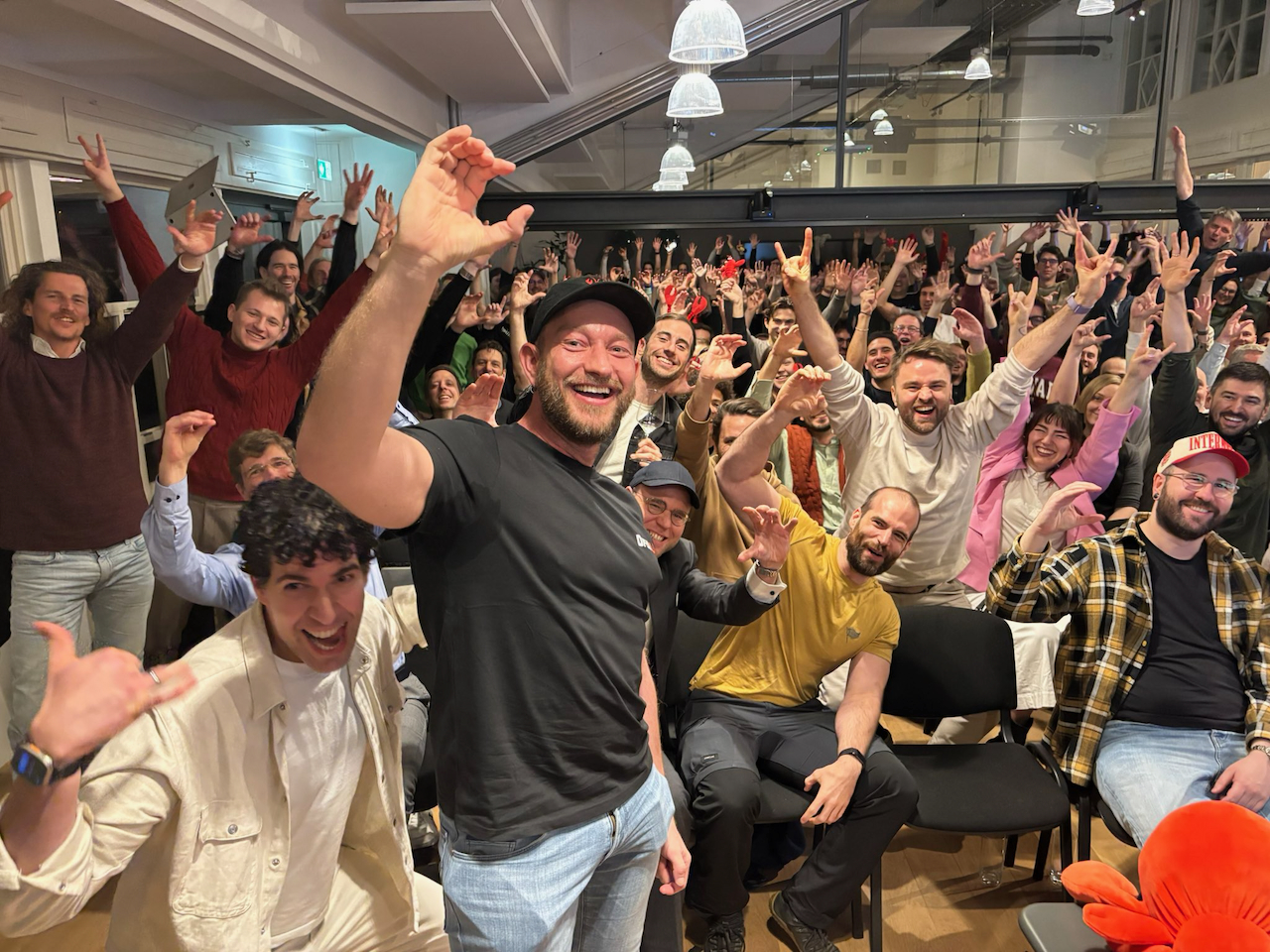
OpenClaw began with a modest wish: send a message from a phone and have an agent do useful work on a computer. Steinberger first called the project WhatsApp Relay. The interface was appealing precisely because it was ordinary. People already knew how to message someone; they did not need another dashboard to learn. The agent could live on a machine of their choosing and connect to the tools and services they already used.
The project grew quickly and changed names almost as fast. Clawd was a joke on the model name Claude and the mascot’s claw. Anthropic’s legal team asked for a change. At a 5 a.m. Discord brainstorm, the community settled on Moltbot, a nod to a lobster shedding its shell. Steinberger later admitted the name never quite rolled off the tongue. On January 29, 2026, he announced OpenClaw. By then, he said, the project had passed 100,000 GitHub stars and drawn two million visitors in a single week.
The names changed as the audience grew; the idea remained a personal agent you could reach from chat.
A wave of attention is flattering until it becomes a maintenance schedule. In that January announcement, Steinberger said the project had grown beyond what he could maintain alone. He was adding maintainers, working through a flood of issues and trying to find a way to pay people for ongoing work. Open source gives strangers a way to help, but those strangers also need time, coordination and a place to make decisions. OpenClaw was becoming an institution before its maker had finished being surprised by its popularity.
The use case still mattered more to him than the numbers. OpenClaw runs where its user chooses and can connect to channels including WhatsApp, Telegram, Discord and Slack. That gives the project its appeal and its demanding edge: an assistant that can act in a personal environment must earn trust in what it does. Steinberger has spoken about making the system easier to use and safer as it reaches people outside the community of developers willing to tinker with every setting.
A larger room for the lobster
On February 14, 2026, Steinberger announced that he was joining OpenAI to work on agents. He also made an unusual declaration for someone holding a suddenly popular project: he could imagine OpenClaw becoming a large company, but building another large company did not excite him. He wanted to keep making the thing. His stated next mission was an agent “that even my mum can use.” It is a wonderfully unforgiving standard. A demo can impress a room of engineers while leaving a parent puzzled by the first permission prompt.
He said OpenClaw would remain open and independent. That promise acquired a structure in July, when he and Dave Morin announced the OpenClaw Foundation, a nonprofit with a full-time team. OpenAI supports it, along with other donors, but the foundation describes the project as belonging to its community. A personal weekend experiment now has maintainers, governance and contributors from several companies. Steinberger remains its creator and a steward of its direction while working at OpenAI.
The arrangement fits the shape of his story. PSPDFKit taught him what it takes to make specialized software dependable for other companies. OpenClaw taught him how quickly a tool can escape its inventor’s private workflow. In one case, he had time to turn a small product into a company. In the other, the public arrived while the name was still changing. The foundation is a way to give that crowd a durable room of its own.
“My next mission is to build an agent that even my mum can use.”Peter Steinberger, February 2026
The first customer remains
It is tempting to flatten Steinberger’s career into a neat sequence of fashionable technologies: iPhone, PDF, AI. The better through-line is less glamorous. He is drawn to tools he wants to use himself. The PDF engine had two buyers before there was much of a company. The agent answered a need he felt while away from his desk. In both cases, his first test was whether the software survived contact with daily life.
That habit helps explain his public voice. He writes with the impatience of someone who would like to get back to building, yet he makes time to show what worked and what did not. He can spend paragraphs on dependency choices or the feel of an agent workflow, then sign off with “The claw is the law.” It is a playful slogan for a project that now carries very practical obligations.
The next question is whether personal agents can become ordinary enough for the person in his stated mission. The answer will depend on many people, and on details much less photogenic than a lobster: interfaces, reliability, boundaries and patient upkeep. Steinberger has worked on unphotogenic details before. A PDF page that opens correctly rarely gets applause. Perhaps that is a useful qualification for an engineer trying to make an agent people can simply use.