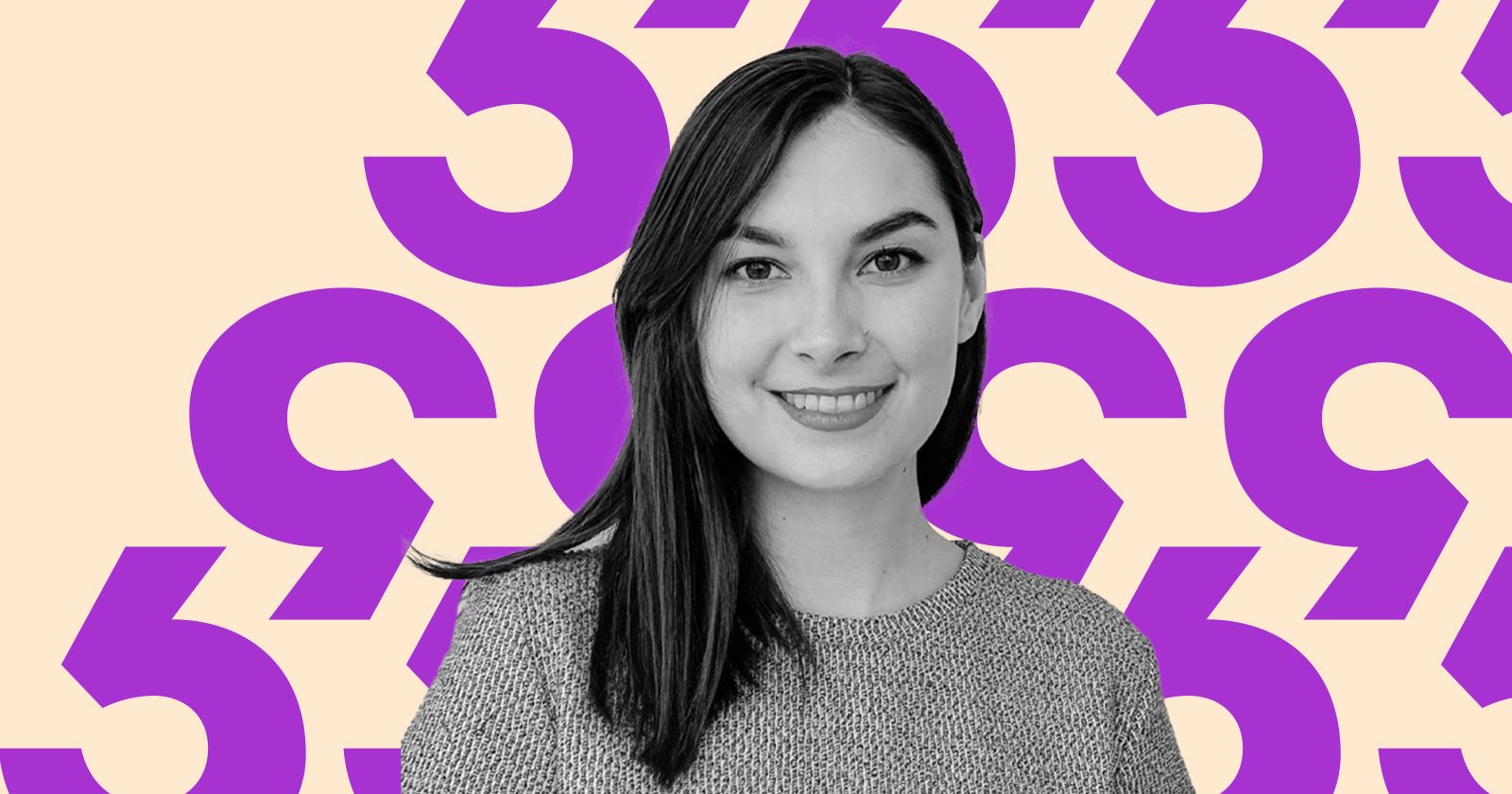
Andrea Campos had her first depressive episode when she was eight years old. For years she assumed the flatness was just who she was. "My first depressive episode was at the age of 8," she has said. "I thought I was a person who'd been born sad." Her therapist relocated, the sessions stopped, and her sleep, memory and grades slid. Through most of school, she has said, she grew up thinking she was dumb.
That is not the usual origin story for a piece of consumer software used by more than 15 million people. But it is the whole point of Yana, the AI emotional-support app Campos built after teaching herself to code. The name is an acronym - "You Are Not Alone" - and it functions less like a wellness product and more like the friend who texts back at 2am. The app that grew out of one woman's untreated depression now logs conversations by the billion across Latin America, Spain and, increasingly, the United States.
"I thought I was a person who'd been born sad."
- Andrea Campos, founder and CEO of Yana
01 / What it isThe vitamin, not the medicine
Yana is a conversational AI companion built around cognitive behavioral therapy, or CBT, and what the company calls "third-generation" techniques. At 23, Campos started CBT herself at the same time she was taking a coding course, and the two collided into a product idea: software that could walk someone through the same coping exercises a good therapist might, in plain language, on a phone. She dropped out of college to build it.
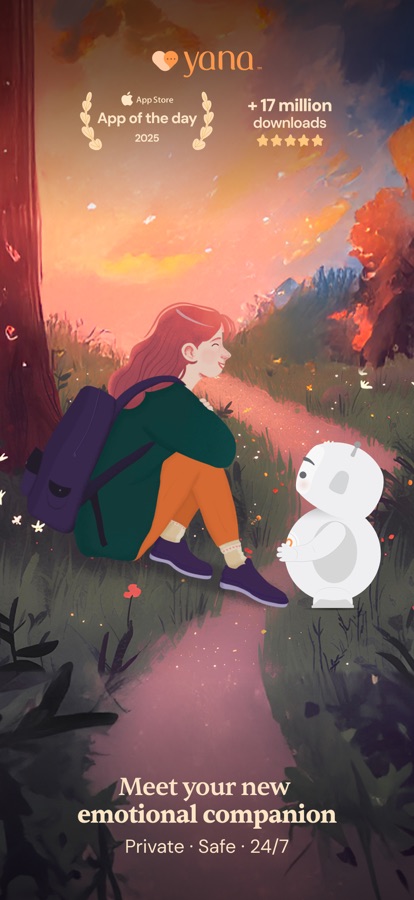
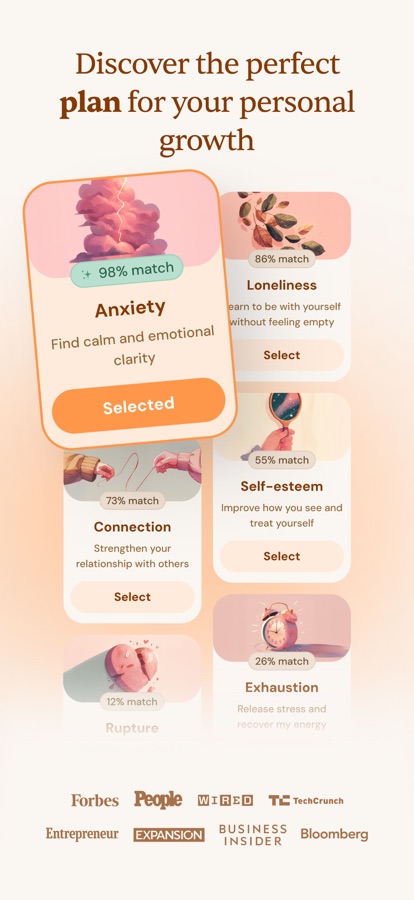
The app works like an emotional diary that talks back. Users get a non-judgmental chat companion, daily check-ins, a calendar of mood icons and a "mood evolution" graph that turns weeks of feelings into a line you can actually read. There is journaling, gratitude logging, daily affirmations and streaks. There are guided CBT "paths" for self-esteem, and assessment tests for anxiety, depression and self-esteem, with a mental check-in roughly every 14 days. A community space called Refuge lets users find each other.
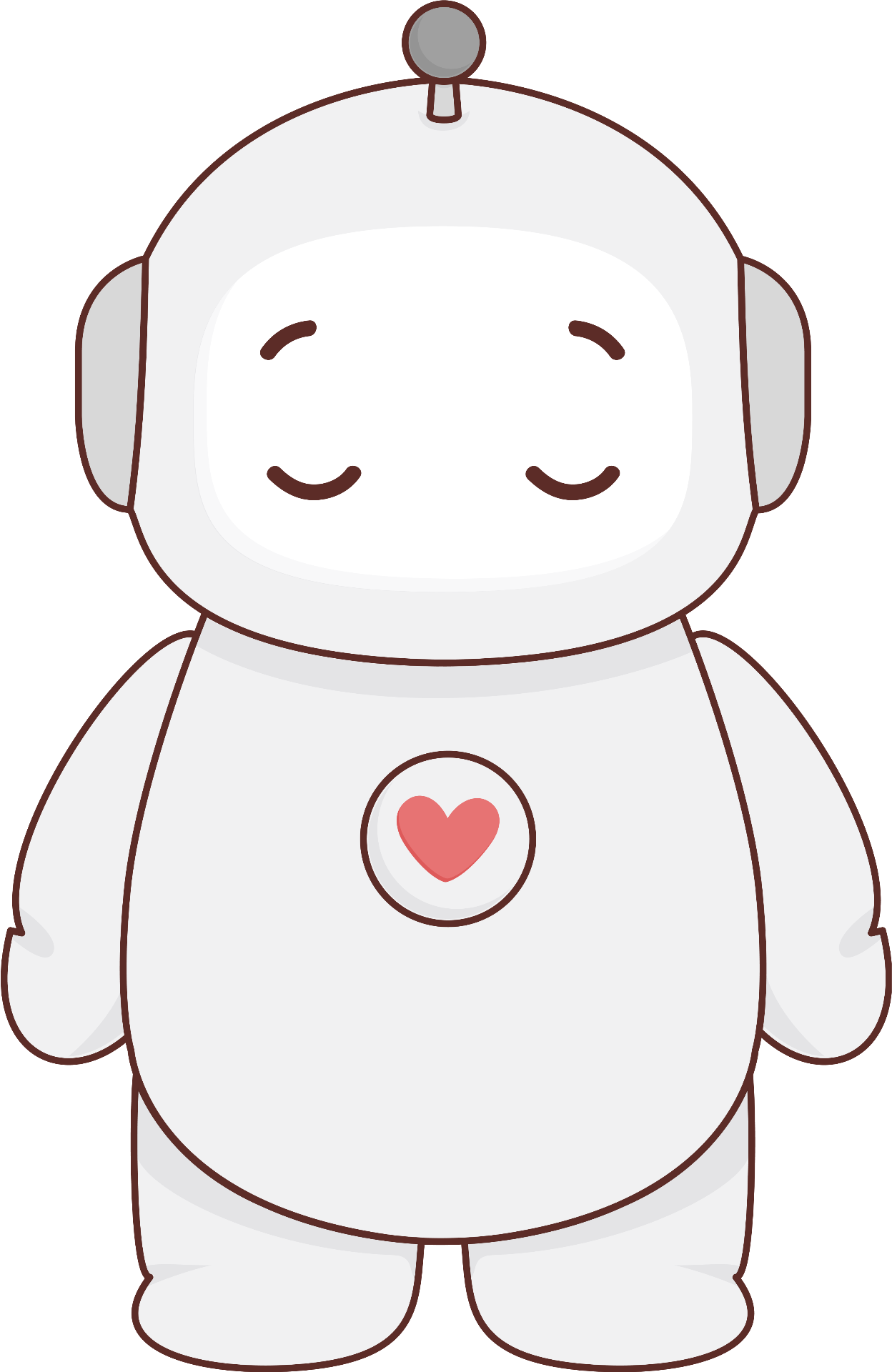
Day to day, what people actually do with it is small and repeatable: open the app, tell Yana how the day went, get a question or an exercise back, watch the mood graph fill in. Over a few weeks that produces something most people never have - a record of their own emotional patterns, the kind of before-and-after a therapist would otherwise have to reconstruct from memory. For someone managing anxiety, intrusive thoughts or a rough patch, the value is less any single conversation and more the habit of checking in at all.
Campos is careful about what Yana is not. It does not diagnose or treat; it is not a medical device. She frames it as a complement to therapy rather than a substitute. "We see a collaborative relationship in which the therapist always plays an irreplaceable role," she has said. Or, in her more memorable framing: Yana is meant to be a vitamin for the soul, something you take daily to stay well - not the medicine you reach for only in a crisis.
02 / The breakThe two weeks that changed everything
Yana launched publicly in early 2020 - by coincidence, the same week Mexico began its COVID-19 lockdown, just as an entire region was about to spend a very long time alone with its thoughts. Then, on World Mental Health Day that October, Apple featured the app. It went from roughly 80,000 users to a million in about two weeks.
What is striking is how little that growth was bought. Yana reached its first several million users essentially without a marketing budget, riding organic demand and app-store features. At points it ranked among the top three most-downloaded apps in around a dozen countries - Mexico, Spain, Chile, Ecuador, Venezuela - occasionally ahead of TikTok, Twitter and Facebook in those markets. The demand was already there. Nobody had built the thing in the user's own language.
03 / The insightNever say "mental health"
One of the sharpest product decisions Campos made was linguistic. While building Yana, she deliberately avoided the term "mental health," because for many people the phrase lands as "disorder" - something clinical, stigmatized, other people's problem. So she framed the app around things people will actually admit to: insomnia, grief, a bad week, a spiral of intrusive thoughts. Meet users in the words they already use, and they show up. "People felt safe sharing with Yana because it was a no-judgement zone," she has said.
"What I want is to combat the lack of education and tools to deal with day-to-day life."
- Andrea Campos
That framing also defines the customer. Yana's users are ordinary consumers - skewing younger, often people for whom regular therapy is expensive, distant or culturally awkward to seek out. For a lot of them, an app that asks "how are you, really?" is the first place they have ever answered the question honestly.
04 / The pivotThe founder who argued with generative AI - and lost
When ChatGPT arrived at the end of 2022, Campos was not an easy convert. Putting a large language model at the center of a mental-health conversation is exactly the kind of thing that keeps a careful founder up at night. She integrated generative AI anyway, cautiously, around August 2023. The response was blunt: weekly downloads doubled, and users sent roughly 1,900% more messages. People wanted to talk more, and the AI let them.
That same year Yana shipped its first English-language version and began shifting its identity from "Yana Mexico" and the old yana.com.mx address toward yana.ai. In August 2024 the company announced it was expanding into the US market, with Campos now operating out of San Francisco. The app that was built for Spanish speakers who had nowhere to turn was getting a passport.
05 / The moneyBig on a small budget
Yana's cap table is a lesson in capital efficiency. It started with a crowdfund of about $10,000, then roughly $315,000 from 500 Startups, Magma Partners and Hustle Fund, followed by a $1.5M seed round led by Mexican fund ALLVP in mid-2021. The business model underneath is freemium: the core app is free, which keeps the barrier to entry near zero, and a paid subscription unlocks more. For a company reaching tens of millions of people, the total raised is strikingly small - a reminder that in an underserved market, distribution can matter more than dollars.
The recognition arrived on a similar budget. Campos was named among ASEM's E-100 high-impact entrepreneurs in Mexico, reported as second overall and first among women-led ventures, and honored as a Gifted Citizen at Ciudad de las Ideas. Apple returned to Yana more than once, featuring it during Women's History Month and in a 2022 spotlight on Hispanic and Latin app creators. None of it reads like a growth strategy so much as the byproduct of building something people needed and telling the truth about what it could and couldn't do.
06 / The marketWhere Yana fits - and where it doesn't
The AI-companion and digital-mental-health shelf is crowded: Wysa, Woebot, Replika and Youper on the companion side, Calm and Headspace on the meditation side. Yana's edge was never being first; it was being Spanish-first, built for Latin America by someone from it, positioned as a companion rather than a library of breathing exercises. Silicon Valley kept building for English speakers. Yana built for the users the incumbents skipped.
That position comes with a genuinely hard question, and to its credit the company does not pretend otherwise. In 2023, Bloomberg framed Yana as testing the limits of using AI for medical care - the unresolved tension in every app of this kind. Where does emotional support end and clinical care begin? Yana's answers so far are structural: it calls itself a complement, it detects crisis and hands off to human hotlines, and it keeps a therapist in the frame as "irreplaceable." Whether that boundary holds as the AI gets better is the story to watch.
Campos's own ambitions run past the phone. She has talked about a physical Yana robot in kindergartens, helping children name their feelings early - the education she wishes she'd had at eight. It is the same idea, aimed one generation upstream.