The first version of Yana had no model, no mobile app and no polished interface. It had Andrea Campos, a phone and a small group of people receiving messages that she typed herself. For a month, the founder played the part of the product she hoped to build.
Campos sent people a list of daily activities, waited for their responses and asked how each one had landed. The test was awkward, manual and impossible to scale. It was also precise. Before automating a conversation, she learned what a useful one sounded like. Before designing retention loops, she watched real people decide whether to return.
That origin explains much of her path as a founder. Yana has changed form several times since Campos started the company in 2017: hand-operated experiment, Facebook Messenger chatbot, standalone mobile app, scripted decision-tree system and, eventually, a generative AI product. Each technical layer arrived after a more basic question had been answered by observation.
A producer learns to build
Campos came to software by a side door. Raised in Cancún, she moved to Mexico City to study entertainment business management. She once pictured herself producing Olympic events or working around NASA. The common thread was orchestration: many moving pieces, a clear audience and an experience that had to work when the lights came on.
In her early twenties, she taught herself programming. Yana began as a side project that joined her interest in code with a belief that guided conversations could be made more accessible in Spanish. She presented the idea at a three-day business-building event, then kept going after the event ended. What began as a demo became a company in 2017.
The early build was less a straight line than a series of recoveries. A developer hired with roughly $10,000 from crowdfunding lost his home and computer in the 2017 Mexico City earthquake and had to relocate. A replacement took payment and disappeared. By early 2019, Campos had reached a blunt conclusion: she would have to make it herself. She used a no-code service she described as a “Wix for chatbots,” built another version and tested it with about 700 people.
This is the part of the founder story worth stealing. Campos did not protect the purity of her job description. When the product needed a researcher, she ran the conversations. When it needed a builder, she learned the tool. When the technical plan broke, she changed the plan rather than the objective.
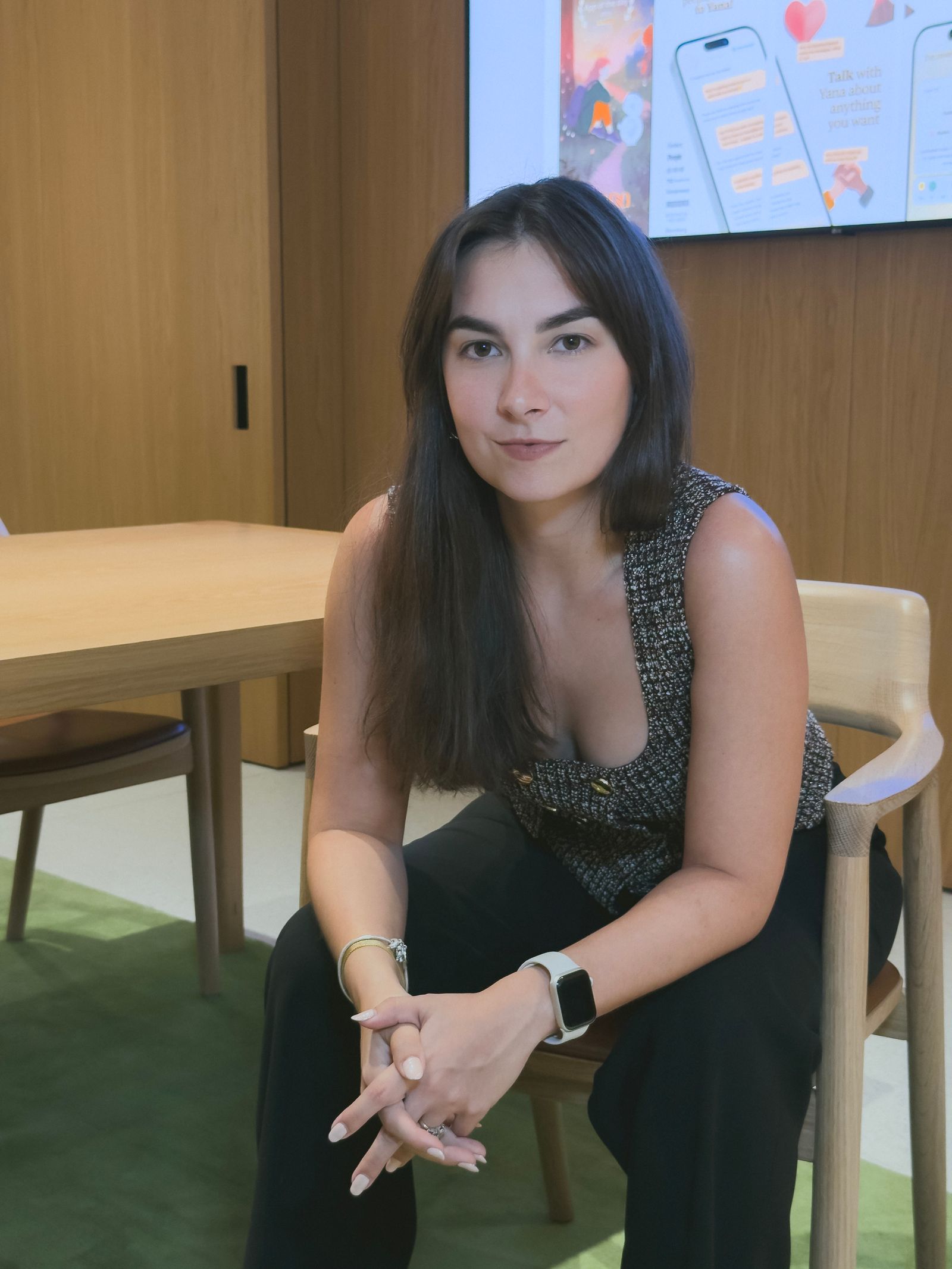
The birthday spike
By early 2020, Yana had only about three months of runway left. Campos moved the experience out of Facebook Messenger and into a dedicated app. The public launch came in March, the same week Mexico entered pandemic restrictions. Growth was steady at first. Then October 10 arrived.
Campos was away at a spa for her birthday when her phone started producing alert after alert. Apple had featured Yana in the App Store. She cut the trip short and returned to Mexico City because the servers were buckling under traffic. Roughly 80,000 users became one million in two weeks. Google later highlighted the app among its personal-growth picks for 2020, adding another wave.
The compressed version looks like a lucky break. The longer version includes three years of prototypes, crowdfunding, accelerator work, legal review, experiments and very little runway. Distribution arrived all at once; readiness had accumulated quietly. A feature can send people through the door, but it cannot make them stay.
Campos said Yana reached its first 10 million downloads without spending on marketing. Teachers, professionals and ordinary users recommended it. Social clips traveled without a paid campaign behind them. The product began with a specific audience and a language that global technology had often treated as an extension rather than a starting point. That constraint gave the company a recognizable voice.
Seven years of compounding attention
Reported user or download milestones. Measures vary by report; the shape shows the distribution arc, not audited revenue.
The model arrives late
Yana’s early conversations were built with decision trees. The system could be designed and guarded one branch at a time. Campos initially resisted generative AI because the new models did not seem ready for Yana’s use case. ChatGPT’s arrival in late 2022 changed the calculation. Waiting now carried its own product risk.
The company began testing a GPT-powered chatbot in 2023. By 2024, Campos said years of operation had produced more than two billion interaction data points that could inform fine-tuning. That history mattered because Spanish is not one neat block. Dialect, slang and cultural cues shift across countries and communities. A general model can translate words. A focused product still has to decide how it should behave.
The move changed the company’s engineering problem. Decision trees ask a team to anticipate routes. Generative systems ask it to define boundaries, evaluate unpredictable outputs and preserve a consistent voice across a much larger field of possibilities. Campos’s advantage was not privileged access to a language model. It was accumulated product judgment about the conversation around it.
That product judgment also shows up in what Campos says publicly. She has been frank about company mechanics, once posting a plea for investors to standardize their update requests instead of asking founders to reformat the same numbers across email, spreadsheets, Airtable forms and calls. It was a small complaint with a builder’s shape: identify repetitive work, define the shared data and ask why the interface still makes people copy and paste.
Changing the founder’s surface area
After years of running Yana remotely, Campos made another operational change. In late 2025, she wrote that she had begun spending real time in San Francisco. Friends wondered why she would move only to open the same laptop somewhere else. Her explanation was vivid: imagine wanting to become an actress and moving to Hollywood.
Short visits had repeatedly fallen apart just as they became useful. One introduction would lead to another, five events would land on the same day, and then she would have to say she was leaving the following week. Staying longer allowed the network to compound. The decision treated geography as a product input, not a lifestyle accessory.
Campos describes herself as private. Her feed is not a running diary. When she does offer a personal observation, it tends to reveal a working theory: proximity increases chance; founder administration wastes time when formats fragment; women building companies face different questions in fundraising rooms. Forbes México included her among its 30 business promises in 2024, where she argued that broader representation in technology and venture capital changes which problems receive attention and how investors evaluate them.
Her network has grown alongside the company. Yana passed through 500 Startups Latinoamérica and received backing from Magma Partners, Hustle Fund, ALLVP and Hi Ventures. ALLVP’s Federico Antoni first met Campos in an accelerator in 2017, then reconnected years later before leading Yana’s 2021 round. The long gap is instructive. Founder relationships often mature on a different clock from fundraising.
The next conversation
Yana eventually expanded into English, Portuguese and another language, with Campos reporting four-language availability and 2.3 billion messages by 2025. The company’s current homepage now promises “a new chapter” while keeping the existing app available. Its language is quieter than a launch announcement: gentler, more personal, still coming.
That phrasing fits Campos’s pattern. She has repeatedly changed the machinery without discarding the product’s basic form: one person opens a conversation, the software responds, and usefulness is decided message by message. The interface is simple. The systems behind it are not.
The arc from manually typing every exchange to governing an AI system is more than a story about scale. It is a shift in what the founder must notice. At the beginning, Campos observed each person directly. Now her team has to preserve that level of attention across languages, models and billions of interactions. The work has moved from writing every line to designing the conditions under which a line should appear.
The durable lesson sits inside that change. Start close enough to see the behavior. Automate only after the pattern becomes legible. Keep the constraints that made the product distinct. Then move yourself, your team and your technology toward the next source of learning. Campos has spent nearly a decade doing exactly that, one version of the conversation at a time.
Follow the next build
Yana’s product page, Campos’s public profile and selected conversations on building consumer technology.