The Story
26 Pounds of Problem
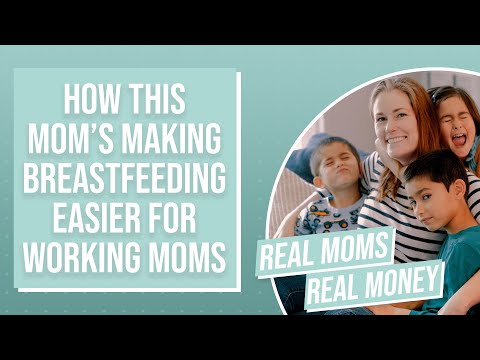
It was a four-day business trip. Kate Torgersen had 8-month-old twins at home - Finn and Zoe - and she was still breastfeeding. Her body was producing one gallon of breast milk every two days, which meant she needed two extra gallons to cover the gap while she was away. She packed Nalgene bottles, zip-lock bags, and ice. She negotiated a mini-fridge at the hotel. She pumped on schedule, in quiet corners, at odd hours. At TSA, an agent stopped her and forced her to dump the ice from two gallons of milk. By the time she landed home, her carry-on had sloshed, dripped, and weighed more than 26 pounds.
She called her father from the gate. Within a week, both had each written a $25,000 check. Milk Stork was born on Mother's Day 2014 - not from a whiteboard session or an accelerator pitch, but from genuine, still-wet fury at a logistical problem that millions of working mothers navigate in near-total silence.
Before Milk Stork launched publicly in August 2015, Kate spent more than a year building it on the margins. She was still employed full-time as Executive Communications Manager at Clif Bar - a job she'd held in various capacities for nearly 18 years. She worked on Milk Stork during pumping breaks and late at night until 1 AM. When she finally transitioned to part-time at Clif Bar in 2016, the company was already showing signs of something real.
What Milk Stork does is elegantly simple: it sends pre-labeled shipping kits directly to a traveler's hotel, complete with storage bags and pre-paid FedEx shipping labels. Each night on a business trip, a mom pumps, packs, and ships the milk home overnight. No sloshing carry-ons. No negotiating with hotel staff. No ice-bag drama at airport security. The kit is waiting at the front desk when she checks in.
The original target market was women traveling for work. Kate quickly realized the real leverage was corporate - selling Milk Stork as an employee benefit. Today, 850+ companies offer it to their teams. The service has shipped more than 7.5 million ounces of breast milk across 112 countries. A team of 23 people handles what used to require improvisation, embarrassment, and 26 pounds of improvised luggage.
Kate's path to founding a logistics company was not linear - it was fascinatingly crooked. She graduated from UC Berkeley, became a firefighter, then an archaeologist, then went back to school for an MFA at the San Francisco Art Institute. From there, she spent nearly two decades at Clif Bar climbing from field marketing to executive communications. She taught entrepreneurship and coding at General Assembly. She is, by any standard, someone who has refused to be one thing.
That refusal runs through the DNA of Milk Stork. The company is simultaneously a logistics platform, a corporate benefits product, a public health intervention, and a statement about what the workplace owes working mothers. Kate has consistently pushed back against the idea that motherhood and professional ambition belong in separate compartments. On LinkedIn, her title reads: "Mom. Also, Founder & CEO, Milk Stork." The comma is doing a lot of work.
The company has attracted serious investor attention. A $900,000 seed round in 2018 was led by Clif White Road Investments - the investment arm of Kate's former employer, which functions as a kind of institutional endorsement from the people who watched her work for 18 years. In October 2020, Backstage Capital - Arlan Hamilton's fund dedicated to investing in underrepresented founders - led a $1 million round. Total funding stands at $3.2 million.
Fast Company named Milk Stork to its Most Innovative Companies list in 2019, in the Travel category. Good Housekeeping gave the Pump & Ship product a Best Parenting Award in 2023. In 2021, Milk Stork shipped kits to athletes and support staff traveling to the Tokyo Olympics and Paralympics - 21 gallons, distributed across a workforce that included breastfeeding Olympians who, until Milk Stork existed, had to figure it out themselves.
Kate talks about entrepreneurship with the pragmatism of someone who built a company while nursing twins: pursue what excites you, move from concept to execution fast, and drop the perfectionism about timing. The right time was always inconvenient. She did it anyway. That is the company's founding logic and its ongoing operating principle.