In coastal Georgia, the problem with a water meter was that it could become a paperweight. Brunswick-Glynn’s aging reading system sometimes left the utility unable to retrieve consumption figures. Some failed meters offered no backup reading at all. Water kept moving. The evidence stopped.
- Neptune sells the whole chain: meters, communications and water-data software.
- Its practical appeal is migration: utilities can move from mobile readings to networks in stages.
- The field decides the outcome. Coverage, installation and staff response still matter.
Neptune Technology Group stepped into that gap. A September 2020 pilot put 250 mechanical meters in problem locations. Successful readings helped persuade the utility to expand. The intriguing detail is how ordinary the proof was: equipment that recorded water passing through it.
That is a useful way into Neptune, a company whose products disappear into pits and plumbing while its software appears in utility offices. Its business connects two events that residents tend to treat as one: using water and receiving an accurate bill.
A very old question, with better instruments
Neptune dates to 1892. The Smithsonian holds an early Trident meter, built from designs patented by inventor John Thomson. A bronze case and a measuring mechanism answered a question that remains commercially valuable: how much passed through this pipe?
Today the answer travels farther. Neptune supplies meters, registers, radio endpoints, data collectors and software. It reports serving more than 4,000 water utilities across North America. These are institutional buyers with service territories, replacement schedules and billing systems to keep running.
The company occupies the junction of manufacturing and utility software. It needs expertise in metrology, durable hardware, radio communication and data management. A mistake anywhere along that chain can spoil the usefulness of everything after it.
The meter is only the first purchase
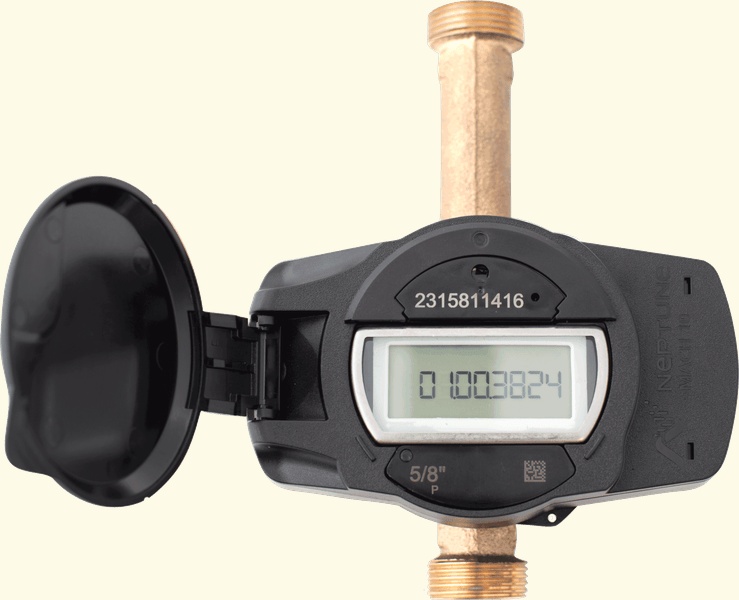
Neptune’s range includes the mechanical T-10 and the ultrasonic MACH 10. The latter measures without moving parts. Residential versions include temperature monitoring, with optional pressure sensing. Commercial and industrial versions offer a replaceable measuring element, allowing that component to be changed while retaining the maincase.
Then comes collection. Automatic meter reading, or AMR, often means workers gathering readings as they walk or drive a route. Advanced metering infrastructure, or AMI, brings those readings back through a network. Neptune offers fixed-network and cellular options alongside mobile collection.
- MeasureWater meter
- TransmitEndpoint + network
- InterpretNeptune 360
- RespondUtility + customer
Neptune 360 puts the information into a browser. Staff can inspect consumption and identify potential leaks, excessive use or reverse flow. My360 extends consumption visibility to residents. Managed services add system monitoring, storage and software access for an annual fee. Hardware sales and recurring services belong to the same business.
A utility is therefore choosing more than a measuring device. It is choosing how information reaches billing staff, how much infrastructure to maintain and how customers will understand their own usage.
The clever part is letting the old system stay useful
Neptune’s R900 approach supports mobile and fixed-network collection without reprogramming the endpoint. That makes staged migration possible. A utility can improve coverage or change collection methods while preserving compatible equipment already installed.
Competitors also connect meters to analytics. Xylem’s Sensus offers FlexNet communications and remote water-system management. Neptune’s appeal must therefore be assessed through its particular hardware, migration path, software and distributor support. “Smart” alone explains very little.
Compatibility can carry real purchasing weight. In 2024, Orange, California, authorized $400,000 for replacement Neptune meters through Ferguson Waterworks. The city’s explanation emphasized compatibility with its existing reading and billing system. Keeping a working chain intact can be more persuasive than adding another feature.
“When the meter died, it was a paper weight.”
LaDonnah Roberts, Brunswick-Glynn Joint Water and Sewer Commission
Brunswick-Glynn’s transition also encountered radio signal problems. Neptune and distributor Delta Municipal Supply addressed them with a higher-gain antenna. Even after choosing the equipment, somebody had to make it work in the actual landscape.
Put a price on the whole job
Moberly, Missouri, offers a concrete cost example. Installer Envocore reported a $2,218,661.11 contract, an eight-month duration and 5,312 installed meters. The project combined Neptune MACH 10 meters with larger Master Meter Octave meters, Neptune radios and Neptune 360.
5,312meters installed
8months
The combination matters. A connected system need not mean every component bears the same badge. It also means dividing the total by the meter count cannot produce a transferable equipment price: installation, communications and project scope sit inside the purchase.
The lesson for buyers is to ask what the contract includes, then test the assumptions behind the expected savings. Fewer reading trips, better consumption records and cloud hosting address different costs. Each deserves its own question.
Somebody still has to turn the information into work
Neptune’s careers material emphasizes safety and professional development. Its CONNECT initiatives include education for utility users. That fits the product: moving readings into software also changes what the people around the meters need to know.

The limits deserve equal attention. Neptune’s ultrasonic testing guidance warns that air and cavitation can disrupt measurements. Network coverage needs validation. A consumption alert cannot repair a pipe. Those are reasons to plan installation and response procedures alongside the software purchase.
Even the newer AI feature has a bounded job. Neptune’s February 2026 ENZO guide describes an assistant for Neptune 360 Help content. It excludes live customer-data queries and platform actions. Think help desk, with a conversational entrance.
In Revelstoke, British Columbia, the next step includes public preparation. Its June 2026 announcement named Neptune Canada as installation partner for a program supported by a C$4.46 million provincial grant. The city plans a year of mock billing before moving to volume-based charges. Residents get time to understand the numbers before paying differently. That part of the plan is worth copying too.
Follow the water
Explore Neptune, its blog and customer stories.
Watch the Neptune 360 product overview, explore the factory tour, or visit the YouTube channel.