Twenty-seven customers. That is a modest number for a company serving more than 2.2 million people. But along Harrison Road in Tulare County, the number describes a problem that a century of water engineering still has to solve, one address at a time. Private wells had gone dry. Households had spent years receiving hauled and bottled water. An earlier attempt to obtain drought funding had been denied.
- Cal Water connects homes, treats drinking water, and keeps pipes and fire hydrants working.
- The Group invested $517 million in infrastructure in 2025.
- Its hardest bargain: pay for stronger systems while keeping the monthly bill manageable.
In August 2026, California Water Service announced that those Harrison Road customers had been connected to its Visalia District. The solution involved 2,600 feet of new pipe, five fire hydrants, and more than $1.3 million in public funding. Cal Water worked with Tulare County, California’s Department of Water Resources, and Self-Help Enterprises. County recovery funds and state drought relief supplied the missing financial bridge.
This is a useful place to begin understanding California Water Service Group. The work was technically familiar. Making it happen required a utility, a county, a state agency, a community organization, and money that had previously proved elusive. A household needed water. An institution had to assemble the conditions for delivering it.
One century. A lot of buried decisions.
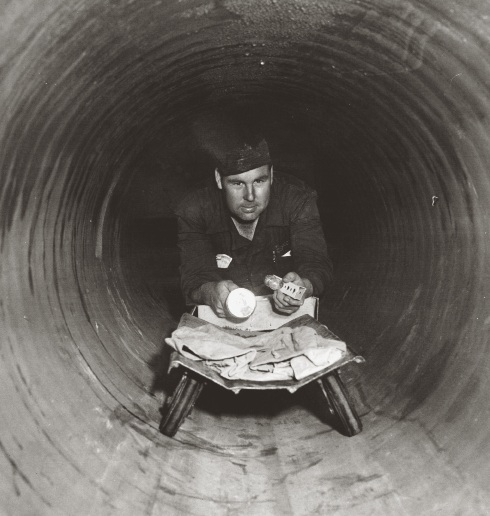
The enterprise traces its origins to 1926, when Christopher T. Chenery, Thomas Hollis Wiggin, and George Lewis Ohrstrom founded Federal Water Service. Water systems in Chico, Visalia, Bakersfield, and Fresno formed the early California business. The modern holding-company structure arrived in 1997. Expansion subsequently brought Washington, New Mexico, Hawaii, and Texas into the picture.
Today, the San Jose company owns utilities providing drinking-water and wastewater services across those five states. California is its center of gravity. Households use the water; businesses depend on it; communities need the pressure available for firefighting. Texas Water Service operates as a holding company investing through its utility interests.
The competitive distinction is geographic scale combined with local systems. American Water, Essential Utilities, and other investor-owned operators occupy the same broad market; municipal utilities represent another ownership model. These are industry peers and alternatives for communities considering ownership, rather than a menu of providers a resident can freely switch between.
The tank that became a lesson
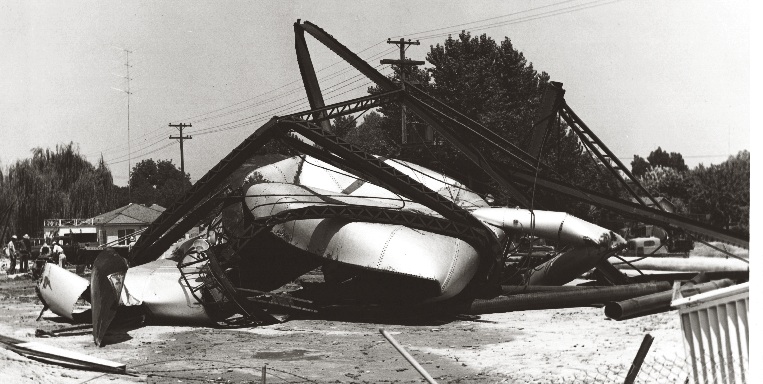
Consider Bakersfield in 1952. Earthquakes damaged the region and destroyed one of Cal Water’s elevated storage tanks. In its historical account, the company puts damage to its system at about $35,000 and says service continued uninterrupted. It also says the experience informed stronger storage infrastructure. A broken component became evidence for the next design.
That pattern is more revealing than an anniversary slogan. Water utilities inherit equipment built under earlier assumptions about earthquakes, population, contaminants, and supply. The practical question is which assumption has expired, and how quickly the replacement can be designed, approved, financed, and installed.
The bill behind the bill
In 2025, Group invested $517 million in infrastructure and recorded about $1 billion in operating revenue. Those figures describe different things: capital investment buys assets used over many years; revenue pays for service through the accounting period. Comparing them shows the scale of the construction effort, rather than a profit margin.
The business model runs through regulation. Utilities charge approved rates, recover permitted costs, and have an opportunity to earn an authorized return on eligible invested capital. Regulators decide what customers should pay. Spending money does not automatically guarantee recovery.
The April 2026 California rate decision authorized roughly $1.45 billion of pre-approved infrastructure investment through 2027, with another $229 million eligible for a separate approval process. Expected revenue increases were scheduled across 2026, 2027, and 2028. The distinction matters: an authorization describes permission and a recovery framework, not completed construction.
On Via Pavion in Palos Verdes Estates, that abstract capital program becomes 3,780 feet of new eight-inch water main. Work began in September 2026, with completion expected by late November. For the people living along the route, infrastructure investment also means traffic controls, temporary lane closures, and pavement that has to be put back. Reliability arrives with a construction schedule.
Financing has a price, too. In October 2026, Group and Cal Water priced $275 million of notes and mortgage bonds, with coupons ranging from 6.08% to 6.54%. Closing was expected by year-end. The stated uses included refinancing existing debt and general corporate purposes.
A fish has a different definition of clean
Chlorine helps protect drinking water. Released into a stream, it can harm aquatic life. Cal Water’s engineers and operations employees developed an overflow device that delivers dechlorination tablets when water escapes a storage tank. The company received its first patent for the invention in 2016.
“Replacing aging water mains is a key part of maintaining a safe and dependable water system”Ralph Felix · Rancho Dominguez District Manager
The lesson is wonderfully specific: design protection for the moment another protection fails. The device anticipates failure of a tank’s electronic shutoff. It addresses an overflow scenario, rather than every possible environmental hazard. Elsewhere, treatment evolves with the contaminants: Cal Water reported 11 completed PFAS treatment plants by the end of 2025.
Reliability has to fit the household budget
There is a second engineering constraint: affordability. Group says its California Customer Assistance Program delivered $22 million in discounts to more than 100,000 customers in 2025. Eligibility rules apply. Its workforce program emphasizes training and prevention; the company reports a 35% reduction in OSHA-recordable injuries that year compared with 2024.
Conservation changes the arithmetic at the other end of the pipe. Group reports spending more than $3.4 million on conservation programs in 2025, with estimated annual savings exceeding 100 million gallons. Those savings are a projection, rather than water already measured as saved. For an eligible household, a more efficient fixture is one practical place to begin.
Customers can read their district’s water-quality report, check conservation rebates, request eligible water-saving devices, and apply for assistance. Availability depends on location and qualification. A nearby address does not establish that a property lies in a subsidiary’s service territory.
Other organizations can copy the Harrison Road approach: identify the physical connection needed, bring public funding and local partners together, and assign responsibility for ongoing service. It depends on available supply, a feasible connection, approvals, and financing. Where those conditions are absent, the same approach may stall. Twenty-seven connections make a small announcement. For the households receiving them, the change reaches every tap.
Follow the water
Explore the company website, latest news, and district water-quality reports. Find Group on LinkedIn; follow its California utility on Instagram, Facebook, X, and YouTube.