Consider the homeowners association payment. It arrives without glamour, usually without gratitude, and with considerable consequences if it goes missing. Someone must collect it, identify it, reconcile it and make sure the roof fund remains a roof fund. For Banc of California, this administrative chore is a clue to the kind of bank it wants to be.
- Repair the funding. The PacWest combination brought a $400 million equity raise and a substantial balance-sheet cleanup.
- Know the customer’s machinery. Juice production, medical practices and community associations have different financial rhythms.
- Stay in the daily work. Deposits, collections and payments make the relationship useful between loans.
The Los Angeles company provides commercial lending, deposits, treasury management and payments for small, middle-market and venture-backed businesses. Its banking heritage reaches back to 1941. But the revealing date is November 30, 2023, when its merger with PacWest closed. To understand today’s proposition, first look at the money that had become expensive to keep.
01 / THE RESETThe money that left first
In the first quarter of 2023, PacWest’s deposits fell from $33.9 billion to $28.2 billion. Borrowings climbed from $1.8 billion to $11.9 billion. Customers were withdrawing one source of money; the bank was replacing it with another. That substitution matters because funding has a price. A loan can keep paying exactly as agreed while becoming less attractive to the institution financing it.
Banc of California and PacWest agreed to combine in July. Warburg Pincus and Centerbridge investment vehicles supplied $400 million in new equity at closing. This was fresh capital supporting the transaction, rather than a $400 million purchase price. The deal also united complementary specialties, including commercial lending and community association banking.
The repair had a bill. Fourth-quarter 2023 results included $442.4 million in pre-tax securities-sale losses and $111.8 million in merger costs. Selling assets and retiring costly funding exchanged immediate pain for a different earnings structure. The useful lesson for any operator is concrete: inspect what growth costs to finance before treating a larger business as a healthier one.
02 / THE CUSTOMERA juice factory is a banking problem
Now consider Pressed Juicery. A customer sees a bottle. A banker must see manufacturing equipment, distribution, new stores and the interval between spending money and collecting it. In the bank’s published customer account, Pressed needed to expand production at its Dinuba, California, facility as its retail, wholesale and digital channels grew.
Banc of California arranged a cross-collateralized credit structure, tying financing to multiple sources of collateral. The attraction was a structure fitted to several connected operating needs. The bank’s account credits that financing with supporting capacity and expansion. It is a specific example of what industry knowledge should produce: a financing arrangement that follows the business.
Talkiatry, another featured customer, brings a different collection of needs: clinicians, technology infrastructure and expansion across markets. Those examples explain the bank’s positioning among California commercial lenders. Its pitch rests on understanding an operation’s moving parts and bringing lending and cash management together around them.
03 / THE DAILY WORKThe homeowners association clue
SmartStreet makes that proposition unusually tangible. Community management companies can use the platform for association banking, while homeowners make one-time or recurring assessment payments. Related services include lockbox collections, remote deposits, payment searches and integration with industry software. The problem being solved is the stubborn, expensive gap between receiving money and knowing precisely where it belongs.
Assessments and customer payments enter the business.
Accounts, records and reporting make the cash legible.
Treasury tools move money; credit supports investment.
BancEdge handles merchant payment processing. The broader treasury offering covers payables, receivables, liquidity and fraud prevention. Commercial real estate, construction, equipment and small business lending supply other entry points. Personal checking and savings remain available, but the company’s stated focus is business banking.
The economics connect. Banks earn interest on loans and investments, pay for funding, and collect service fees. An operating account potentially brings recurring deposits and payment activity alongside a loan. My reading of this model is that specialist service earns its keep when the customer has a reason to use the bank every working day.
04 / THE UNFINISHED WORKThe repair bill keeps arriving
A merger does not settle the argument forever. In July 2026, Banc of California reported repositioning $2.3 billion of lower-yielding securities, beginning a selected loan-sale process and retiring subordinated debt. Securities losses were $256.7 million before tax. The quarter produced a $251.3 million loss available to common and equivalent stockholders.
Management expects the changes to improve future earnings. Expectation still needs to become performance. Credit losses, deposit competition and interest-rate changes can upset the calculation. The relationship model depends on retaining useful deposits and lending soundly; industry familiarity cannot make a troubled borrower pay. For customers, that makes the quality of execution more relevant than the warmth of a pitch.
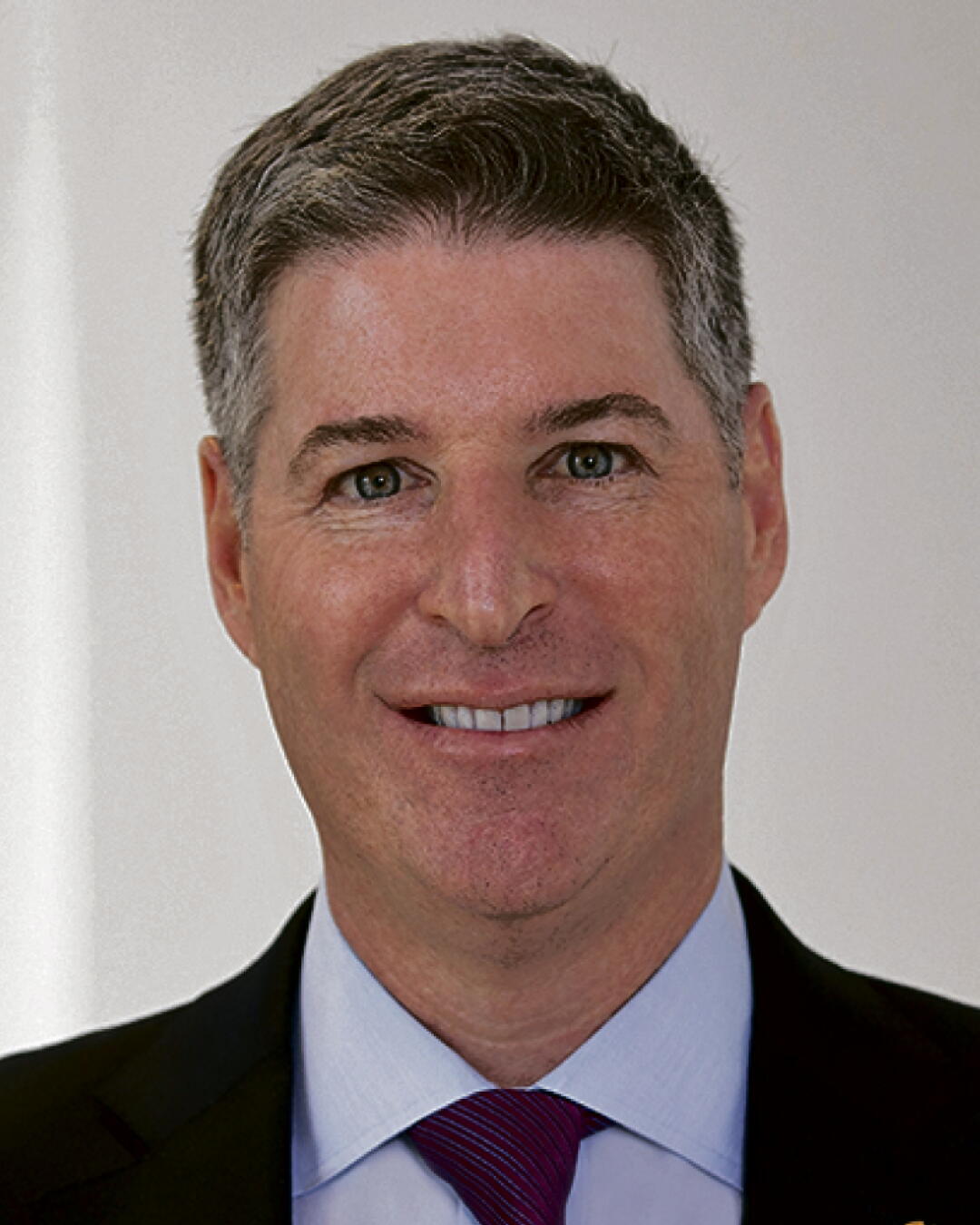
He knew the other side of the merger.
Jared Wolff previously served as president of Pacific Western Bank.05 / THE NEXT ACCOUNTAsk your banker to do the homework
Wolff joined Banc of California as CEO in 2019 and became holding-company chairman in 2025. His public description of management combines delegation with a firm view of decision-making:
“I really don’t believe in decisions by consensus.”JARED WOLFF / MAY 2026 INTERVIEW
On October 20, 2026, the bank launched Private Banking for wealthy individuals, business owners, executives and family offices. It extends the commercial relationship into personal deposits, lending and treasury needs, while working with outside financial advisers. The expansion follows the customer from the company account to the household account.
For a business choosing a bank, the copyable move is to bring the operating details to the first meeting. Ask how collections will reconcile, who handles exceptions and how credit fits the investment cycle. A bank that understands your company should be able to discuss the boring stuff with precision. Eventually, the roof needs paying for.
Follow the money
In their own words
Around the web