A broken water main is unusually good at attracting attention. It can stop traffic, interrupt a working day, and turn an ordinary stretch of road into the evening’s most photogenic inconvenience. The pipe that keeps working receives rather less applause. George Demosthenous has built his business around the decisions made before either pipe becomes a story.
His route to that business began with listening. Water utility contacts kept telling him about failures, the bad press that followed, and the difficulty of planning what to replace. He already worked in the industry. The complaints were specific enough to stay with him when he entered a very different room: an innovation class at Harvard.
A problem that came with the coffee
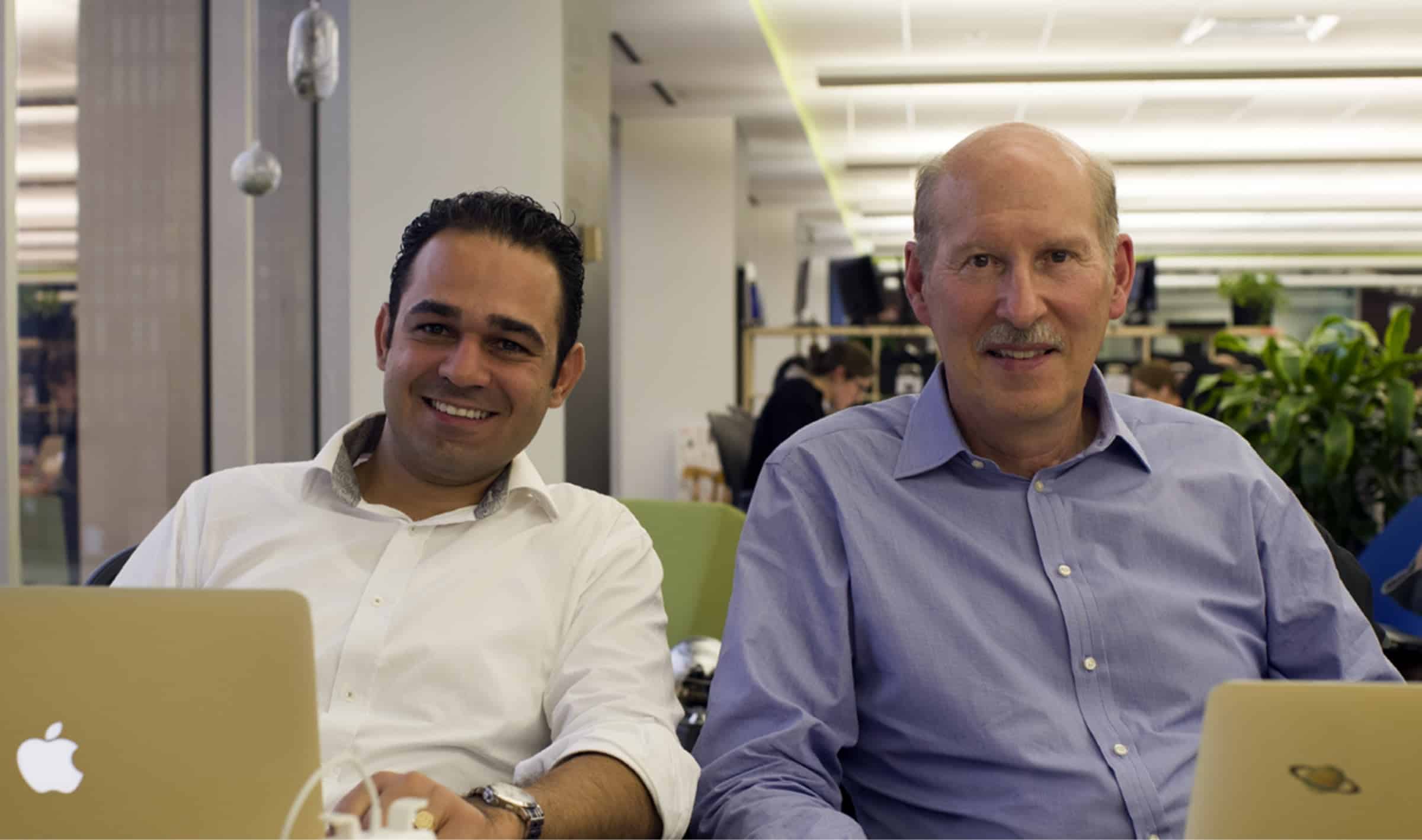
Demosthenous was studying for a master’s degree when he took a course taught by Jim Fitchett. Over coffee, he described the pipe problem. Here was an industry responsible for extensive underground networks, struggling with a consequential question: where should the next intervention happen? Their conversation became the beginning of a founding partnership.
The pair co-founded VODA.ai in 2017. Coffee is a modest setting for a company’s beginning. The question they discussed reached beyond a single broken main: could existing information help water professionals plan before the next failure? Their business would be built around making that sort of planning easier.
Demosthenous brought experience of the people who would have to use the resulting software. His utility contacts were trying to plan work while dealing with the consequences of failures. Better forecasting offered a way to bring more evidence into those choices. For a founder, that is a fairly concrete place to begin: with someone else’s recurring, expensive difficulty.
Before the startup, the software
Before VODA.ai, Demosthenous worked at Mueller Systems, where his responsibilities included leading software product management, managing a development team, and overseeing the product roadmap. It was experience close to the junction of what customers need and what a software team can deliver. A roadmap, after all, is another exercise in deciding what deserves attention first.
His education also connected business and systems. At the University of North Carolina at Charlotte, he earned a BSBA in Management Information Systems and Industrial & Operations Management. He later earned a master’s in management at Harvard. Those subjects sit comfortably beside the work he eventually chose: applying software to the organization and operation of physical infrastructure.
VODA.ai was not his first encounter with entrepreneurship. Earlier roles included co-founding Sani Systems and holding a stake in O2 Oxygen Bar. The path into water analytics therefore included both building businesses and working inside an established utility technology company. By the time he started VODA.ai, he had already spent years around the market he wanted to serve.
“I come from water.”
George Demosthenous
That was how he described his background to Innospark Ventures. It is an economical introduction, with a small opportunity for misunderstanding. Read as a professional biography, it makes his point: the utility problem preceded the new company. His familiarity with the sector gave the founding conversation its subject.
A map is only the beginning
The software business he helped build concerns assets that are difficult to see and expensive to disturb. A pipe network produces records, histories, and maps. Turning those records into a replacement program requires choices about risk and resources. Demosthenous’s company works on the analysis that helps utilities put those choices in order.
VODA.ai’s prediction engine is called daVinci. Its work includes assessing pipe failure risk and supporting capital planning. The business asks utilities to use information about their networks to guide maintenance and investment. The attraction is practical: a replacement list should reflect the assets that warrant attention, rather than becoming a procession arranged only by age.
There is less glamorous work before a prediction appears. Utilities keep information in different forms, and VODA.ai’s approach includes cleaning and harmonizing those datasets before modeling. That detail connects the startup to Demosthenous’s earlier software work: customers arrive with records they already have, and the product has to make those records useful. The polished result depends on preparation that rarely makes the headline.
The Itron collaboration announced in June 2024 makes that approach tangible. Its Pipe Asset Management offering combines utility records and metering information with other data, including soil, terrain, and road features. VODA.ai provides the AI engine. The resulting interactive tool is intended to help identify pipes for replacement or rehabilitation and support the allocation of capital.
For Demosthenous, working through an established provider also offered access to more utility customers. His description of the mission during the Itron announcement was compact: “simplify engineering for water professionals.” The phrase gives the technology a clear assignment. Whatever the model does internally, its value has to reach someone making an infrastructure decision.
The company you build with
His professional world extends into Boston’s Greek innovation community. He appeared on a Hellenic Innovation Network panel about data analytics and infrastructure in 2021, alongside participants from Metrika, TileDB, and Amazon. Another network event placed him in a discussion about smart cities with representatives connected to Trikala and the MIT Media Lab.
A 2022 account of the network also described him leading its CEO group, which met monthly to discuss shared challenges and exchange ideas. Those discussions put him among founders dealing with the organizational questions that continue after an idea has become a company: how to build teams, share experience, and learn from people working on different problems.
VODA.ai joined Endeavor Greece’s third Scale Up cohort in 2021. Later came a different kind of connection. In June 2025, CRH Ventures announced that it had led a Series A investment, with participation from L-Stone Capital. The announcement paired funding for growth and research with a collaboration involving CRH’s Oldcastle Infrastructure business.
That relationship matters because infrastructure software eventually meets infrastructure work. Oldcastle’s CivilSense platform combines AI insights with field expertise. The investment announcement described market access as part of the arrangement. For a founder selling into utilities, reaching the customer and fitting into practical delivery are substantial parts of the job, alongside developing the software itself.
A lifetime, in eight years
In September 2025, Demosthenous accepted a Lifetime Achievement Award for VODA.ai at the Smart Water Summit in Charlotte Harbor, Florida. The company had been founded eight years earlier. The award’s name sounds rather grand beside that calendar, but its stated purpose concerned the company’s sustained contribution to bringing smart water tools into the market.
The setting is part of the meaning. The summit brought together 36 vendor partners and 100 utility attendees. This was recognition within the working market VODA.ai served. In accepting it, Demosthenous credited the team’s work and connected the technology to the water professionals using it. The company, rather than its CEO personally, was the award recipient.
Operational reach reported by VODA.ai on its About page, checked October 2026.
Those figures describe the spread of the company’s work. They also keep the founder’s story tied to the industry that supplied its original problem. A coffee conversation can launch a business; continued use by utilities requires the business to keep answering questions that matter to them.
The test is what happens next
Demosthenous set out his own standard for predictive software in a January 2026 article about return on investment. He argued that accuracy has to translate into operational and financial consequences: avoiding unnecessary spending, reducing emergency work, and changing which assets receive attention. A prediction earns its keep through the decisions it influences.
That argument puts useful limits around the enthusiasm. In the same piece, he discussed poor data, false positives, and the difficulty of adopting new working practices. Sending a crew to investigate the wrong thing can consume the resources a utility hoped to save. A planning tool also needs a place in the team’s actual working day.
His published view is therefore more demanding than producing a persuasive screen of numbers. It asks what changes after the analysis arrives. Which work moves forward? Which investment waits? Those questions return to the concerns his utility contacts brought him before VODA.ai existed. The newer technology still has to answer the older operational problem.
The meter joins the conversation
In June 2026, the company widened the brief. VODA.ai Meters was announced as a way to identify meters likely to under-register consumption and prioritize investigation or replacement. Developed with a large U.S. utility, it extends the company’s work into revenue recovery. Here the loss can sit in a measurement, quietly affecting what gets billed.
The following day, VODA.ai introduced Advisor, a conversational decision support product for water professionals and engineering consultants. The announcement described natural-language requests for project plans, scenario evaluation, and adjustments to planning criteria. It said customer availability was planned for later in 2026. For Demosthenous, the announcement offered another route from accumulated information to usable recommendations.
He connects that direction to VODA.ai’s stated ambition to affect a billion people through decision support for water professionals. It is a goal, with the actual work taking place at a smaller scale: one network, one planning exercise, one choice about what receives attention. That scale makes the ambition comprehensible. People experience infrastructure through the service it provides.
The founding story began with operators describing what happened when pipes failed. Demosthenous has spent the years since helping build a business around what might happen earlier. The satisfying result would be difficult to photograph: a sound choice, a planned repair, an ordinary road remaining ordinary. The evening news would have to find something else to do.
Follow the conversation
- VODA.ai - company website
- George Demosthenous on LinkedIn
- Watch: CEO Spotlight interview
- Listen: The Water Entrepreneur
- Read his essay on predictive AI and return on investment
- Itron’s collaboration announcement
- CRH Ventures’ investment announcement
- The 2025 Smart Water Summit award
- VODA.ai’s Meters announcement
- VODA.ai’s Advisor announcement