A photography studio is supposed to make room for the person in front of the camera. Natalia Bishop’s kept making room for other people. Photographers shared it. Creatives and freelancers gathered there. Eventually, the room began to suggest a business larger than the one she had set out to run. The camera had done its job. The interesting activity was happening just outside the frame.
Story, the Louisville coworking community Bishop founded, traces its beginnings to a 1,500-square-foot shared studio in 2016. Its history includes an Ikea trip, a move into NuLu, and an expanding invitation to people trying to build something. By 2017, it had added 12,000 square feet at the Center by SIDIS. The furniture had acquired rather more responsibility than furniture usually expects.
That widening invitation runs through Bishop’s career. She has been a photographer, an education entrepreneur, a university innovation leader, an investor, and a mentor. Look at the titles and the route appears restless. Look at the people she wants to serve and it becomes easier to follow: people with an idea who could use company, practical knowledge, or an introduction.
A creative career, with several detours
Bishop came to Louisville from Colombia at 17 with her family. She worked at UPS while pursuing an education. Her early ambitions were creative: she wanted to animate films for Pixar. She earned an associate degree in design at Jefferson Community & Technical College, tried culinary studies at Sullivan, and studied business administration at the University of Louisville. Dessert-making helped persuade her that a chef’s life might belong to someone else.
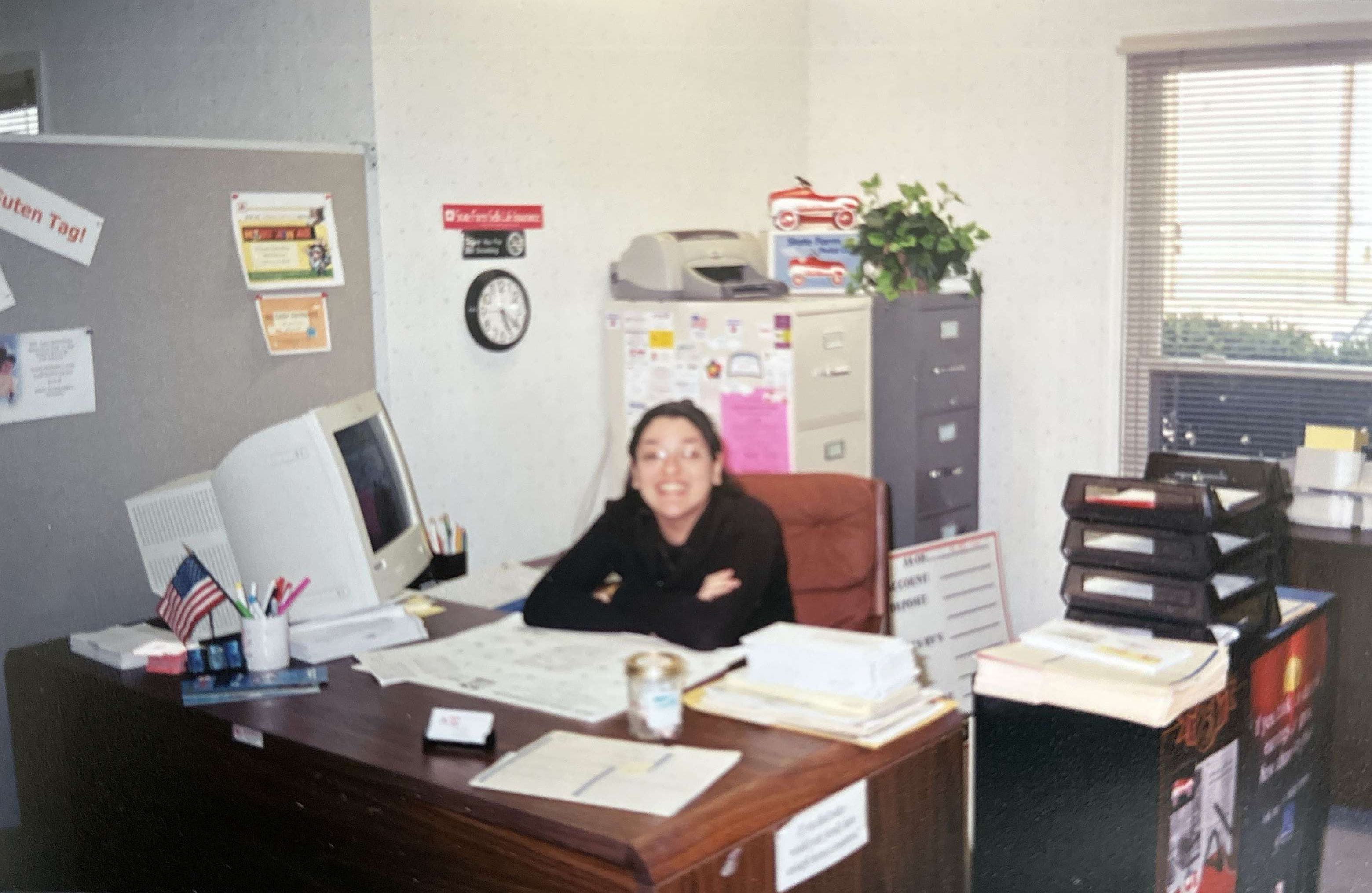
Corporate retail offered another route. Photography offered a way to work creatively on her own terms after becoming a mother. Chocolate Box Photography became a business she could build from home. The progression matters because Story grew from the experience of running a creative business herself. She had occupied the position of the independent worker before she began organizing space for other independent workers.
By 2017, she was running three businesses while raising two children. There was even a dog, Snoop, in the picture of her studio. Entrepreneurship can sound rather abstract when described through ecosystems and capital. A dog among the desks returns it to the more familiar business of fitting work into an actual life.
The title she gave herself
At Level Up, Bishop used the title Chief of Happiness. It had a cheerful sound and a fairly demanding job description. She wanted the people working with her, the customers, and the shareholders to be happy with what the company was doing. Choosing her own title gave her a way to name the obligation.
“For me, it’s about the people.”
Natalia Bishop
Level Up began as a way to bring people into Story. Bishop knew creative people through photography; classes gave them something to do together. The idea soon traveled beyond the coworking space into local businesses and restaurants. When the audience turned out to be largely women, the company adjusted its programming around them. The customers had helped identify the company.
The classes offered practical creative skills. In 2018, Bishop described the example of Preston Fouts, who attended a class, built Sweet June Bakery, and returned as a teacher. It is the kind of development a course catalogue struggles to advertise: the learner eventually becomes part of the invitation to someone else.
By 2020, Level Up was developing live online teaching and a subscription learning product. Its team worked with an outside project manager on the technical launch. The classroom was changing shape, and Bishop was learning another part of the job: making a creative experience function through software. Even an informal invitation requires a functioning door.
Someone has to work out the numbers
Bishop’s instinct for bringing people together did not automatically supply every process Story needed. In January 2019, she brought in Open Eye, having met managing partner Taylor Tricarico when Tricarico was looking for event space. A conversation about a room became a working relationship about the company.
The work included interviewing founders, organizing what they said, defining services, tracking meaningful measures, and forecasting revenue and expenses. Those are unromantic activities until you need them. They help determine whether the welcome can be repeated next month, whether the team can deliver it, and whether the founder can stop carrying every decision alone.
- ListenInterview the people the business aims to serve.
- DefineTurn their needs into specific services.
- OrganizeBuild forecasts, responsibilities, and repeatable work.
An outline of the operating work undertaken during Story’s 2019 consulting engagement.
Bishop later expressed regret that she had waited so long to make that investment. There is something useful in the admission. A founder who helps other people find support can still take time to recognize her own need for it. Her career contains both sides of the transaction: extending a hand and deciding to take one.
The founder makes room for a CEO
In June 2021, Story announced a planned succession. Lauren VanCleave, its director of operations, would become CEO. Bishop would move to board chair while taking a role at the University of Louisville. It was a change in the distribution of responsibility, with someone who knew the daily business stepping into its leadership.
VanCleave described Bishop’s belief in her ability before she fully possessed that belief herself. The relationship adds a specific meaning to the familiar idea of supporting people. At some point, encouragement has to become authority. The person being encouraged gets the job, the decisions, and the opportunity to bring her own judgment to them.
The transition also brought a clearer focus on the NuLu operation and on whom Story wanted to serve. A founder’s biography tends to count what she starts. This chapter deserves attention for what she entrusted to another person. The organization had to become large enough, in its thinking as well as its floor plan, to accommodate another leader.
Across the pitch table
The university role took Bishop into another setting for helping companies develop. In 2022, she publicly announced joining Renew Venture Capital as a general partner. Her own description of the journey ran from corporate work through creative entrepreneurship, community building, software, and academia. Investment added another way to work on the same question of access.
At Renew, she described her specialty as helping underrepresented founders build community, skills, and teams, then prepare to raise capital and scale. Her volunteering and mentoring have also included Actors Theatre of Louisville, Amplify Louisville, and Russell Tech Business Incubator. These connections locate her work in a city, among organizations with different ways of helping people participate.
She was a 2023 JFCS MOSAIC Award honoree. Recognition of that kind places business-building alongside a wider civic contribution. The work involves who gets introduced, who has someone to ask, and whose idea receives enough attention to become a serious proposition.
Being an investor has also given Bishop reasons to question the pursuit of investment. In a June 2025 conversation on Woman-Owned Wallet, she discussed the fit between venture capital and a founder’s intended business. Raising money can become a conspicuous milestone. It still has to serve the company someone actually wants to run.
“Just because we experience a problem ourselves doesn’t necessarily mean there’s a business there.”
Natalia Bishop, Woman-Owned Wallet, 2025
That observation leaves room for an awkward but necessary investigation. Who else experiences the problem? What would they pay to solve it? A founder’s conviction can begin the work; other people’s behavior has to help test it. Bishop’s experience of following a studio’s users into a broader business makes that question particularly apt.
The classroom leaves the building
Wild Accelerator gives the later chapters of Bishop’s work a wider geography. Founded in 2018 by Tarik Nally and Stacy Servo of Kale & Flax, it found a home at Story after its second season in 2019. Bishop now chairs its board. The relationship joins founder education and mentorship to a physical community that can host them.
There are smaller versions of that opening, too. In May 2025, Xavier University’s Sedler Center thanked Bishop for hosting students at Story during a visit to Louisville. They encountered nine entrepreneurs across three panels, with companies at different stages of development. For a student, that supplies something a tidy business diagram cannot: several people describing how they actually got from an idea to the company in front of them. For Bishop, hosting is a way to let the next group into a conversation already underway.
Wild’s subsequent work has included a 2023 investment-readiness conference with Velo and the U.S. Embassy in the Dominican Republic. Its Academy later developed through a program for organizations serving founders and students. Those steps move the work beyond the people who can happen to walk through a Louisville door.
Story’s shared photography studio
Bishop announces her Renew partnership
Wild Academy’s virtual platform launches
In February 2026, Wild announced a virtual Academy featuring WILLA, an AI business coach. The intended audience includes founders historically excluded from conventional networks. Software offers a different means of reaching them, with education available beyond a scheduled gathering in a particular building.
Bishop also leaves space for a less formal kind of learning. On LinkedIn, her “What I Learned Today” posts have moved from a ramen-egg tutorial to the question of timing in startup investing. It is an appropriate combination for someone who has studied cooking, made photographs, and helped founders. Curiosity can begin at the stove and end somewhere unexpected. There is no requirement that a useful business thought arrive wearing a conference badge.
Back in Louisville, Story still makes the basic invitation tangible: a place to work, people to meet, rooms for gathering. Bishop’s larger career has kept returning to the conditions that allow somebody else to begin. The first room held photographers. The work since has been finding out how many other people might need a place in the picture.
Follow the conversation
More from Bishop and the communities around her.
Visit Story ↗Natalia on LinkedIn ↗Natalia on X ↗Watch: Renew’s conversation with Natalia ↗Listen: Is your business right for venture capital? ↗Explore Wild Accelerator ↗Read Bishop’s Renew biography ↗Read the Chief of Happiness interview ↗