Lisa Skeete Tatum had spent years deciding which ideas deserved investment. She could assess a business, question its assumptions and consider what might happen next. Choosing the next chapter of her own career proved less obliging. After more than a decade in venture capital, she wanted to combine the work she enjoyed with her commitment to opening opportunities for other people. She could describe what she wanted to leave. The destination was harder.
That is an awkward position for someone whose qualifications seem to promise a reliable answer. Cornell. Harvard Business School. A partnership at a venture firm. The people around her expected clarity, and she expected it of herself. Instead, she found a question that became the starting point for Landit, the company she leads today: where do I start?
The revealing detail is how much support she already had. Connections and experience had helped her build a career; neither made its next turn automatic. As she talked with other women, she recognized the same uncertainty in people who had ample talent and ambition. A business opportunity was taking shape inside a conversation many successful people would prefer to postpone.
The engineer who wanted a launch
Skeete Tatum was born in Newark, New Jersey. As a child, she wanted to be an astronaut. Her mother, who served in the military, gave her another early education in changing direction: the family moved around the world, and each move came with the possibility of new people and new experiences. Her mother presented a new chapter as an adventure. That interpretation of change stayed with her.
She earned a chemical engineering degree at Cornell in 1989 and began working at Procter & Gamble. Her responsibilities crossed product supply, purchasing and product development; she also worked in its prestige fragrance business. Before career development became her product, she had experience with products that required a rather more literal launch.
In 1994, she became managing director of Circle of Beauty, a cosmetics startup launched by Sears. The following year, she founded STI, a consulting practice serving consumer products businesses. These were early encounters with the work of making a business happen: deciding what to build, understanding a customer and getting an idea out into the world.
She enjoyed the process enough to want to participate in it across more companies. A former P&G executive introduced her to venture capital. The introduction matters in her telling. An unfamiliar profession became a possibility because someone with a different view of the working world pointed toward it. The next move depended on knowing that the move existed.
“Because I am an engineer, I love little hacks.”
Lisa Skeete Tatum
The people between the job titles
At Harvard Business School, where she earned her MBA in 1998, Skeete Tatum served as president of the African American Student Union. She also met Sheila Lirio Marcelo, later the founder of Care.com and her cofounder at Landit. The business partnership would arrive much later. First came the relationship.
Her subsequent career included more than a decade as a general partner at Cardinal Partners. A 2026 director biography dates that chapter from 1998 to 2009, followed by a period as an angel and fund investor. From the outside, the sequence looks orderly. Engineering becomes business school; business school becomes investing. A biography is a helpful document with an unfortunate habit of removing the hesitation.
Skeete Tatum’s own account restores some of it. She describes the difficulty of making her interests, experience and desire to contribute add up to a next step. In 2012, she became a Henry Crown Fellow at the Aspen Institute. The fellowship required a project intended to make an impact. Her own career question supplied the material.
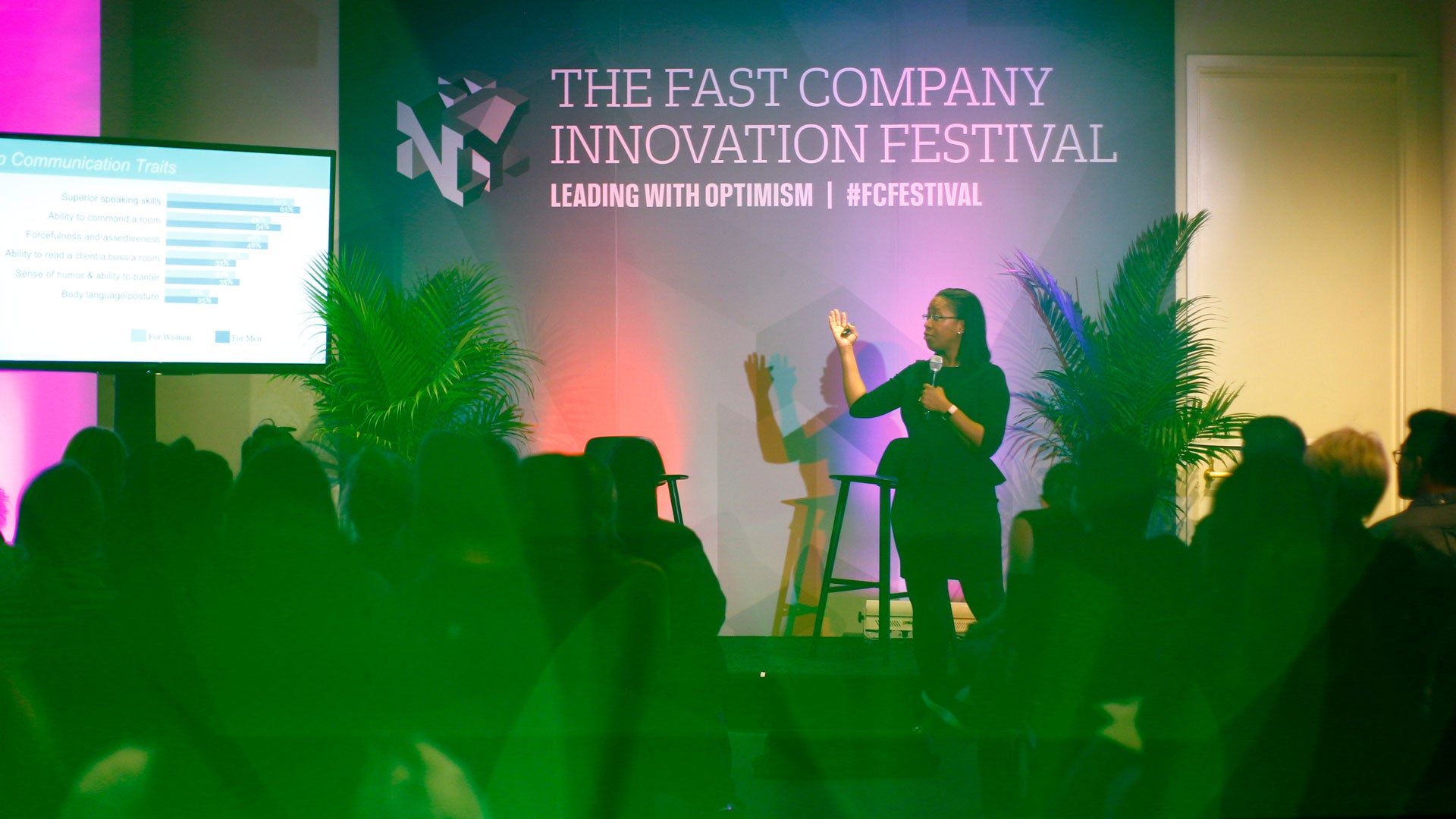
Marcelo was in the same fellowship class. The two women had a friendship, complementary experience and an increasingly specific problem to work on. Landit would bring together guidance, professional connections and practical tools so that an individual could make progress without first having to assemble the entire support system alone.
Putting a price on the missing playbook
Landit was incorporated in 2014. By 2016, it was available in beta, with contemporary reporting describing $2 million in funding. Its official launch followed in 2017. The early audience was women navigating a transition, pursuing advancement or returning to paid work. Each circumstance brought its own practical questions. A person seeking a promotion needed something different from someone wondering which profession might fit.
That distinction shaped the service. Landit combined a personal career playbook with coaching, professional presentation and access to advisors. Employers were part of the proposition, too: a company could use it to invest in employees’ development. The employee’s next move and the employer’s interest in retaining talent could be addressed together.
In February 2019, Landit announced a $13 million Series A led by WeWork. Other backers included NEA, Valo Ventures, Workday Ventures and GingerBread Capital. At the time, the company had a presence in more than 20 countries. By August 2023, Forbes reported that it had raised more than $20 million overall.
Those milestones show the idea moving beyond its founder’s personal dilemma. They also record her changing relationship to capital. The former investor now had a company of her own to finance and a proposition to explain. Knowing how investment decisions work does not remove the work of persuading someone to make one.
Her ambition for Landit reaches beyond helping someone obtain an offer. She asks what happens after the employee arrives: whether they stay, develop and move forward. The company now describes its service as personalized coaching and career pathing for employees more broadly. Its beginnings in women’s career development remain central to understanding why she built it.
A boardroom small enough to fit in your life
One of Skeete Tatum’s recurring ideas is a personal board of advisors. The phrase borrows a little ceremony from corporate governance and gives it a useful domestic scale. An individual career can benefit from several kinds of help, distributed among people who understand different parts of the problem.
In a 2017 workshop, she described five roles: mentor, sponsor, connector, close friend and coach. Each has a job. A mentor can help someone think; a sponsor can advocate when an opportunity is being discussed; a connector can make an introduction. A friend offers a different kind of knowledge, while a coach helps turn a goal into a strategy.
Five seats at a personal table
chapter
- 01 / MentorPerspective and advice
- 02 / SponsorAdvocacy in the room
- 03 / ConnectorAn introduction that matters
- 04 / Close friendSpace for the unpolished version
- 05 / CoachStrategy for the road ahead
Roles described in her 2017 career workshop. People and needs can change over time.
The division of labor makes the idea appealing. Expecting one wise person to provide every introduction, every answer and every timely intervention is quite a recruitment brief. Different relationships can share the work. Skeete Tatum also emphasizes maintaining those relationships and giving something back. Professional support requires more tending than collecting names.
Her advice often has this practical scale. Keep a record of weekly accomplishments, for example, so that a review or promotion conversation does not depend entirely on memory. A Friday note about what changed because of your work can become evidence later. It is a modest administrative habit with a useful advantage: you have the details when you need them.
There is an engineer’s preference for something usable in these suggestions. The broad aspiration is career success. The immediate action might be writing down an achievement or asking a particular person for an introduction. She brings an unwieldy ambition down to a step someone can take before the week ends.
The calendar gets a vote
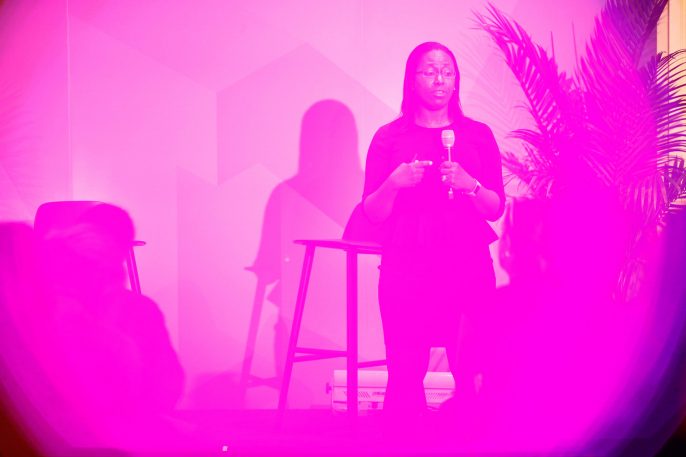
A company built around helping people navigate work inevitably raises a question about its founder’s own working life. Skeete Tatum calls her method hyper-prioritization. Family commitments receive the same seriousness as a business or board meeting. The calendar must accommodate the people she wants to be present for, as well as the work she wants to do.
Her 2019 work diary supplied the ordinary texture behind that principle. She took New Jersey Transit to New York, preferred the quiet car and brought pastries to her team. At home, dinner could involve a family argument over who was the better ping-pong player. Board experience apparently offers no automatic jurisdiction over the kitchen table.
By January 2025, her productivity guidance included tracking completed work, reserving uninterrupted periods for tasks and assigning time deliberately. She encouraged people to distinguish urgency from importance. The advice fits her larger concern with direction: an overflowing schedule offers very little reassurance that the right work is getting done.
Her priority filter
Adapted from the four task categories she described in 2021.
She has continued to occupy actual boardrooms alongside building Landit. A Stryker director since 2020, she was reelected in May 2026 and serves on its Audit Committee. Her governance experience also includes Union Square Hospitality Group and service as a Cornell trustee. Across those settings, she has worked both with institutions and with people finding their way inside them.
The questions remain close to the ones that unsettled her own career. What can this person do? Who can help them see the options? What would allow them to progress? Landit gives those questions a commercial home. Her advisory-board idea gives them a personal one. Both depend on the willingness of other people to participate.
Her story began with a résumé that could explain where she had been and could offer no satisfactory instruction about where to go. She eventually found a direction by taking that gap seriously. The next person confronting the same blank space might begin with a conversation, a written goal or a name to call. A next chapter needs somewhere to start.