Israel Niezen had acquired the sort of education that usually allows a person to stop explaining his qualifications. Finance. Harvard Business School. Years on the business side of technology. Then he went back to learn programming. There is something pleasing about an executive voluntarily putting himself in a position where a missing semicolon can ruin his evening. Seniority offers many privileges; immunity from the beginner’s mistake is apparently negotiable.
By July 2019, his return to the classroom had attracted its own small distinction: Trilogy Education had given the UCLA Extension coding boot camp graduate its Robert Frost Award for taking a different road. At the time, he was serving as chief revenue officer of Telescope, a television audience engagement company. He was already established in business. The decision to study suggested that established was becoming an uncomfortable place to stay.
An executive takes the beginner’s seat
The curiosity had been there earlier. When choosing his first college major, Niezen had considered computer science. He later recalled being discouraged by advice that a programmer ought to have started coding as a child and spent adolescence absorbed in video games. He chose finance. It is a curious entrance requirement for a profession: apparently one’s teenage leisure activities were supposed to settle the matter.
An earlier startup brought a more expensive education. Niezen has described a promising business that encountered product problems while he assumed the CEO could concentrate on commercial affairs. He reconsidered. Full-stack programming led to data science and applied machine learning. His account is candid about the limits of his own coding ability compared with his engineers. The point was to understand the work well enough to make better business decisions.
That makes the return to study more interesting than a decorative certificate. An executive who understands how a product is assembled has a different conversation about deadlines, trade-offs, and what a customer can reasonably expect. Technical fluency does not require winning an argument with every developer. It may begin with recognizing why the argument exists.
“Never ever stop learning.”
Israel Niezen
An ambition with a return address
His interest in machine learning brought him to Andrew Ng’s courses. Factored was founded in 2019; Ng joined as its co-founding advisor. Niezen’s connection with the venture also brought an older ambition into view. He wanted talented Latin Americans to have access to careers in technology, an intention he says he had already put into his graduate school applications years before.
He had come to the United States from Peru with his mother and siblings. His account of that experience places education and access close together. Moving countries had made opportunities visible that were less readily available elsewhere. Factored gave him a way to work on that difference through a business serving US companies and employing engineering talent in Latin America.
The proposition had two parties who needed each other. Companies needed people able to build and maintain demanding data systems. Engineers needed assignments that would test their abilities and help them develop. Connecting them required recruiting, training, and delivery. Each part had to work well enough for the next opportunity to arrive.

One example he shared in 2022 concerned an engineer who came from a small Colombian company. Factored invested four months in full-time training before the engineer worked on Silicon Valley projects. That colleague subsequently received a Stanford fellowship and joined OpenAI within three years of arriving at Factored. The individual remained unnamed in the telling. The sequence was specific: investment, demanding work, then a larger opportunity.
There is a revealing generosity in choosing a departure as evidence of success. A company spends time developing someone, and a subsequent employer benefits too. For Niezen’s stated ambition, that can still count as progress. A career has become possible that might otherwise have remained out of sight.
The arithmetic starts to show
By the time of his August 2025 conversation with Daniel Isenberg, the scale was easier to put into numbers. The conversation described more than 300 people and a revenue progression from $700,000 in 2020 to $18 million in 2024. Those are historical figures reported with the interview. They show the size of the business Niezen was discussing at that point.
Five years, in reported revenue
The same account included ambitions to pass $30 million in 2025 and $100 million in 2028. Those were targets. The distinction matters in a business culture that sometimes lets the future arrive prematurely in a headline. Growth already achieved gives a reader something to examine; growth proposed gives a reader something to watch.
Factored’s name suits a company whose work depends on people combining their abilities. Its services now span AI engineering, machine learning, data engineering, data science, and analytics. Behind those categories are different jobs: preparing information, developing models, testing behavior, and keeping systems useful after delivery. A customer’s need rarely respects the neatness of a service menu.
At Factored, that expectation sits alongside values that emphasize results over titles, personal ownership, and action before perfection. They are demanding ideas to put beside a promise of warmth. People need room to make decisions, and then they need to answer for them. For Niezen, the combination follows from the business he chose: customers entrust projects to engineers they may never share an office with. A friendly introduction can begin that relationship. Consistent work has to sustain it, through the ordinary weeks when nobody is gathering for a photograph or getting on a plane.
Niezen’s own career provides a reason to care about those handoffs. Having returned to technical education from a commercial role, he understands the attraction of a convincing business proposal. His company’s work ultimately has to survive the less sociable examination of whether the system functions.
The band is part of the business
For a less numerical view of his management, consider Buenos Aires. In November 2024, Niezen shared a studio performance featuring colleagues on piano, drums, bass, guitars, and vocals. He joined in on guitar and guest vocals. He credited the musicians individually, including a piano solo and salsa breakdown. The CEO had become one member of the ensemble, which is a useful place for a CEO to spend an evening.
His enthusiasm for the performance came with a broader observation: coworkers have talents and personalities that a job description leaves out. He described colleagues becoming close friends and encouraged people to bring those other parts of themselves to work. Music made the idea tangible. A list of corporate values seldom offers a bass line.
Another account of the Argentina visit filled in the surroundings. There were Argentine rock classics, steak dinners, tango shows, and bets on horses with unusual names. Members of the team had come from Uruguay, Paraguay, and Colombia as well. These are the details that give a distributed company some physical texture: people who usually meet through screens sharing an evening with no agenda to approve.
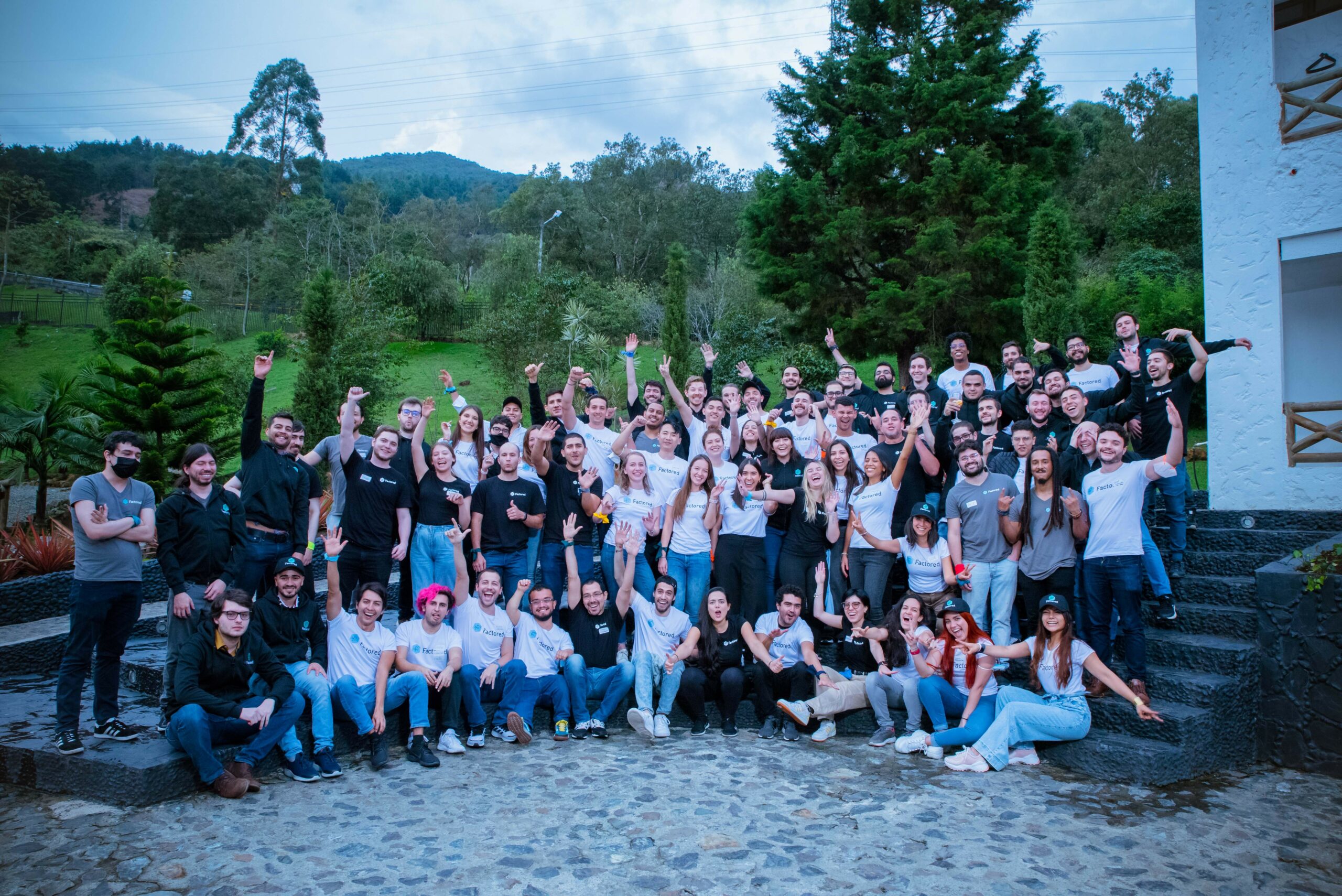
The gatherings continued. In 2026, Factored held its Nerdapalooza celebrations in Santa Marta, Colombia, and Floripa, Brazil. Niezen shared the music, dancing, beaches, and friendships that accompanied them. The name has the benefit of making its intentions reasonably clear. Nobody arrives at Nerdapalooza expecting a silent examination of quarterly spreadsheets.
Away from those gatherings, his surfing offers another view of the relationships around him. Since business school, he has taken annual surf trips with friends. In July 2022, after a return visit to the Maldives, he marked a particular first: throughout the holiday, he had stayed off Zoom calls, checking messages asynchronously.
He thanked his team. That detail deserves a little space. A founder’s holiday can reveal whether responsibility has travelled beyond the founder. Being able to step away means other people have enough confidence, authority, and trust to keep things moving. The waves were a pleasure; the absence of calls was a small piece of organizational evidence.
The assignment keeps changing
The work has continued to evolve. In its announcement that it had become an OpenAI Select Partner, Factored described engineers working within customer teams, participating in architecture decisions and carrying systems into production. Niezen emphasized practical business outcomes. The language fits a business whose value must eventually be experienced in a customer’s working day.
His promotion of Factored’s 2026 AI & Data Hackathon offered a more detailed version of that expectation. The challenge asked participants to build an AI-first customer service system for banking. The brief called for decisions about privacy, reliability, explainability, fairness, cost, and when a human should take over. Competitors had to justify where AI belonged and where conventional logic was preferable.
That is a useful assignment for anyone tempted to treat a demonstration as a finished product. A banking customer will eventually ask an awkward question. Data will be incomplete. A confident answer may be wrong. The exercise asks engineers to account for such complications before congratulating themselves on the presentation.
Niezen’s career has acquired a similar preference for understanding what happens beneath a polished surface. He returned to study after discovering a gap in his own preparation. He built a business around engineers whose opportunities could grow. He still makes room to play guitar beside them. There is a certain elegance in a second education that leaves one with more questions, more collaborators, and a reason to turn up the volume.
Follow the next verse
Explore Factored, follow Israel on LinkedIn, or watch the Buenos Aires studio performance.