The investor who uses AI to find founders before other VCs know to look. Princeton math, Google YouTube, McKinsey Global Fellow - now backing the companies rebuilding sectors that incumbents forgot.
Wayne Hu's first business was a game. Not a startup, not a side hustle - a program for the TI-83 graphing calculator, written in Visual Basic, sold to classmates. His parents had immigrated from rural Taiwan to become engineers, and they had taught him to code. At Princeton, he played tennis and studied Mathematical Economics, graduated Phi Beta Kappa, and went straight to Goldman Sachs for a summer before trading trading floors for management consulting.
At McKinsey, he was one of five consultants selected annually for the MGI Global Institute Fellowship - a research post studying macro forces and technology trends. That's a detail worth sitting with: out of the entire McKinsey analyst pool, five people a year get sent to the firm's think tank to think about the future. Hu was one of them.
Then Harvard Business School - but not the way most people do it. He enrolled and immediately partnered with three different startups. At the same time. Not sequentially, not one-at-a-time, but all three running in parallel while completing his MBA. By the time he graduated, he had also spent a year at Kleiner Perkins, working on investments in transportation, robotics, and marketplaces.
Grow Therapy occupies arguably the most strategic position at the heart of the massive structural demand-supply imbalance for mental health services.
Wayne Hu, on SignalFire's seed investment in Grow TherapyAfter Harvard came Google. As Global Strategy Lead for YouTube ads monetization, Hu ran go-to-market strategy for what was already a multi-billion-dollar video business. He understood scale - not conceptually, but operationally. How a product at that volume actually works. Then he walked away from it in 2015 to help build SignalFire from scratch.
The bet wasn't just on venture capital. It was on a different kind of venture capital. SignalFire runs on proprietary AI - a platform called Beacon that ingests signals about talent trajectories, market movements, and founder histories that most investors never see. The thesis is straightforward: if you can see the data before others do, you can make better calls at seed. Hu has been making those calls for a decade.
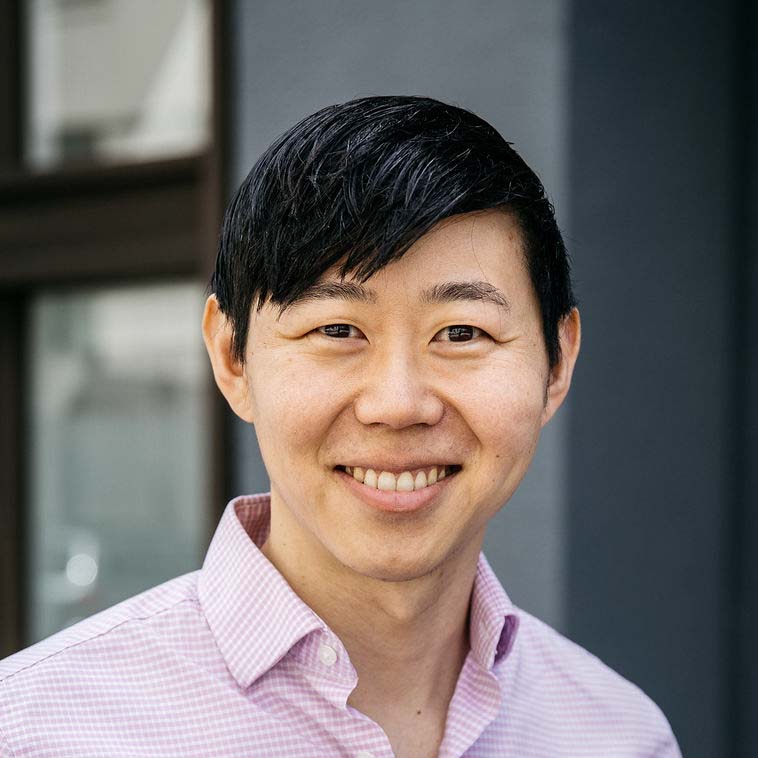
SignalFire built its own AI platform - Beacon - before "AI-native VC" was a phrase people used. The platform aggregates signals: where engineers are moving, what founders are working on, which markets are heating up, who's about to leave a big company to start something. It's a talent intelligence and market intelligence engine layered on top of traditional venture judgment.
Hu uses this data not just to find deals, but to support companies post-investment. SignalFire's model includes operational support, AI-powered talent sourcing, and founder mentorship built into the fund's infrastructure - not outsourced to a portfolio services team, but baked into how the firm works.
In April 2025, SignalFire raised $1 billion in new capital - a milestone fund for backing the next generation of applied AI startups. Hu has been building toward this since the day he joined in 2015. The firms that raised the capital were making bets. SignalFire was running the data.
SignalFire's proprietary AI ingests talent movement, market signals, and founder trajectories to surface investment opportunities before they become obvious. It's the firm's core competitive advantage - and Wayne Hu helped build the investment thesis around it.
Investment Focus
Seed through Series B · Vertical SaaS · Consumer · FinTech · HealthTech · Education · Marketplaces · Historically underserved sectors ripe for end-to-end reinvention
Wayne Hu writes his first checks at seed and Series A - before a sector becomes consensus, before the round gets competitive. These are the outcomes.
Hu's investment thesis has a consistent thread: historically innovation-sparse sectors. Not "hot" markets where every partner at every fund is already writing checks. The markets where the previous generation of tech didn't bother - mental health, legal tech, workforce education, patient advocacy. Places where reinventing end-to-end is actually possible, because nobody else has tried.
When Hu backed Grow Therapy, insurance-covered mental health was not a consensus opportunity. Therapists working independently, navigating insurance panels, running their own practices - this was not the kind of problem that attracted venture capital. It was unsexy, complex, and regulatory. Hu looked at the supply-demand imbalance for mental health services and saw not a problem but a structure waiting to be reorganized.
Their vertical integration allows them to unlock net new supply and build a much stickier and deeper relationship with therapists.
Wayne Hu, on Grow Therapy's business modelThe same logic runs through EvenUp - applying AI to personal injury law documentation - and Patlytics - running AI on patent data for IP professionals. These are not spaces where consumer apps get built. They're spaces where the work is slow, manual, and desperately in need of automation. Hu backs the founders rebuilding them from scratch.
Grow Therapy's founders Jake Cooper and the team earned a specific description from Hu: "execution machines who are genuinely kind and fun to be around." That combination - operational ferocity alongside genuine human warmth - appears to be what he looks for. The data tells you where to look. The people tell you whether to back them.