Allison Byers has a small test for the idea that people connect through spreadsheets. She loves black licorice. On a trip to Iceland, she encountered three varieties of licorice ice cream and considered herself exceptionally well served. When she introduced a new version of Scroobious, her capital access platform, this was the fact she chose to share about herself. A founder introducing a fundraising product might ordinarily lead with a market forecast. Byers offered a taste that divides the room.
The choice fits the product. Scroobious’s video profiles include personal stories and fun facts, giving founders, investors and mentors something to recognize in one another before anyone starts discussing a check. In her launch video, Byers defended her favorite sweet with the instruction, “Don’t yuck my yum.” It is a useful glimpse of someone whose work involves persuading people to reconsider what, and whom, they dismiss.
The meeting before the money
Byers founded Scroobious in 2020 after discovering how much a fundraising process could conceal from the person doing the fundraising. She had helped build a previous startup, raised nearly $10 million, and still could not close its Series B. Its board authorized an asset sale. The all-male management team at the acquiring company subsequently raised $55 million. She initially read the outcome as her own failure. Then she began examining the assumptions that had governed the contest.
She approached the problem with the habits of a former consultant: research interviews, market sizing and a business plan. Hundreds of conversations with founders, angel investors and networking platforms helped turn a personal disappointment into a product question. What would help someone become visible to an investor who would otherwise never meet them? Teaching founders to present their businesses was part of the answer. Giving them access to people who might listen was another.
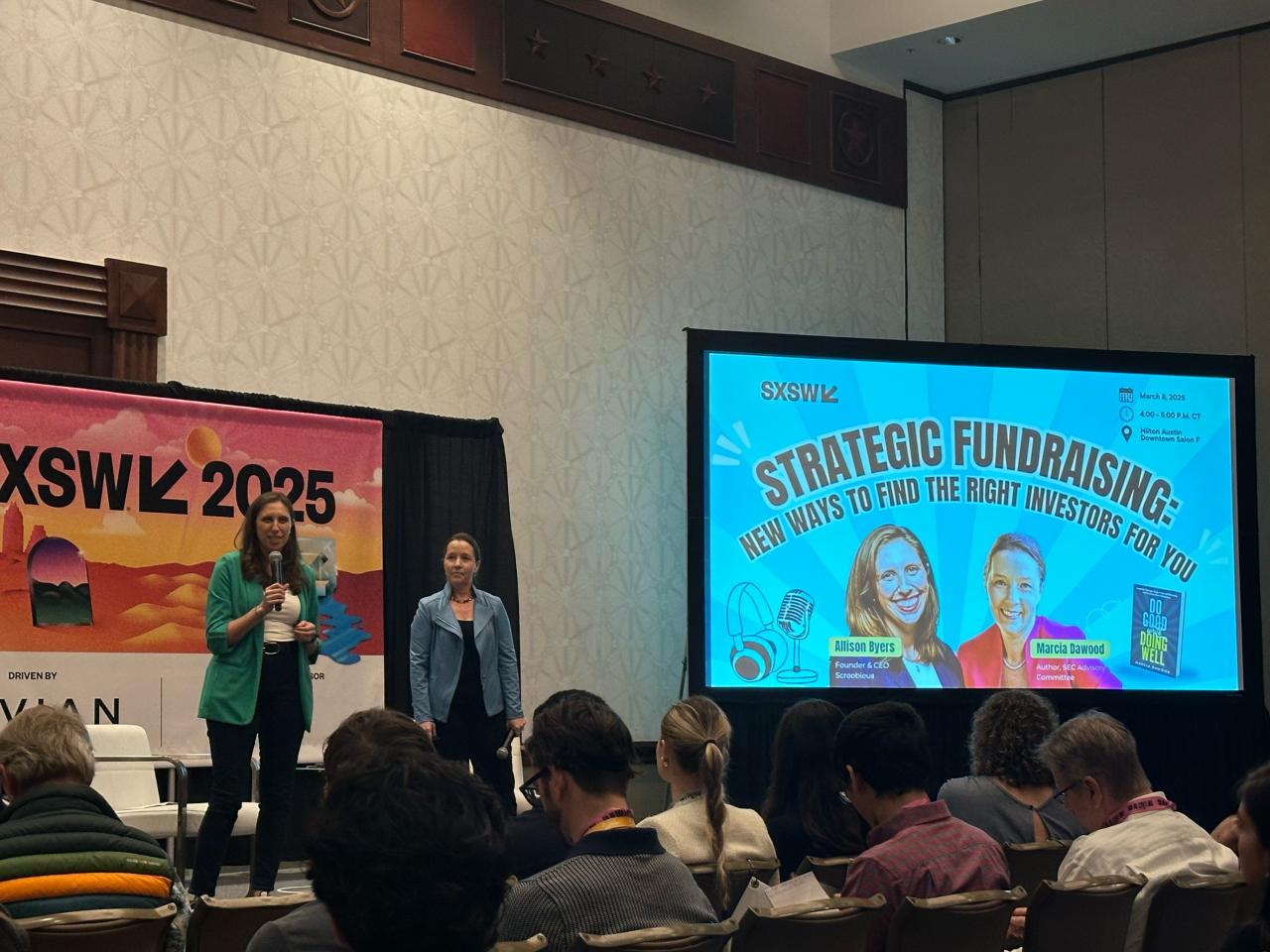
Early Scroobious centered on video pitches and its Pitch it Plan, a program for turning a founder’s story into investor-ready material. Byers took that work into the startup community, including a March 2023 session at Boston University’s Business Innovation Center. The practical task was specific: help people explain what they were building, and help investors discover businesses beyond the introductions already circulating in their inboxes. A useful pitch needed a route to an audience.
A psychology student enters the room
Long before Scroobious, Byers was interested in why people behave as they do. She graduated from Syracuse University in 2003; her academic background includes psychology and philosophy, with honors and summa cum laude distinction. Her subsequent career included work as a senior consultant at The Brookeside Group and as director of online media and search at Compete. Understanding behavior and interpreting data were already recurring parts of her working life.
She earned her MBA at Boston University’s Questrom School of Business in 2008. One relationship from those years would become consequential much later. Cynthia Cohen, who had awarded her a scholarship, was the first person Byers approached about the idea for Scroobious. They met at Pavement Coffee, and Cohen took her through the university’s innovation building. An early conversation became continuing advice. The story gives her argument about relationships a rather concrete address: a coffee shop.
Byers has kept returning to the university as a mentor, classroom speaker and pitch judge. Her connections there include collaborators, investors and her husband, also a Questrom graduate. There is something revealing about this continuity. The MBA did provide business training, but the people persisted long after the coursework. The founder now trying to make networks more accessible has a particularly clear view of what a durable network can do.
The animal that refused a category
Scroobious is an unusual name for a business dealing with money. Its inspiration is the poem The Scroobious Pip, associated with Edward Lear and Ogden Nash, about a creature the other animals cannot comfortably classify. Eventually, they celebrate it as it is. Byers saw a parallel with founders whose businesses or backgrounds fail to resemble the familiar examples an investor expects. The literary reference does quite a lot of work for a company name.
There is a practical problem beneath the whimsy. If discovery depends on familiarity, an unfamiliar founder must do extra work before the business even receives consideration. Scroobious began by helping people articulate that business through short videos and connect with relevant investors. The video format allows a person to arrive with voice, expression and a story. For a company named after an unclassifiable animal, making room for individual character is a fairly consistent design choice.
By 2024, Scroobious had served more than 900 founders. In a conversation that October, Byers described equitable capital access as “fair representation of all segments with the exclusion of none.” That framing explains why her community extends beyond a single demographic or a single financing instrument. Founders need people, expertise and support as well as money. A platform that brings those relationships together has work to do before a formal fundraising round begins.
“Fair representation of all segments with the exclusion of none.”Allison Byers on equitable capital access
A second route runs through Sacramento
Building a platform also brought Byers into policy advocacy. She helped develop California’s Senate Bill 54 with the F5 Collective bill team. Signed in 2023, the legislation introduced demographic reporting on venture investment. Her contribution placed her inside a different kind of process: drafting, working with legislators, and testifying before a committee. The question of who receives funding was becoming a question that public institutions could ask, rather than one confined to private investor conversations.
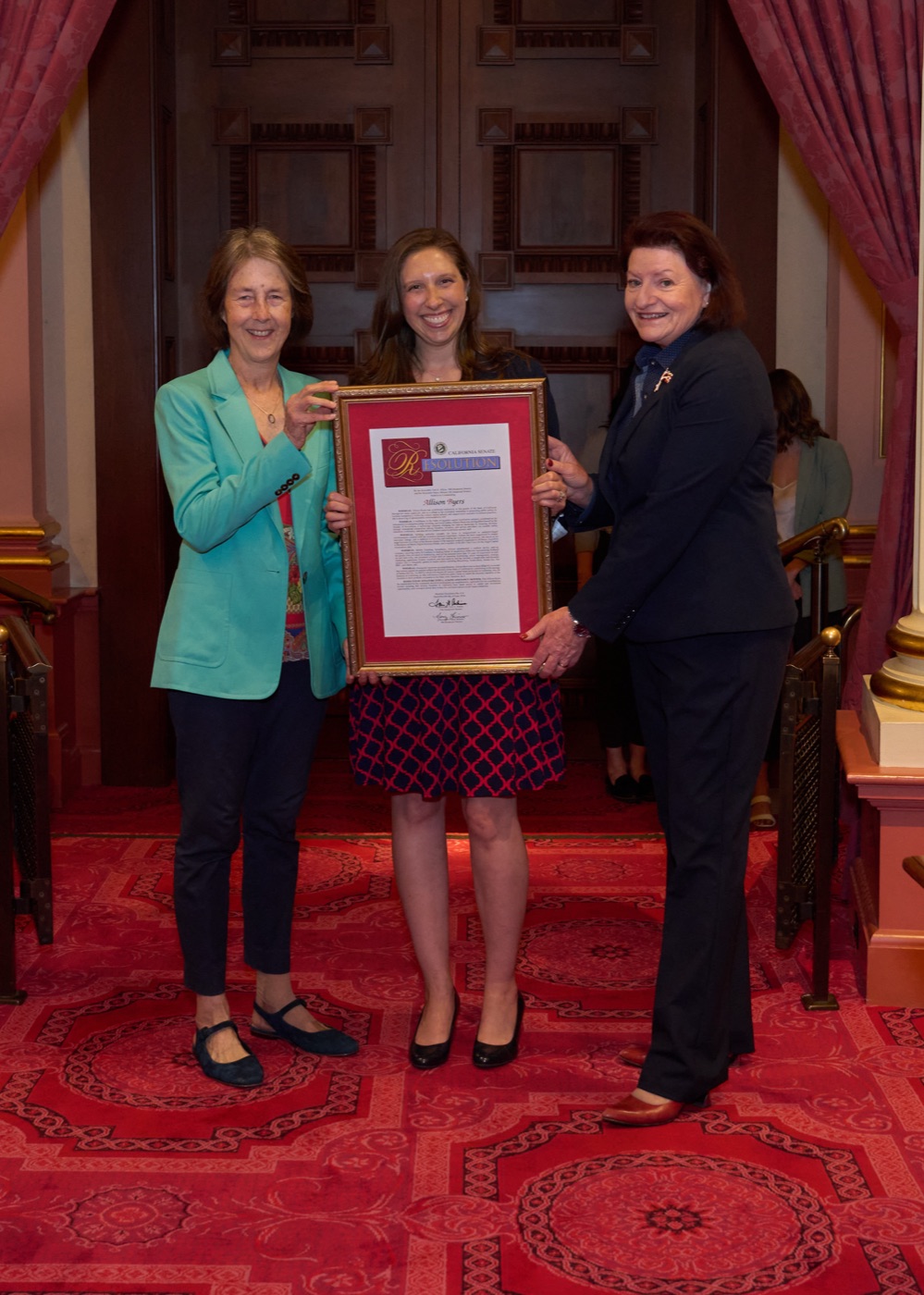
In June 2024, the team was recognized on the California Senate floor. Byers later described standing there with colleagues, friends and family and struggling to find words. For someone who makes a living explaining things to rooms of people, that was a memorable reversal. She urged others to participate in civic life too. The route from a founder’s frustration to a legislative chamber had consisted of individual, unfamiliar tasks that someone had to begin.
Her advocacy continued beyond that bill. In a February 2025 written statement to the House Financial Services Committee’s capital markets subcommittee, she argued for broadening access to startup investing. She wrote as both a founder and an angel investor, and described her involvement in the Angel Capital Association’s DEI task force. Her concern reaches both ends of the transaction: who gets considered for investment and who gets an opportunity to become an investor.
A book with a hundred early readers
In April 2026, Byers published Fundraising for the Rest of Us: How to Build Your Pitch, Navigate Bias, and Raise Capital on Your Terms. Its organizing tools include her Core 10 Pitch Framework, alongside founder stories and guidance on identifying appropriate capital. The book extends the teaching work beyond the platform. Someone can encounter its ideas without joining a cohort, attending an event or knowing the right person to arrange an introduction.
Writing it took about two years. More than 100 beta readers responded to chapters as she produced them, and their feedback helped push the manuscript beyond 500 pages. It also includes more than 20 interviews with founders and investors. That is a pleasing complication for a book about access: the audience had a hand in making the thing meant to serve it. The author who asks founders to build relationships was building them around the manuscript.
Published April 2026. A fundraising guide developed with readers in the conversation.
Byers’s argument also gives founders permission to think more carefully about the kind of funding they pursue. In her June 2026 guest essay, she discussed angels, grants, revenue-funded growth, crowdfunding and strategic partners alongside venture capital. Each carries different expectations. Her emphasis was on choosing capital that suits the business and beginning relationships before money becomes urgent. The achievement worth pursuing, in this view, is a working company with a suitable financial foundation.
Something that survives demo day
The current Scroobious proposition puts more weight on what happens between formal milestones. Its relationship-based approach brings founders, investors, mentors and advisers together around shared interests and goals. Video remains part of the introduction; direct connections allow the conversation to continue. The company’s weekly newsletter, personally written by Byers, adds practical commentary, opportunities and member stories. An introduction is useful. Remaining in someone’s field of view can be useful for much longer.
That continuing contact appears in Scroobious Spaces, which is designed to keep founders, alumni and supporters connected after an accelerator or university program ends. Byers also remains active in public conversations: a September 2026 VentureFizz interview explored her background, the company and her book. Her work now spans software, writing, investing and advocacy, with the same recurring concern about the people who never receive the convenient introduction.
There are smaller projects, too. At home near Boston, she plants a garden every summer, although the local critters tend to win. It is an apt detail for a founder accustomed to revising the conditions around an outcome. She keeps planting. In her professional life, the next iteration concerns relationships that can outlast a pitch meeting, a program, or a rejected request. Somewhere in that network, there may even be another person who understands the appeal of licorice ice cream.
Keep the conversation going
Allison’s website · Explore the book · Scroobious · Weekly newsletter
LinkedIn · Bluesky · Instagram · Twitter/X
Watch: Bloomberg Technology conversation Watch: Startup Grind’s diverse founders discussion Listen: VentureFizz, September 2026 Read: The Questrom connection Read: Byers on choosing a path to capital