Breaking
MUSE S ATHENA - first consumer wearable to fuse EEG + fNIRS + SpO2 (2025) 1 BILLION+ minutes of brainwaves decoded - one of Earth's largest EEG datasets 88-96% agreement with hospital-grade sleep labs AAIC 2026 - Muse at-home sleep EEG enters CNS clinical trials with Cumulus 500,000+ users across 100+ countries NASA uses Muse for astronaut training MUSE S ATHENA - first consumer wearable to fuse EEG + fNIRS + SpO2 (2025) 1 BILLION+ minutes of brainwaves decoded - one of Earth's largest EEG datasets 88-96% agreement with hospital-grade sleep labs AAIC 2026 - Muse at-home sleep EEG enters CNS clinical trials with Cumulus 500,000+ users across 100+ countries NASA uses Muse for astronaut training
Company Dossier - Neurotechnology

Muse.
The Mind, Out Loud.

Toronto's Interaxon Inc. took a machine that lived in a lab, shrank it onto your forehead, and taught your brainwaves to talk back. It is meditation you cannot fake, and sleep science you can wear to bed.

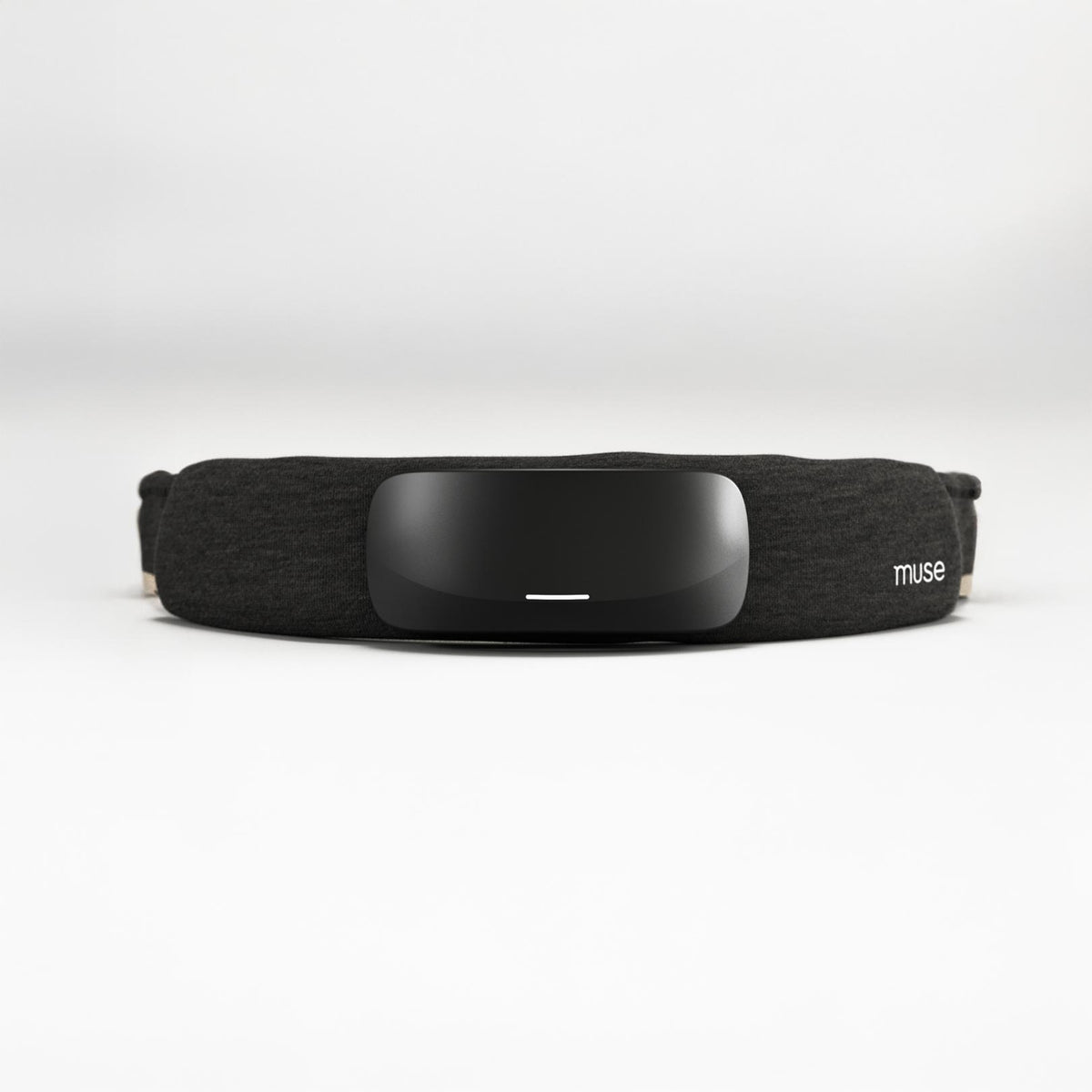
Muse S Athena brain-sensing headband by Interaxon
The instrument - the Muse S Athena. A soft band of silver-thread EEG, light-reading fNIRS, and SpO2 sensors that you fall asleep in. It looks like a sweatband. It behaves like a sleep lab.
2014
First headband shipped
1,000+
Research labs using it
$37.1M
Total funding raised
200+
Peer-reviewed studies

The Story

A gadget quietly grew up into an instrument


The pitch for Muse has always been faintly implausible: put on a headband, and you will hear your own mind. Focus, and the app plays calm weather. Let your attention drift, and it starts to storm. This is neurofeedback, and the useful thing about it is that you cannot lie to it.

Muse is the flagship product of Interaxon Inc., a company incorporated in Toronto in 2007 by a psychotherapist (Ariel Garten), an engineer (Chris Aimone), and a designer (Trevor Coleman). Before it was a company, it was an art project - installations and concerts, around 2003, where audiences changed the lights and the music using nothing but their brain activity. The founders reportedly once helped light up the CN Tower and Niagara Falls this way. Which is a charming origin story, and also a fairly literal demonstration of the entire business: turn invisible electrical activity into something you can see and hear.

The consumer headband arrived in May 2014. The trick was compression - not of files, but of instruments. Electroencephalography (EEG) normally means gel, wires, and a technician. Muse turned it into four dry sensors, a Bluetooth link, and an app that translates the signal into audio. It sold the idea that meditation, a practice famous for being hard to know if you are doing right, could come with a readout.

Then it kept adding sensors. Muse 2 (2018) folded in heart rate, breath, and movement. Muse S (2020) went soft and sleep-friendly, so you could wear it overnight. And in March 2025, Muse S Athena became the first consumer wearable to combine clinical-grade EEG with fNIRS - light sensors that read blood oxygen in your prefrontal cortex - plus SpO2. The distinction matters more than it sounds. EEG can tell you that you are focusing. fNIRS can tell you how hard your brain is working to do it. That gap, between "am I" and "how much," is roughly where the company now wants to live.

The commercial story is the one every hardware company eventually confronts: you cannot sell someone a headband twice. So in 2022 Interaxon raised a $9.5M Series C and pointed it squarely at a subscription. Sell the device once; sell the membership forever. Premium unlocks guided content, sleep tools, an AI coach named Enso, smart wakeup, and - the genuinely novel bit - features that track how your brain changes over months, not minutes.

"Muse has collected and decoded over 1 billion minutes of brain data - one of the largest EEG collections in the world."

- On the Foundational Brain Model, Interaxon's "LLM for the brain"

All of which leads to the most interesting number in the whole dossier. Interaxon says it has collected and decoded more than a billion minutes of brainwaves. It is using that to build what it calls a Foundational Brain Model - explicitly framed as a large language model, but trained to decode the brain instead of language. Whether or not that model helps you sleep tonight, a model trained on that much neural data is the kind of asset that tends to become the actual company.

The subtle tell is in the web address. The store is choosemuse.com; the newer front door is musehealth.ai. A meditation gadget is turning into a brain-health instrument. In 2025 the company said its AI platform delivers clinical-grade sleep and brain intelligence, and independent work (Lanthier et al., 2025, in SLEEP Advances) put its sleep staging at 88-96% agreement with polysomnography - the gold-standard lab test. By mid-2026, Muse's at-home sleep EEG was being wired into Cumulus Neuroscience's platform for central-nervous-system clinical trials, debuting at the Alzheimer's Association International Conference in London. The wellness gadget, in other words, is applying for a serious job.
Under The Band

What it actually measures


The Muse S Athena stacks several signals so the app can turn a night's sleep - or a five-minute sit - into a report. EEG reads electrical activity. fNIRS reads how hard the brain is working. PPG and SpO2 track heart rate and blood oxygen. An accelerometer and gyroscope catch movement. Together they make the invisible legible.

Illustrative signal mix - not a spec sheet.

EEG · brain electrical activityCore
fNIRS · cognitive effortNew
PPG / SpO2 · heart & oxygenUpgraded
Motion · accelerometer + gyroSupport

The Timeline

From brain-controlled concerts to clinical trials


2003

Brain-controlled art begins

The founding team builds installations where audiences control lights and music with EEG.

2007

Interaxon Inc. founded

Ariel Garten, Chris Aimone and Trevor Coleman incorporate the company in Toronto.

2014

Muse ships

The first consumer brain-sensing headband launches with real-time meditation neurofeedback.

2018

Muse 2

Adds heart rate, breath and body-movement sensing to the EEG platform.

2020

Muse S

A soft, sleep-friendly band adds overnight tracking and guided sleep journeys.

2022

$9.5M Series C

Led by BDC Capital and Export Development Canada to fund a subscription membership model.

2023

New CEO

Jean-Michel Fournier is appointed CEO of Interaxon.

2025

Muse S Athena + AI platform

First consumer EEG + fNIRS + SpO2 wearable ships alongside a clinical-grade AI brain-health platform.

2026

Into clinical trials

Validated at-home sleep EEG joins Cumulus Neuroscience's platform for CNS trials, debuting at AAIC 2026.

The People

Three founders, one improbable idea


AG

Ariel Garten

Co-founder · former CEO

Psychotherapist and neuroscientist; the public face who framed Muse as "seeing your own mind."

CA

Chris Aimone

Co-founder · CTO

Engineer and product developer behind the signal processing that made dry-sensor EEG usable.

TC

Trevor Coleman

Co-founder

Product designer; helped turn a lab instrument into something people want to wear.

Jean-Michel Fournier was appointed CEO in April 2023.

The Money

Funding & backers


RoundAmountDateNotable Investors
Series C$9.5M USDAug 2022BDC Capital, Export Development Canada, Alabaster, Phyto Partners, Iter Investments
Total raised to date~$37.1M-Across seed and growth rounds

Latest disclosed round: Series C. Valuation not publicly disclosed.

The Wire

Latest updates


Jul 2026

Into the clinic

Cumulus Neuroscience integrates Muse's validated at-home sleep EEG for CNS trials, debuting at AAIC 2026 in London.

Feb 2026

Deep-sleep stimulation, at home

Muse brings deep-sleep stimulation into its consumer AI sleep platform.

Oct 2025

Full-cycle sleep AI

The AI sleep platform expands with interventions across the whole sleep cycle, including an AI Coach.

Jun 2025

Clinical-grade intelligence

Muse's AI platform is positioned to deliver clinical-grade sleep and brain-health intelligence.

Mar 2025

Muse S Athena launches

First wearable to integrate clinical-grade EEG, fNIRS and SpO2 in a lightweight form.

Sep 2024

Cognitive-performance metric

Muse launches an advanced metric for tracking cognitive performance.

Good Questions

FAQ


What is Muse?

A brain-sensing headband from Interaxon Inc. that uses EEG to measure your brain activity and gives real-time audio feedback via an app to guide meditation, track sleep, and train focus.

Who makes Muse and where?

Interaxon Inc., founded in 2007 and headquartered in Toronto, Ontario, Canada.

How accurate is its sleep tracking?

Independent research (Lanthier et al., 2025, SLEEP Advances) found its sleep staging agrees with gold-standard polysomnography 88-96% of the time.

What's new about the Muse S Athena?

Launched in 2025, it's the first consumer wearable to combine clinical-grade EEG with fNIRS and SpO2 - measuring not just whether you focus, but how hard your brain works to do it.

Do I need a subscription?

The core neurofeedback works with the free app, but Premium unlocks the full content library, sleep tools, the Enso AI Coach, and longitudinal brain-tracking. New Athena units include a year of Premium.

Watch & Explore

Demos, channels & links


Share This Dossier