There is a particular sort of business problem that looks innocent on an organization chart. The brand team makes people care. The performance team makes people click. The media people buy attention. The data people explain, somewhat later, what happened. Everyone has a dashboard. No one quite owns the distance between a feeling and a sale.
Morning Walk, an independent agency with offices in Chicago and Milwaukee, has made that distance its territory. It calls the idea performance branding: discover the commercial purpose of a brand, turn it into experiences and content, connect those experiences to customer data, then measure whether the whole arrangement produced growth. The phrase is corporate. The argument underneath it is pleasingly blunt. A brand should not have to choose between being memorable and being useful to the business.
This is not a newborn agency pretending to have discovered advertising. Morning Walk traces its life to 1957, when Frank “Jake” Jacobson and his wife, Betty, opened Jacobson Advertising at a picnic table in their Sheboygan garage. The firm later became Jacobson/Rost. In 2023, Pat Goggin and Steve Simoncic bought the shares of retiring owner Jerry Flemma, renamed the company and gave an old operation a new instruction: keep moving. Goggin became partner and CEO; Simoncic, partner and chief creative officer. They did not erase the inheritance. They repackaged it.
“The name ‘Morning Walk’ represents our values of optimism, energy and forward motion.”Pat Goggin, Partner and CEO
The campaign was not big enough
The easiest way to understand Morning Walk is through a waterpark. Kalahari Resorts has worked with the agency for more than two decades. Its earlier campaign, “Make More Memories,” did what a resort campaign ought to do: it showed real families having the kind of day that makes parents forgive the price of snacks. Then the language began to sound familiar elsewhere. Competitors talked about “forever moments.” Disney talked about real family magic. Success had produced the advertising version of camouflage.
What failed first was not the work. It was its distinctiveness. Morning Walk and research partner Shapiro+Raj went back to the audience. Guests still cared about memories, but Kalahari also delivered experiences beyond expectation: enormous indoor adventure parks, distinctive dining and water attractions difficult to find elsewhere. The story did not need replacing. The invitation did. After months of research, scripting, animatics, production decisions and one 90-minute client meeting, “Get Kalahari’d Away” emerged across television, Twitch, public relations and CRM.
That sequence is worth copying. Inspect the old idea before inventing a shiny one. Study where competitors have crowded in. Separate the durable customer truth from the expression that has gone stale. Then let one organizing idea travel through every channel. It is less glamorous than declaring a revolution, and more useful.
The performance branding loop
A promise is harder to copy than a promotion
Morning Walk describes brands as ecosystems, a word that can make a simple idea sound like it requires a terrarium. Here the meaning is practical. A snowplow buyer encounters a promise, a dealer, a product, an online learning tool and the accumulated evidence that the machine will work at 4 a.m. in February. If those pieces disagree, the ad is decoration. If they reinforce one another, marketing becomes part of the product experience.
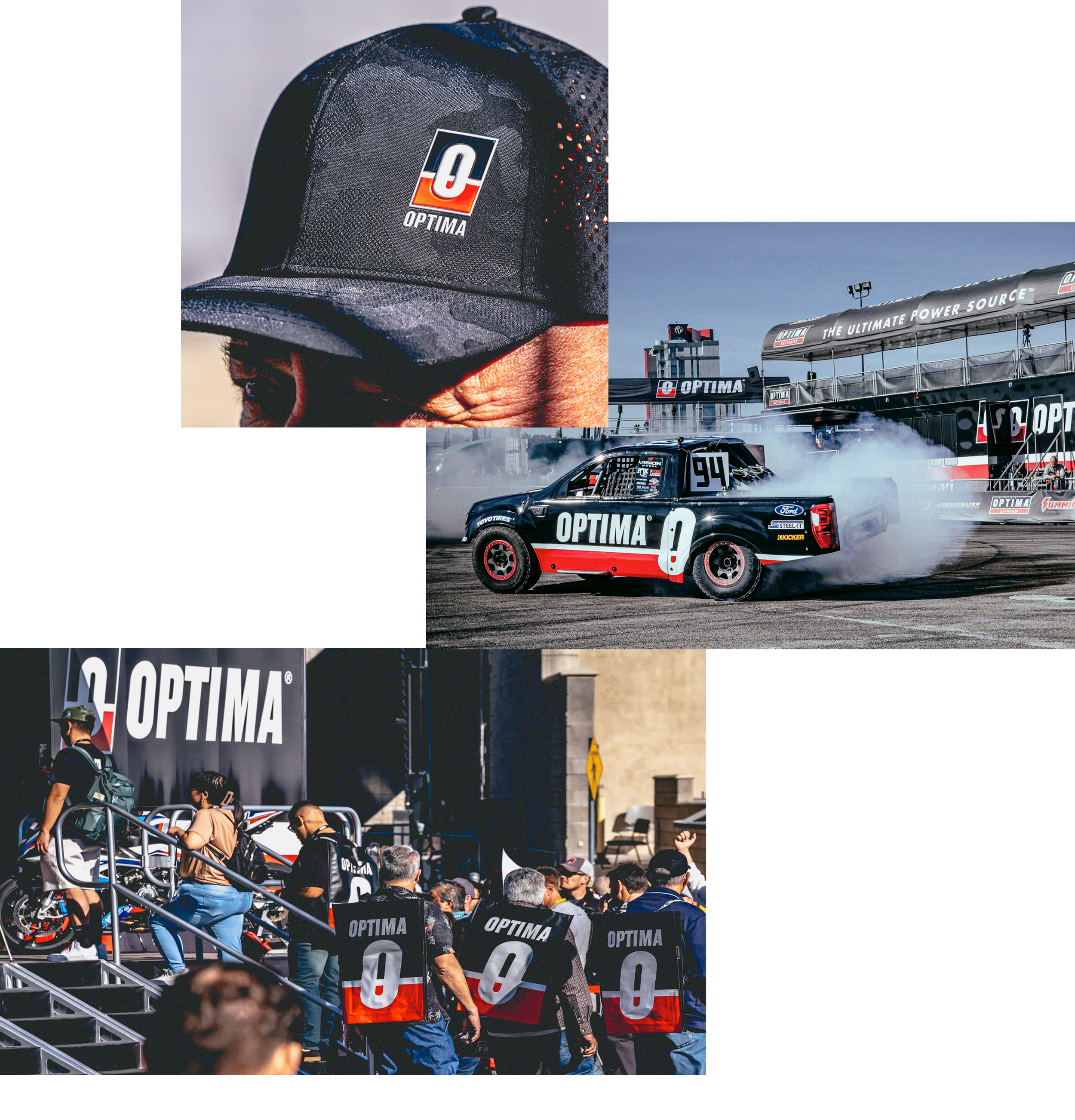
For BOSS Snowplow, the agency replaced the idea of a temporary campaign with “Keep ’em Open,” a promise that could organize advertising, dealer communication and education for owners. Morning Walk says BOSS moved from ninth to first in the snowplow market. For OtterBox, it stretched protection from a product feature into a broader source of confidence. The agency reports a 250 percent market-share increase during the relationship, plus a 13 percent rise in unaided awareness from the “Protecting Your Mobile World” campaign. For OPTIMA Batteries, brand ambassadors, torture tests, events and first-party customer capture formed one connected system. Morning Walk reports a 157 percent increase in margin since the partnership began.
These figures are company case-study claims, not a controlled experiment. They also reveal the model’s limit. It needs access, continuity and permission to work beyond the ad. A brief for three social posts next Thursday cannot become an ecosystem. Neither can a client whose product disappoints or whose departments refuse to share customer signals. Performance branding works best when the agency can connect product, creative, channels and measurement over time. Without that connective tissue, the phrase shrinks back into ordinary integrated marketing.

The number hiding behind the clever work
The agency’s homepage presents three numbers: $30 billion in enterprise value created with clients, an average 17-year tenure among its five largest relationships and 90 percent recurring revenue. The first is the loudest. The last two are the more revealing.
Agency relationships are notoriously easy to pitch and difficult to keep. A 17-year average means Morning Walk has been around long enough to watch the customer change, the media plan decay, the category copy a winning line and a useful idea become background noise. Recurring revenue means the business model depends less on isolated unveilings and more on staying close to the machinery of a client’s growth. That explains the breadth of the offer: purpose and brand strategy, campaign and content design, digital products, public relations, media, creator programs, CRM, customer-data strategy and analytics.
The roster is similarly unromantic in the best way. It includes doors, batteries, phone cases, snowplows, resorts, beer, breakfast food, fintech and intelligent suspension systems. These are products with channels, dealers, repeat customers, seasonal demand and margins. They give performance branding something solid to perform against.
AI moves into the plumbing
Morning Walk’s newer layer is technological. The company says it has built proprietary segmentation tools, invested in data strategy teams and created internal systems for briefs, prototypes and campaign reporting. Its Super:Human Sidekick collects creative AI tools in one place. Its public Performance Branding Platform is pitched as a digital workroom that remembers a brand and project history, connects existing tools and data, offers a conversational interface and uses measures such as clean rooms, federated learning and encryption to protect client information.
This is where the company is different from a brand consultancy that hands over a handsome strategy book, and from a performance shop that treats whatever converts this week as the entire truth. AI is meant to compress the time between signal and response. Creators can be matched using demographics, sentiment and brand-fit scores. Concepts can be prototyped while feedback is still useful. CRM can become more personal. Reports can arrive before everyone forgets the question.
That distinction matters because cheap content has made content itself less scarce. Morning Walk’s 2026 midyear view is that AI-assisted execution has become baseline. When anyone can produce more, the advantage shifts toward deciding what deserves to be produced, whose voice an audience trusts and which business result matters. It is a convenient thesis for a creative agency, but convenience does not make it wrong.
The old agency takes a morning walk
The name change makes more sense now. A morning walk is neither a moonshot nor a victory lap. It is a repeatable practice. You begin with yesterday’s knowledge, notice what changed overnight and move far enough to see the problem from another angle. The company says walking was already part of its creative process; it also cited research suggesting movement can increase creative output.
By the time Jacobson/Rost became Morning Walk, the agency said its performance-branding focus had helped drive 35 percent growth through new and existing clients. The ownership transition supplied the occasion, but the business model supplied the reason. A 66-year-old firm was not trying to look young. It was trying to make all its accumulated capabilities behave as one thing.
That may be the most credible part of the proposition. Morning Walk is not arguing that campaigns are dead, or that metrics have finally defeated taste. It makes campaigns. It loves a good story. It simply insists that the story continue into the product, the inbox, the store, the customer record and the next decision. The walk, in other words, is not away from advertising. It is from the advertisement to everything that happens after it.