At Southern First Bank, the irritation was ordinary: updating the software meant stopping work. A tool meant to help credit analysts was interrupting them. When renewal approached, the bank reconsidered its setup. Moody’s account of the project says commercial and industrial financial spreading was implemented within three months. Here is a useful place to begin understanding Moody’s Analytics: the unglamorous interval between receiving information and doing something with it.
- It sells company data, research, risk models, and software to institutional customers.
- Its reach runs from bank lending to insurance and financial-crime investigations.
- The practical question: can the information reach the person making the decision?
A familiar name, a different job
Say “Moody’s” and people think of bond ratings. Analytics occupies another part of the institution. The ratings business publishes credit opinions. Analytics supplies the databases, analytical tools, and working environments that help customers investigate companies and manage exposures. Since June 2024, it has gone to market simply as Moody’s. The shorter brand makes the distinction easier to miss.
Its buyers include banks, insurers, asset managers, corporate teams, and public agencies. A lender wants to interpret a borrower’s accounts. A compliance officer wants to understand an ownership chain. An insurer wants to estimate catastrophe losses. These are different professions with a shared inconvenience: the evidence arrives in pieces.
The company behind the company
Consider Orbis, the company-information database. Moody’s describes coverage of more than 600 million entities. That is a coverage figure, rather than a promise of equally rich financial records for every business. Its usefulness lies in organizing names, ownership relationships, and available financial information so people can compare organizations across jurisdictions.
In February 2026, Monaco Police announced it would use Orbis for financial-crime investigations. The announcement concerned access and investigative capability, rather than a tally of crimes solved. Still, the customer is revealing. A corporate ownership record can matter to an investigator following connections just as it matters to a bank checking a counterparty.
- 01 IdentifyWhich company?
- 02 ConnectWho owns it?
- 03 AssessWhat could change?
- 04 ReviewWhat will we do?
The wider product portfolio supplies other pieces. EDF-X offers modeled credit-risk signals. Lending tools support spreading, underwriting, and monitoring. Economic research supplies forecasts and scenarios. Grid supports screening for sanctions and other risk information. RMS brings catastrophe modeling into the insurance workflow. The expertise spans financial analysis, entity resolution, economics, and physical hazards.
Building the map was expensive
This business emerged through corporate organization and acquisitions. Moody’s grouped its non-rating activities under Analytics in 2007; 2008 was its first full year of coordinated operations. Treating it as a startup founded by John Moody would collapse two different histories.
The acquisitions explain its shape. In 2017, Moody’s agreed to buy Bureau van Dijk for €3 billion, then approximately $3.27 billion. Closing documents recorded $3.542 billion, including debt retirement. In 2021, it announced the purchase of RMS for approximately $2 billion. Company relationships and natural disasters became parts of the same institutional risk offering.
My reading of that strategy: a borrower’s financial statements tell only part of the story. Ownership, economic conditions, and physical exposure can change the interpretation. Bringing those inputs together creates useful questions. It also creates an integration job. Purchasing expertise and making it convenient to use are separate achievements.
The subscription has to earn its place
Analytics reported approximately $3.6 billion in 2025 revenue. Its business model centers on subscriptions, data access, software, and related services. This gives the vendor a continuing commercial relationship with customers whose work recurs every day: screen another business, review another loan, monitor another portfolio.
The price depends on what is purchased. One public UK G-Cloud 15 Orbis schedule lists a £102,900 base for up to one named user, with a minimum 12-month contract. Modules add charges; API access is listed at 20% of base. That procurement schedule is a specific example, rather than a universal quote for every Orbis customer.
For a buyer, the comparison belongs at the task level. S&P Global Market Intelligence also provides credit and financial-risk analytics. LSEG Risk Intelligence offers compliance-screening alternatives. Moody’s case rests on its combination of company information, credit expertise, and decision software. Breadth matters when those components solve a connected problem; a narrower requirement deserves a narrower comparison.
AI gets a seat at the analyst’s desk
Research Assistant, launched in December 2023, adds a conversational interface to Moody’s information. Users can screen companies, examine financials, investigate credit questions, and support portfolio monitoring. The attraction is easy to understand: ask a question instead of assembling every relevant document by hand.
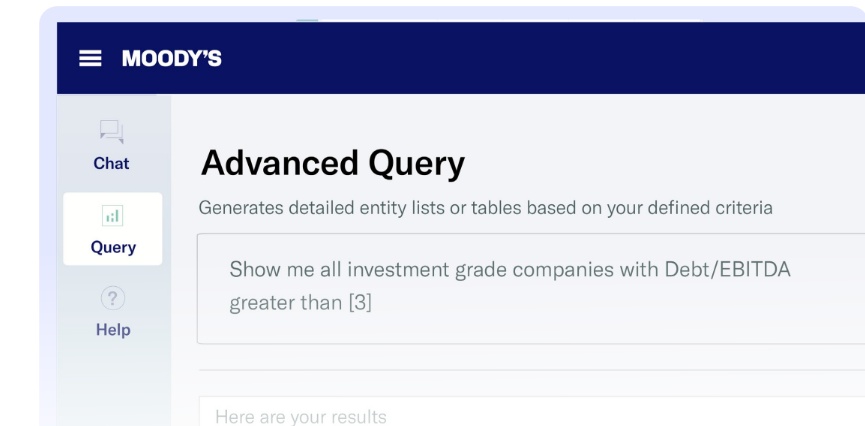
Distribution is changing too. Moody’s April 2026 partnership overview describes intelligence entering environments including Microsoft 365 Copilot and Excel. Its Databricks relationship delivers datasets into customer analytics environments. The strategic inference is straightforward: useful information gains value when reaching it requires fewer detours.
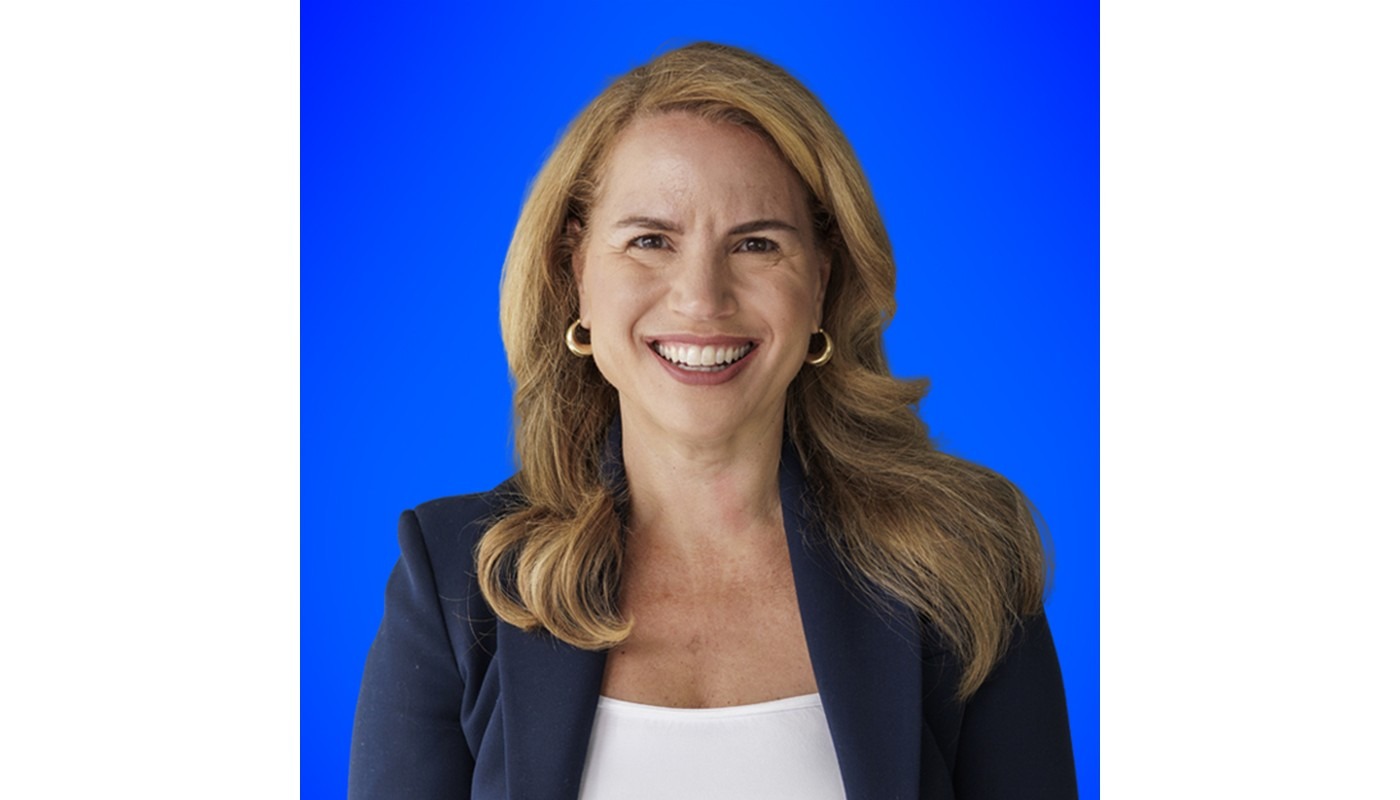
In April 2026, Moody’s announced Christina Kosmowski as Analytics CEO, effective June. Her background includes LogicMonitor, Slack, and Salesforce. The appointment puts enterprise software and customer adoption near the center of the story.
“My focus is to ensure every customer can act on that intelligence”Christina Kosmowski · April 2026
Start with the interrupted work
The lesson to borrow is operational. Map one decision from incoming document to final review. Identify where people wait, retype, reconcile, or lose context. Then test whether a proposed tool removes that friction with records and reviewers representative of the actual job.
There are limits. A stale company match can undermine an ownership check. A scenario depends on its assumptions. An AI summary needs examination against the underlying evidence. These are practical implications of the work, not promises that a larger database will erase uncertainty. Southern First’s interrupted updates offer a useful purchasing question: exactly which interruption will this subscription remove?