At a team lunch in Toronto, six years into Bettermode, Mohsen “Mo” Malayeri found himself measuring the company in people. There were stories to exchange and colleagues to appreciate. There was also a confession: it had taken several companies and a few decades to reconsider what success ought to mean.
His September 2024 reflection wandered away from the usual founder trophies. A unicorn valuation, a public offering, material rewards: these had lost their exclusive claim on the scoreboard. He was thinking about the company one keeps, and the work that makes another morning feel worth getting up for. An anniversary lunch had turned into an audit of ambition.
For someone selling software that helps people gather, it was an apt place to arrive. Malayeri is the co-founder and CEO of Bettermode, the Toronto company once called Tribe. But his interest in assembling people predates its product, its investors and its name. Before there was a platform, there were weekends, university campuses and aspiring entrepreneurs trying to find one another.
The accelerator had to wait
The early career had a more conventional opening. Malayeri co-founded an online advertising business, Anetwork, before moving into the work of helping other people start companies. He co-founded the Iran Entrepreneurship Association in 2012 and Avatech, an Iranian startup accelerator, in 2014. The sequence matters. An accelerator needs entrepreneurs ready to use it.
Avatech program manager Sara Usinger later described a practical difficulty behind its beginnings. When Malayeri first considered an accelerator, the surrounding startup community needed development. He and other organizers worked on that first: Startup Weekends, meetups and gatherings that could help people become teams. The institution would follow the activity.
That is an inconvenient order of operations for anyone hoping to begin with an impressive sign above the door. People must have reasons to walk through it. The work involved creating awareness, encouraging ideas and making entrepreneurship something people could practice together. Only then would a structured program have enough promising companies to support.
By 2014, Malayeri had organized more than a dozen startup weekends across nine Iranian cities. Most participants were young adults. He also remembered a 12-year-old arriving with an idea. Anyone who has struggled to finish a slide deck may find that detail mildly unfair.
A prize you could talk to
In 2014, he organized a trip for Iranian entrepreneurs to Startup Istanbul. The event put them in contact with international mentors and investors. Financial sanctions severely constrained the investment possibilities, but the conversations still mattered. Malayeri saw value in getting into the room and hearing how people outside the domestic market assessed a business.
“Startup fever is everywhere,” he said at the time. It was a compact description of the enthusiasm he was helping organize. The trip offered practice, feedback and exposure to investors; an Iranian payments startup, Zarin Pal, earned an honorable mention. Malayeri treated access to experienced investors as a reward in itself.
Seen from his later career, that episode supplies an early version of a recurring question: how do you make a useful encounter possible? A conference trip, a weekend workshop and a customer forum differ enormously in scale and machinery. All require someone to arrange the conditions for a worthwhile exchange.
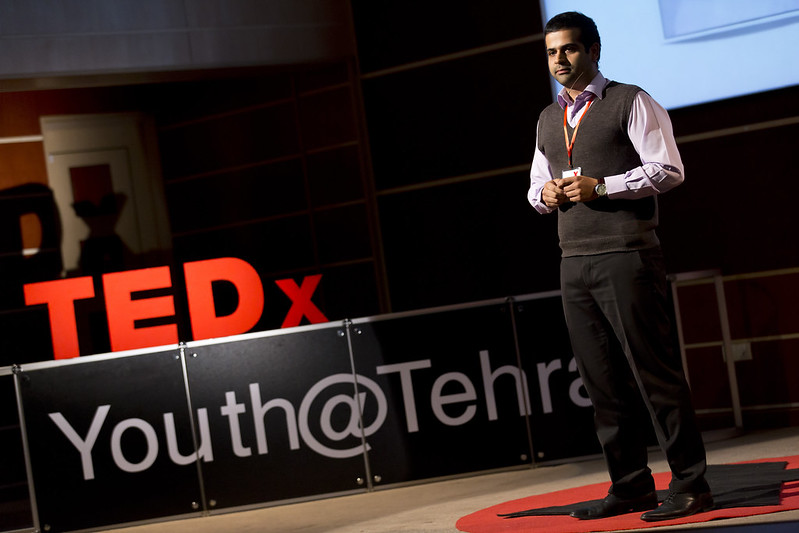
His speaking work followed the same territory. At TEDxYouth Tehran, he addressed seven do’s and don’ts of entrepreneurship. At Startup Grind Tehran in January 2015, his own career became the subject of a fireside conversation. The organizer had become someone whose experience other organizers wanted to put on stage.
- 2012Iran Entrepreneurship Association
- 2014Avatech accelerator
- 2018Tribe founded in Toronto
- 2023CEO of Bettermode
Three founders, one shared problem
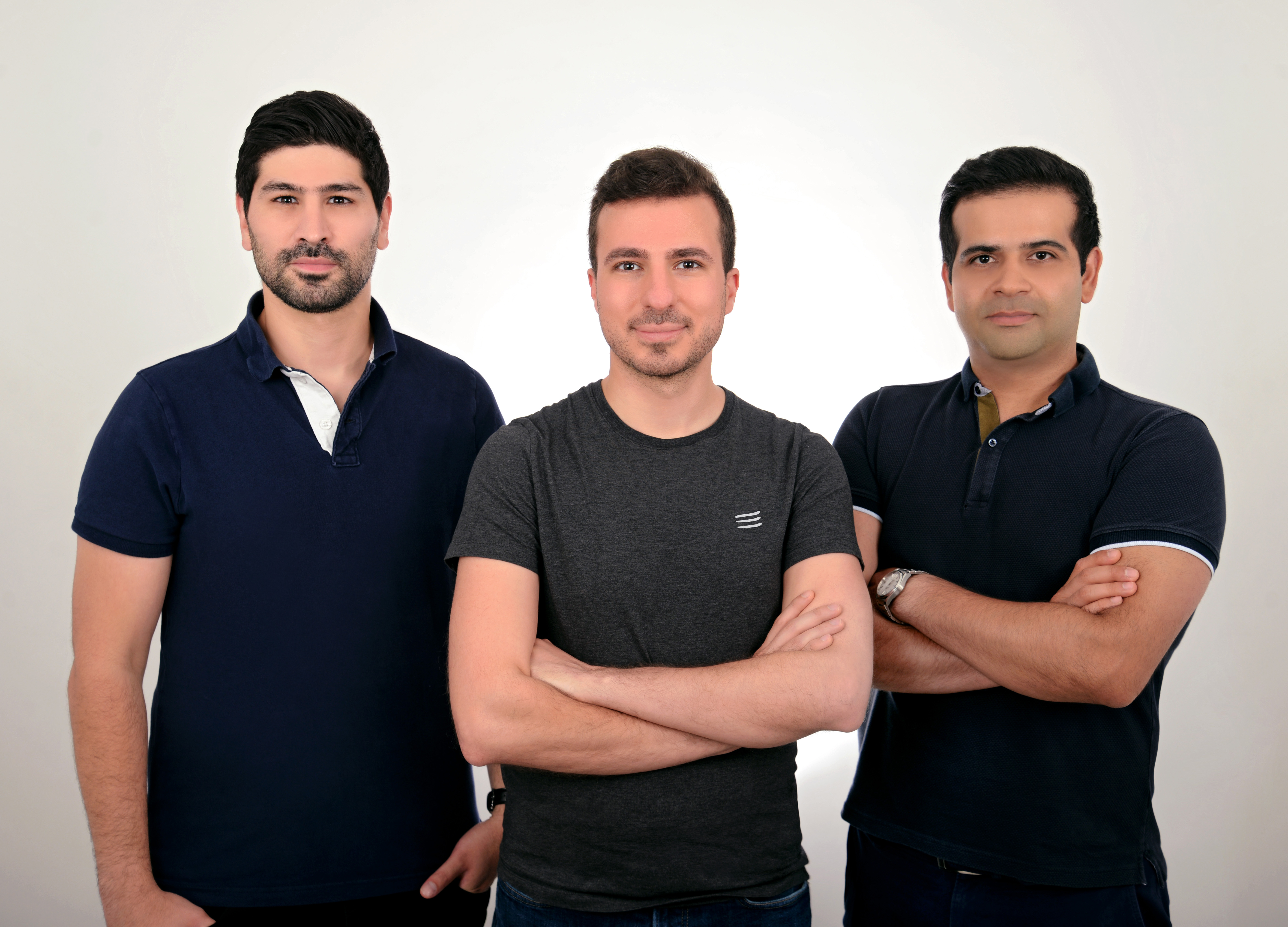
In Toronto in 2018, Malayeri co-founded Tribe with Siavash Mahmoudian and Soheil Alavi. The founders had migrated to Canada from Iran. Their company took a familiar human activity - customers helping, questioning and learning from one another - and gave businesses software for hosting it under their own brands.
The proposition was practical. A business could have a place for discussions, questions, feedback and shared knowledge. Its customers could meet one another somewhere connected to the product they were using. The company would provide the infrastructure and customization; the business and its members would still have to give the place a purpose.
In June 2021, Tribe announced a $7.5 million seed round led by Bessemer Venture Partners and CRV, with participation from Inovia Capital. Bessemer described a market in which businesses were piecing together communities on general-purpose social services. Tribe offered a customizable place that a business could shape around its own users.
The investment thesis gave commercial weight to something Malayeri had been doing for years. A useful community can help people learn, help a business understand its customers and give experienced members somewhere to contribute. Funding could expand the infrastructure. The quality of the exchanges would determine whether anyone returned.
Bessemer Venture Partners + CRV, with Inovia Capital
By January 2023, the company was publicly introducing itself as Bettermode. Malayeri announced his move into the CEO role that September, acknowledging Mahmoudian’s work building the foundation and Alavi’s product leadership. His own earlier title had been co-founder and COO. The change put him in charge of a company whose product had already gone through substantial iteration.
Start with something people can use
Malayeri’s advice to community builders is unusually compatible with an unfinished room. He teaches a “minimum viable community”: an early version that tests whether people have a real problem a community can help solve. The concept asks builders to learn from actual participation before furnishing every corner.
In a masterclass with The Community Club, he set out five components: members, content, structure, user experience and design. Each needs a lean first version. Working on them together is more useful than perfecting one while leaving the others absent. A beautiful empty forum is still asking visitors to admire the furniture.
Members02
Content03
Structure04
UX05
Design
Build a lean version of each. Observe participation. Improve from feedback.
His guidance also makes room for work that will resist automation. Introduce members to one another. Help resolve their problems. Collect data early and use it to learn. Elaborate optimization can wait while the basic value of the community is being established. The first useful introduction may teach more than another afternoon spent rearranging menus.
There is a recognizable connection to Avatech’s beginnings. In both settings, the people and their activity need attention before the institution can fulfill its promise. That is a reading of his career rather than a claim that every decision followed one grand plan. The continuity lies in the practical work: create an opportunity to participate, then see what happens.
The small print is part of the job
His public product updates bring that idea down to the level of software maintenance. A June 2022 release explained unread-post counts and feed sorting. These are modest features with a clear social purpose: help returning members see what they have missed and make discussions easier to follow.
A Mailchimp integration announced the following month connected community membership information to audience segmentation. The details were administrative, but the use cases concerned relationships: welcoming a new member, recognizing a loyal customer or sending a message relevant to a particular interest. Community building generates a surprising amount of clerical work.
In August 2025, Malayeri was still publishing updates about such particulars. Drafting and scheduling through Zapier, a mobile comment box that stayed visible and clearer sign-in error messages appeared alongside integration fixes. The list suggests the everyday responsibility behind the CEO title. Even a company devoted to connection has to explain why someone cannot log in.
Back around a table
His January 2026 look back at 2025 combined growth with an admission that the year had been difficult. He reported more than two million new users and engagement growing sixfold year over year, alongside new customers including Webflow, HiBob and Verkada. These were his reported figures, with no absolute engagement baseline supplied.
He also described a new leadership team and a move to working in person at the company’s downtown Toronto office. Ami Asadi announced his arrival as partner and chief product officer; Farhad Hedayatifard announced his role as partner and chief technology officer. Their accounts emphasized longstanding relationships with Malayeri. The next chapter involved people who already had some shared history.
Hedayatifard outlined plans for AI-assisted engagement and moderation, community-aware models and changes to the app platform. Those were announced ambitions. They introduce an interesting test for a company whose CEO has urged beginners to spend time making personal introductions: which tasks can software usefully take over, and which encounters still need a person paying attention?
“It’s about the people you spend your time with and what excites you to wake up every morning.”
Mo Malayeri, reflecting on Bettermode’s sixth anniversary, 2024
The anniversary lunch offers a less technical measure. Malayeri had spent years creating opportunities for other people to meet, work and build. In Toronto, looking around his own team, he was applying a similar standard to his life. Who is here? What are we making together? Is the work still interesting enough to continue?
His TEDx biography records a fondness for coffee, startups and entrepreneurship. The coffee fits. Gathering people is a business with many meetings, and software has yet to make a satisfactory cup. From Iranian startup weekends to a Toronto office, Malayeri’s work keeps returning to the same ordinary event: people finding a reason to stay in the conversation.