The people who liked Top Hat could not buy it. In a 2015 account of the company’s beginnings, Mike Silagadze and Mohsen Shahini had found enthusiastic university administrators, but little purchasing authority or available budget. One pilot needed a third-party grant to cover its $10,000 cost. A promising classroom idea had run into the machinery of the university.
- Polls, readings and assessments give instructors feedback during the course.
- Students buy subscriptions; campuses can cover platform access.
- AI support follows assigned materials. Teaching decisions still belong to people.
The sale that would not close
The founders changed the route. Professors already selected textbooks. They could select classroom software, too, with students paying a subscription. The retrospective describes an early cohort of 15 professors, five universities and 3,500 students paying $20 a semester. The shift made adoption possible at the level of an individual course.
Top Hat began in 2009, in an apartment near the University of Waterloo. Its underlying problem remains recognizable: a lecturer can explain something clearly, look across a quiet room, and have very little idea whether the explanation worked. Silence supplies almost no useful detail.
A question, then a different lecture
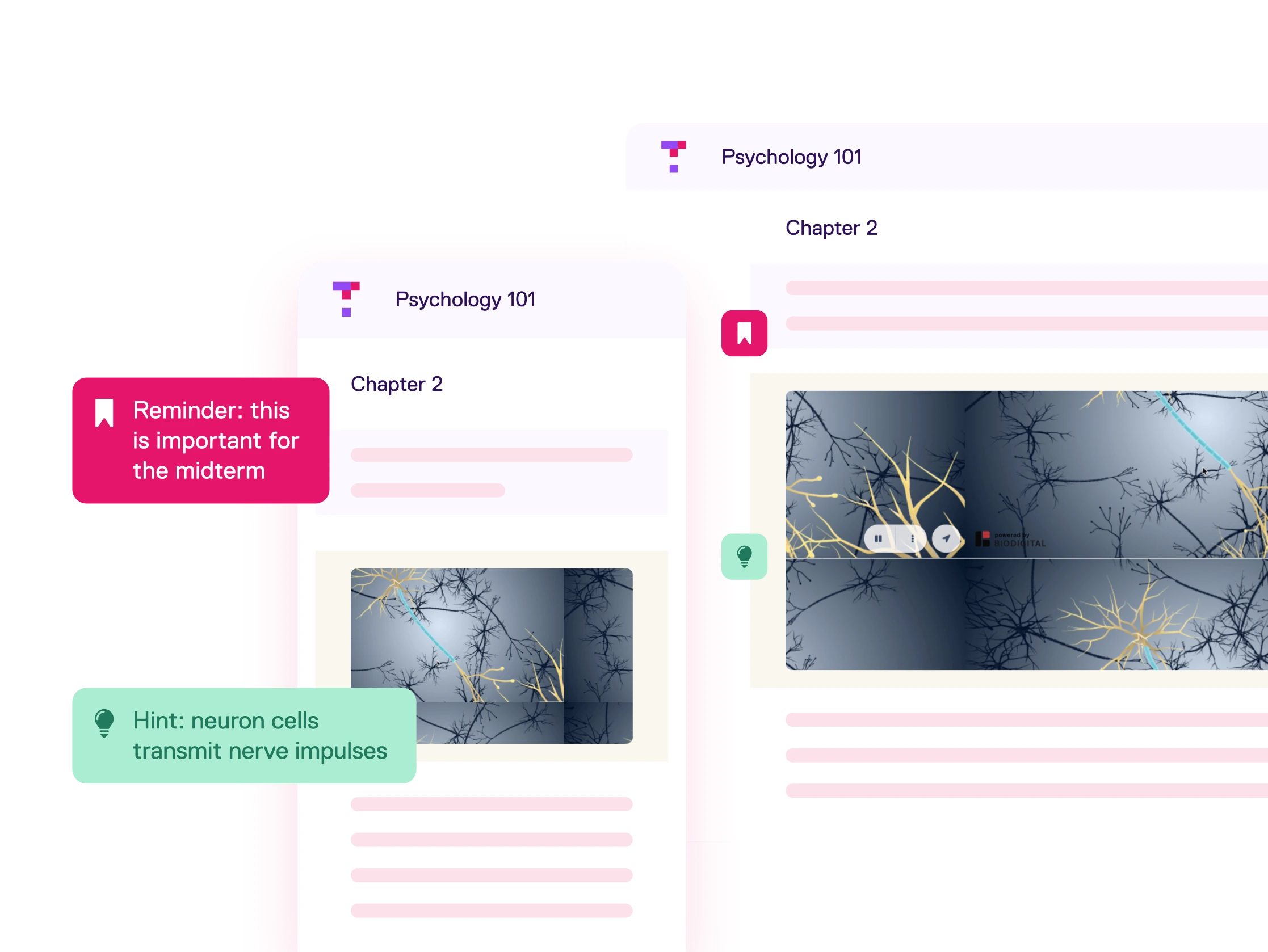
Top Hat turns students’ own devices into a way of answering back. An instructor can present a poll, collect answers, run a discussion or check attendance. Outside class, students encounter interactive readings, assignments and quizzes. The gradebook and performance reports gather these activities into a picture the instructor can inspect.
Consider a practical use: ask a conceptual question before moving to the next topic. If the answers split, pause. Ask students to discuss their reasoning, then revisit the concept. This is an illustrative teaching sequence, rather than a reported classroom event. Its value depends on the instructor being willing to change the next ten minutes.
That helps explain where the company fits. Top Hat complements a learning management system, with roster and grade synchronization, rather than requiring a campus to rebuild its administrative home. iClicker and Poll Everywhere also provide classroom engagement tools. Top Hat’s pitch bundles those interactions with editable course content and course-specific AI support. The choice turns on how much of that bundle a course needs.
NC State offers a concrete example. In its 2018 account of campus adoption, physics instructor Zodiac Webster described students who hesitated to raise their hands but would post questions electronically. Accounting professor Bruce Branson used polling feedback to decide whether to spend longer on a concept. The university also described work on classroom Wi-Fi and faculty training. Those details matter together: students need a reliable way to respond, and instructors need a reason to interrupt their slides.
The textbook joins the conversation
A polling tool has to wait for someone to write a question. A courseware company can put the question inside the reading. Top Hat lets educators adopt digital textbooks, rearrange material, add multimedia and author their own resources. Its expertise increasingly spans both the software and the content that gives students a reason to open it.
Capital helped widen that ambition. Top Hat announced $55 million in Series D equity and debt financing in February 2020. During that year it acquired Nelson’s Canadian higher education business, bluedoor and Fountainhead Press. In February 2021, Georgian supplied a $130 million Series E. Joe Rohrlich succeeded founding CEO Silagadze that March; Maggie Leen became CEO in March 2024.
The January 2026 Wiley partnership adds another route to content. Selected psychology and anatomy and physiology titles can be adapted within Top Hat and used with its engagement tools. For an instructor, the attraction is continuity: the assigned reading, the question in class and the later practice can inhabit the same environment.
Who gets the bill?
The early adoption trick also created a tension. The instructor chooses; the student may pay. Current public platform prices are $35 for four months, $58 for twelve months and $96 for forty-eight months, in US dollars. An assigned textbook changes the combined price. A platform required across several courses may justify a longer subscription; occasional use makes the purchase harder to defend.
Institutional licensing changes that arrangement. UW–Madison introduced an enterprise agreement in 2022. A January 2026 Top Hat announcement reported more than $1 million in student savings over the preceding year, usage by educators and students more than doubling since implementation, and 30 percent more courses using it over the past year. The university’s own guidance confirms that students and instructors can use the platform without paying a subscription.
“Affordability and instructional excellence are top priorities for our institution.”Kristy Bergeron · UW–Madison · January 2026
These observations make a useful purchasing case, with limits. Student savings describe charges avoided, while the institution pays for access. Adoption measures use. Neither establishes that the software caused better learning. The announcement also credits coordinated outreach and hands-on faculty support. The license came with people helping other people use it.
The next question is personal
Ace, introduced in 2023, extends the same feedback idea into AI. Educators can generate questions from their material. Students get explanations and practice linked to their course. July 2025 additions included examples connecting concepts to students’ interests and targeted practice around areas of difficulty. Content Enhancer followed in October, offering accessibility checks and recommendations for course materials.

Generated questions still need review. Participation still needs interpretation. A phone connection, accessible materials and time for course preparation remain practical requirements. A class needing only an occasional anonymous poll may find a simpler tool sufficient. Adding software without changing what happens after a wrong answer leaves much of the opportunity unused.
An instructor can test the mechanics before committing a class: Top Hat’s current guest mode lets students join polls and discussions without accounts, for up to five sessions in a course without enrolled students. That offers a useful rehearsal. Upload slides, review the proposed questions and see whether the answers reveal anything the lesson would otherwise miss.
Top Hat’s January 2026 announcements describe more than three million students served annually across over 1,500 institutions. The scale is substantial; the useful habit is small enough to copy tomorrow. Ask a question before the exam. Inspect the replies. Make room in the lesson to respond. The technology can deliver the answers. Someone still has to decide what they mean.