Ask a room full of students whether they understand, and the room may tell you very little. Ask each student to choose an answer, and suddenly there is something to work with. A split vote. A popular mistake. A confident answer that happens to be wrong. Macmillan Learning’s business increasingly occupies that small, consequential space between presenting information and discovering what somebody understood.
- Textbooks supply the content; Achieve connects it to practice and assessment.
- iClicker lets instructors collect responses across a class.
- The AI Tutor’s usefulness depends on students doing some thinking.
A publisher acquires a second job
The name suggests a shelf of books. The corporate history explains the software. In October 2015, Macmillan announced the combination of its Higher Education and New Ventures groups, effective January 2016. Established imprints such as Bedford/St. Martin’s, W. H. Freeman, and Worth would share a division with education technology businesses including Sapling and iClicker.
That arrangement paired two kinds of expertise: commissioning and editing material professors trust, and building tools that register what students do with it. The company remains privately held and family-owned within Holtzbrinck. Its stated values emphasize inclusion and collaboration with educators. The practical test of those commitments is whether the material and the tools make sense to the people using them.
The portfolio reaches across humanities, social sciences, and STEM. Students use the materials; instructors select and assign them; institutions and bookstores help deliver access. Macmillan International Higher Education joined forces with the business in 2021, extending its international footprint. This is an established educational supplier adapting its machinery around digital coursework.
The book becomes a loop
Achieve is the center of that machinery. Its comprehensive version arrived for fall 2020. Depending on the course, students get an e-book, assignments, adaptive quizzes, multimedia, and feedback. Instructors get assessment resources and performance information. Achieve connects to a campus learning management system, making the courseware part of an existing workflow.
There are several ways into the system. Read and Practice pairs reading with adaptive quizzing. Essentials offers a smaller collection of course tools. The fuller courseware adds more support. Curriculum Solutions handles custom materials, including combinations of existing and instructor-created content, delivered digitally or in print.
Repeat while there is still time to change the lesson.
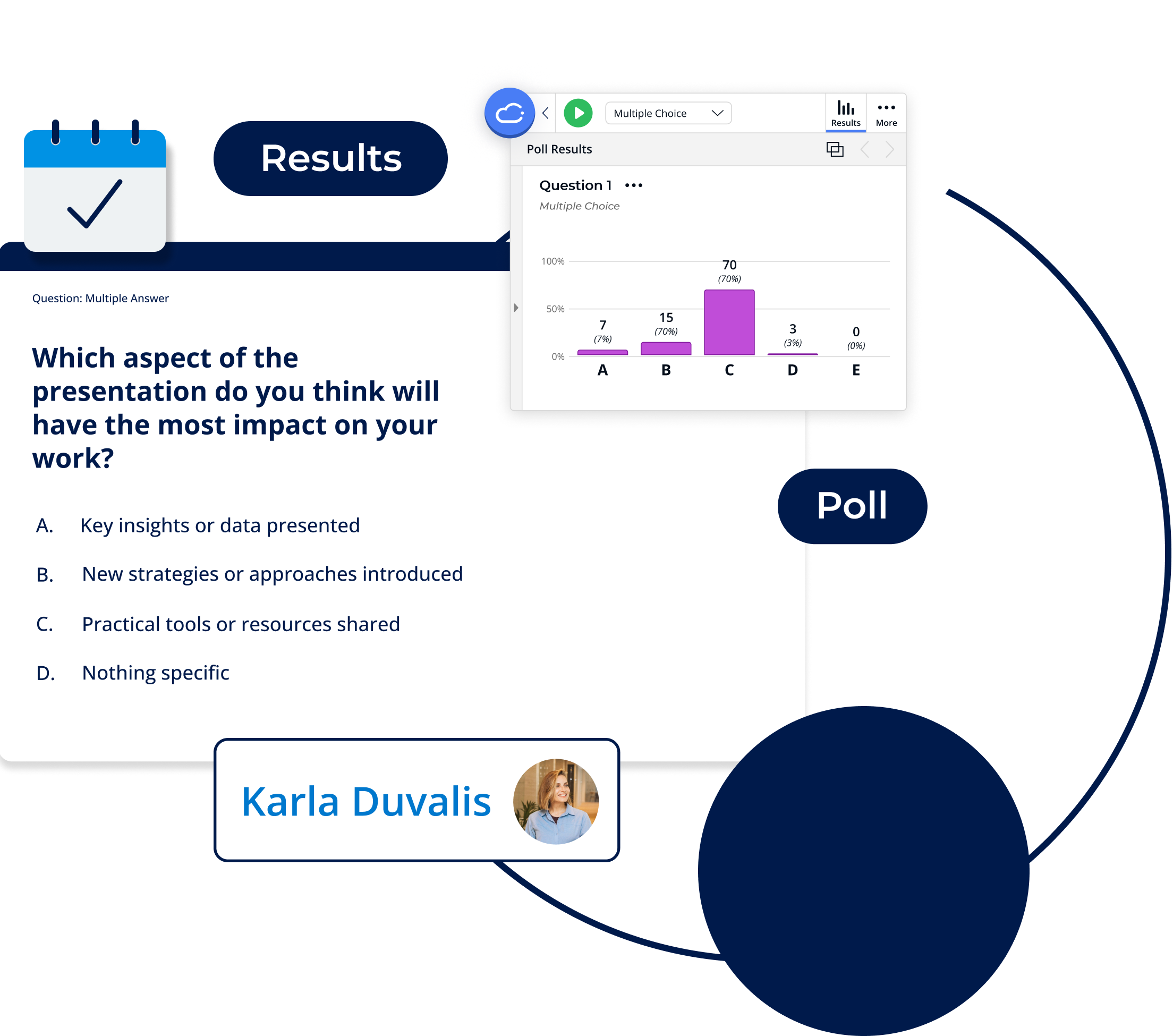
iClicker brings the same logic into class through polls, attendance, and confidence ratings. Its toolbar works with existing teaching materials. A teacher can ask a question, inspect the response pattern, and decide whether to continue or pause. A histogram earns its keep when it changes what happens next.
A tutor with another question
The AI Student Tutor moves that exchange into homework. Available in selected Achieve courses, it is designed to guide students through problems with questions and explanations. Biology, chemistry, and economics are among its supported subjects. The product’s premise is that help should keep the student inside the reasoning process.
Macmillan’s April 2026 research summary, drawing on more than 1,200 students across 36 institutions, makes a useful distinction. Students using only preset prompts showed little improvement. Students engaging in their own words showed stronger gains. The summary reports the best outcomes when the tutor was used on 25% to 75% of homework questions.
More than 1,200 students informed the company’s April 2026 AI Tutor research summary. Engagement style mattered.
These are company-reported findings, not a guarantee for the next class. They also complicate the idea that access alone solves the problem. A student can operate a tutor without making much intellectual use of it. Teaching someone to ask a specific question may matter as much as providing the chat window.
“learning is dynamic, expansive and deeply human”Susan Winslow, CEO, July 2025 identity announcement
There is still a bill
The economics deserve attention because the person choosing courseware may not be the person paying. Faculty adoption can lead to student purchases of books or access. Institutional and departmental licenses offer another route. Custom materials add another service. The commercial relationship crosses the classroom in several directions.
iClicker’s published pricing provides a concrete example: instructor accounts are free; a standalone student app subscription lists $15.99 for six months or $24.99 for a year. One subscription can cover multiple courses. Most Achieve courses include iClicker at no additional student charge. Those figures are listed prices checked in October 2026; the assigned course determines what a student actually needs.
The crowded space beside the syllabus
Macmillan faces familiar alternatives: Pearson’s MyLab and Mastering, McGraw Hill Connect, and Cengage’s MindTap and WebAssign. Free educational materials and assignments built in a campus LMS create a different comparison. Macmillan’s pitch rests on bringing authored content, practice, assessment, and classroom participation together. Whether that combination earns its price is a course-level decision.

Its recent changes show where the work is going. The release history documents AI Tutor expansion and Respondus assessment security. A July 2025 visual refresh explicitly marked the shift toward a digital learning identity. Behind the new look sits an older editorial problem: deciding what students need explained, and how to explain it.
For a department considering adoption, the first useful exercise is mundane: open a free instructor sample course in the relevant discipline. Work through an assignment as a student would. Check which features that particular course includes. Then examine the grading and LMS connection. A demonstration of the whole portfolio can make every tool look adjacent; an actual syllabus reveals which connections the instructor will use week after week.
Copy the pause
An instructor can borrow the underlying method without buying the entire portfolio. Ask everyone to commit to an answer. Look for a shared misunderstanding. Invite an explanation. Adjust the teaching, then ask again. When using AI help, ask students to describe the obstacle in their own words and later solve a similar problem unaided.
The approach needs room for revision. If polls become attendance theater, if assignments reward completion alone, or if feedback arrives after the course has moved on, the loop loses its purpose. Macmillan Learning supplies several ways to notice confusion. The teacher’s next decision remains the part that makes noticing worthwhile.