At seventeen, Siavash Mahmoudian had a peculiar problem with his dating app: he was too young to use it. The minimum age was eighteen. The programmer could build the door, write the rules and attract an audience, yet still fail the admission test. As an introduction to the difference between making software and belonging somewhere, it was unusually thorough.
He later put the app’s audience at 400,000 people. Another project, a chatbot running through Yahoo Messenger, connected people with experts. That one produced a particularly durable connection: he met two future co-founders through it. A tool for introducing strangers had, rather efficiently, introduced him to his own business partners.
Years later, Mahmoudian would co-found Tribe, the Toronto community platform renamed Bettermode. He served as CEO from 2018 to 2023. Today he is chief technology officer at Passage. The organizations have changed; the question running through his work remains recognizable. What has to be built before people can get somewhere together?
The programmer outside his own door
Mahmoudian grew up building things online in Iran. He dates his first programming to age nine or ten. His early interest was already social: software that helped people find one another, exchange knowledge or form a group. An online community offered both an engineering problem and an immediate test of whether anybody cared.
There is a useful distinction here between an audience and a relationship. Hundreds of thousands of registrations can describe reach. A future co-founder arriving through a chatbot describes something more consequential. The connection persists after the interface has become a period piece. Yahoo Messenger now sounds like a museum exhibit; the friendships turned out to have a longer support cycle.
His working life took him from Iran to the United States and then Canada. Across those moves, the subject kept returning in different forms: collaboration, community software, tools other people could use to build their own networks. The trajectory makes more sense as a sustained interest than as a succession of fashionable startup categories.
A small offer, before the company
One early public exchange catches that interest at a smaller scale. In February 2011, a developer asked a Persian Computing discussion group for code to convert Persian words written with English characters into Persian script. Mahmoudian replied that he had written a PHP tool four years earlier. He supplied two links and offered to share the code for an open-source project.
The converter, he explained, worked from users’ choices accumulated over four years. Even here, the people using the tool helped shape what it did. This was an ordinary technical reply, addressed to somebody trying to solve an ordinary problem. There was no fundraising announcement attached, and no need to turn the exchange into a manifesto.
It is a telling piece of the record precisely because it is small. A person needed help; another person had built something useful. The distance between them was a message and a pair of links. Community can look terribly grand in a pitch deck. In practice, it often begins with somebody answering the question.
When NASA wants a button
In the United States, Mahmoudian co-founded Breezio, another community software business. Its customers included NASA and the State of Maryland. Those names brought a difficult lesson. Large customers had particular requirements, and their requests pulled the company toward custom development. A small change could be perfectly reasonable for one customer while making the shared product harder to maintain.
The button was his memorable example: when an organization like NASA asks for one in a particular place, saying no becomes difficult. The joke has a serious engineering problem underneath it. A business selling reusable software can gradually find itself selling exceptions. Every exception is defensible. Collect enough of them and the original product starts to disappear.
Two requirements followed him into his next company. Communities needed room to differ, and their social features needed to fit inside the products people already used. The challenge was to accommodate those differences without commissioning a fresh piece of software each time. Flexibility had to become part of the machinery.
A conceptual map of Tribe’s platform philosophy, rather than a performance chart.
Five customers. One missing bank account.
In Canada, a side project became the starting point for Tribe. Mahmoudian’s longtime friends Soheil Alavi and Mohsen Malayeri joined him as co-founders. The business was founded in Toronto in 2018. Their shared history mattered: this was a reunion of people who already knew one another, organized around something Mahmoudian had begun to build.
The first sales arrived with less ceremony than most corporate origin stories require. A prototype took two weeks. Four weeks of marketing brought five customers willing to pay $300 a month. The team had reached $1,500 in prospective monthly recurring revenue before it had a bank account. Incorporation and collecting the money became practical necessities.
That order of events gives the story its pleasing awkwardness. Demand had turned up while the business was still getting dressed. It also offered a concrete signal. Five customers had put a price on the problem the founders wanted to solve. A prototype could start the conversation; customers prepared to pay gave the conversation somewhere to go.
to pay×$300per customer
per month
$1,500 in monthly commitments - before the bank account.
A platform has to earn the name
Tribe’s $7.5 million seed round closed in November 2020, co-led by Bessemer Venture Partners and CRV. The money helped fund a more extensible product. The distinction mattered because allowing customers to switch features on and off is a much smaller promise than allowing other developers to build useful things of their own.
The investment thesis extended beyond any individual discussion board. Bessemer saw community as an asset a business could cultivate around its customers. Inovia described the opportunity in terms of infrastructure, drawing parallels with Shopify for commerce and WordPress for content. Both comparisons placed the value in what other people could create on top.
For Mahmoudian, that proposition also had a competitive dimension. A feature can travel quickly between rival products; the relationships formed around a product take longer to reproduce. His compact expression of the idea was: “You can copy a product, but you cannot copy a community.” It is an argument for treating the conversations as part of the business.
“You can copy a product, but you cannot copy a community.”
Siavash Mahmoudian · 2021
Building the next version also meant bringing in people with relevant experience. In 2021, Tribe announced the acqui-hire of pe•ple co-founders Han Wang and Hahnbee Lee. Their work included customization, analytics and Q&A. Mahmoudian described the benefit in practical terms: improvements in the engineering team’s speed and the quality of its changes. The platform ambition had acquired a staffing plan.
The engineer leaves the code drawer open
His public GitHub profile offers another view of the same career. Under the username syavash, Mahmoudian shares a web-development-course repository described as source code for his video tutorials. Other visible projects include ai-class and magicode, the latter described as code used to make videos. There is also a fork of a directory of Toronto’s open-source companies, people and projects.
These are modest artifacts beside a funded company. They make the technical part of “technical CEO” tangible. Somebody can inspect the examples, reuse an exercise or follow the machinery behind a demonstration. The teaching materials sit in public, where a learner can do more than admire a finished result.
He has talked through the business side in public, too. In January 2021, he joined Alavi on the Persian-language podcast Tabaghe 16 to discuss Tribe and product-market fit. The format brings the co-founder relationship into view: two people with a shared company talking about the work of finding its market. For a community-software founder, explaining the process is itself a form of participation.
A new name, then a new job
Tribe became Bettermode in 2022. In his announcement, Mahmoudian connected the new identity with continuous improvement and higher standards. Renaming a business can be a lavish exercise in typography. Here, his stated emphasis was on the ongoing work the name was supposed to demand.
The leadership changed the following year. In September 2023, Malayeri announced that he was stepping into the CEO role, thanking Mahmoudian for the foundation he had laid over five years. Alavi continued to receive recognition for his product leadership. The announcement made the company’s shared authorship visible at the moment its chief executive changed.
In 2023, Mahmoudian moved to Passage as CTO, working alongside founder and CEO Martin Basiri. His present work belongs to a different problem: helping international students access Canadian education through a platform that combines matching, financing and support.
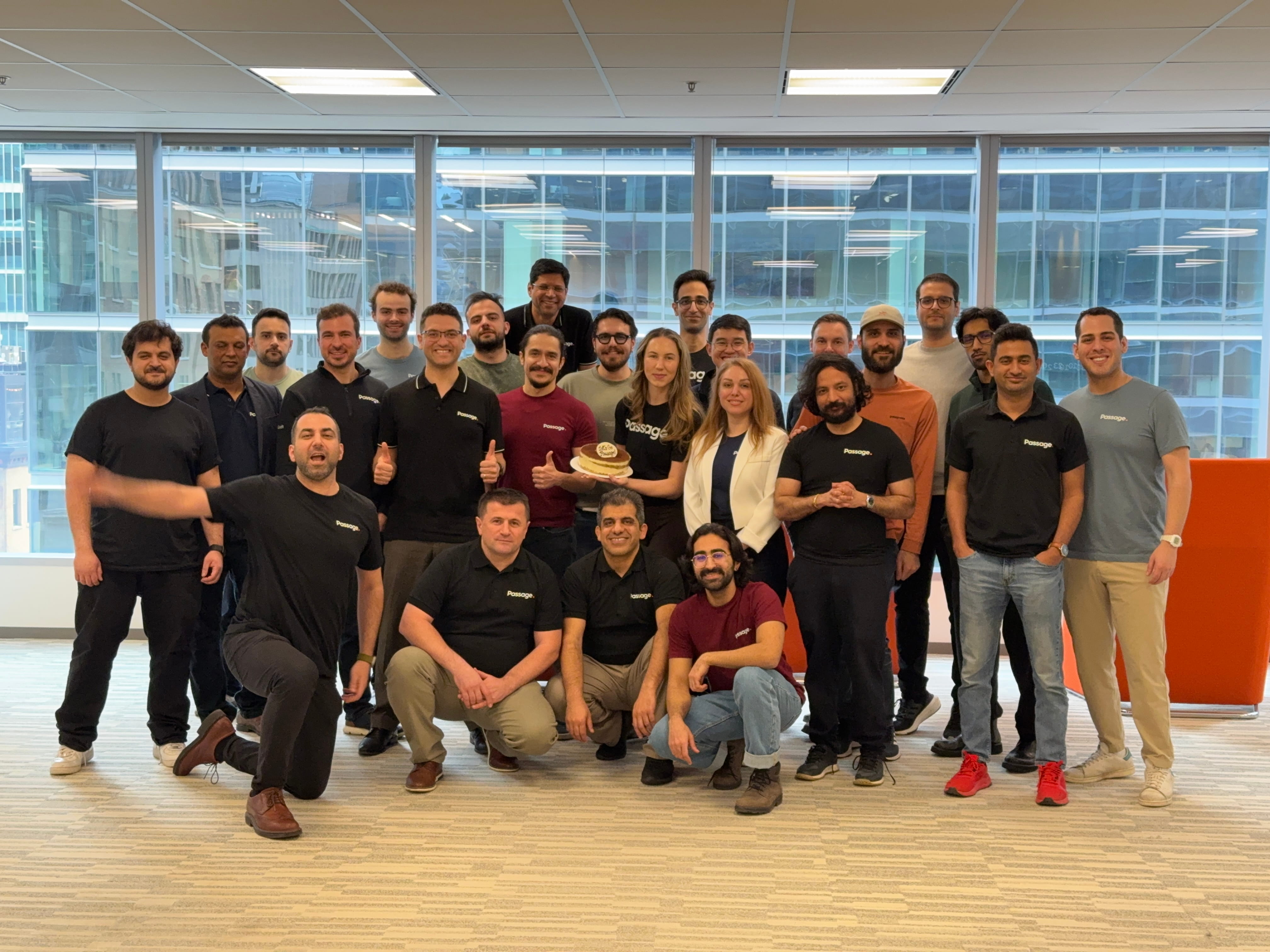
The new setting changes what access means. At Bettermode, an organization needed the tools to bring its people together. At Passage, a student may need a route into an educational opportunity. The work has moved from the architecture of a conversation to the practical steps that can make an education possible. Both give his interest in access a concrete setting, with people depending on the machinery to work.
His LinkedIn introduction is brief: “I am driven by impact.” It is a broad aspiration, but the projects give it specific settings: a chatbot introduction, code offered to another developer, a community inside a customer’s product, a platform supporting students. The teenager outside his own app’s door has spent much of his career working on the entrances.