The Company That Made a Stand Out of Nothing
MOFT folded a laptop stand down to 3mm, raised a million dollars proving people wanted it, and then kept folding - into wallets, desk mats, and iPad studios. Here is how a neck ache became a product category.
The problem MOFT solves is almost too small to name. You are working from an airport gate, a rented kitchen table, a hotel bed, and your neck aches because your laptop sits flat and your chin drops to meet it. Laptop stands exist to fix this, but they are heavy aluminum wedges that defeat the point of being portable. That gap - between the annoyance and the cure being worse than the disease - is where a company got built.
MOFT, which stands for Mobile Office For Travelers, makes origami-inspired accessories for people who work and create away from a desk. Its founder, Julianna He, reportedly designed the first product after suffering neck pain hunching over a laptop on the road. The team spent roughly two years folding a stand down to about 3mm - thin enough to stick to the underside of a laptop and forget it was there until you needed it. In early 2019 they put it on Kickstarter. About 32,000 people backed it, and combined with a follow-on Indiegogo campaign, the launch crossed a million dollars.
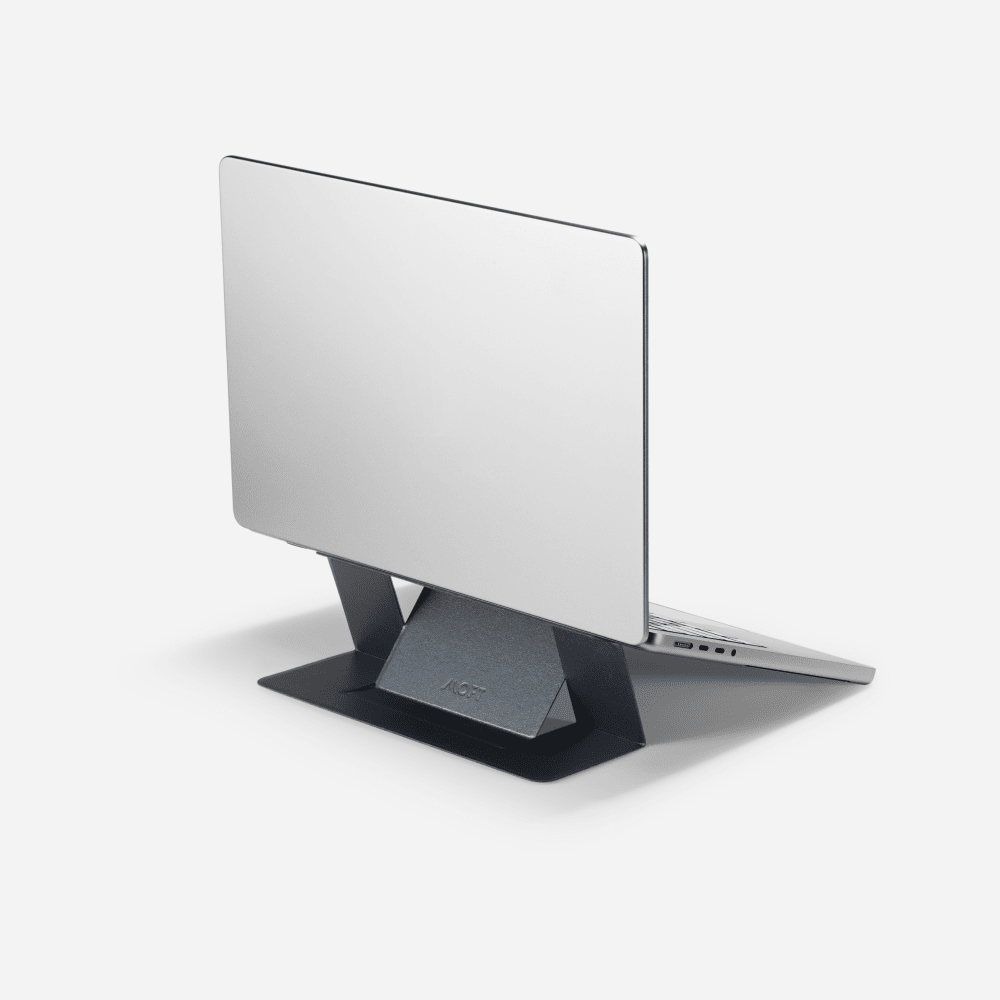
That first product tells you almost everything about the company. It did not try to build a better aluminum stand. It reframed the object entirely: a stand should be invisible, weigh almost nothing, and travel with the laptop rather than beside it. MOFT's internal design ethos has been described as "unseen, unfelt, unnoticed." The product should vanish when you are not using it - which is a strange goal for something you are trying to sell.
01 / The MethodSell the freedom, not the stand
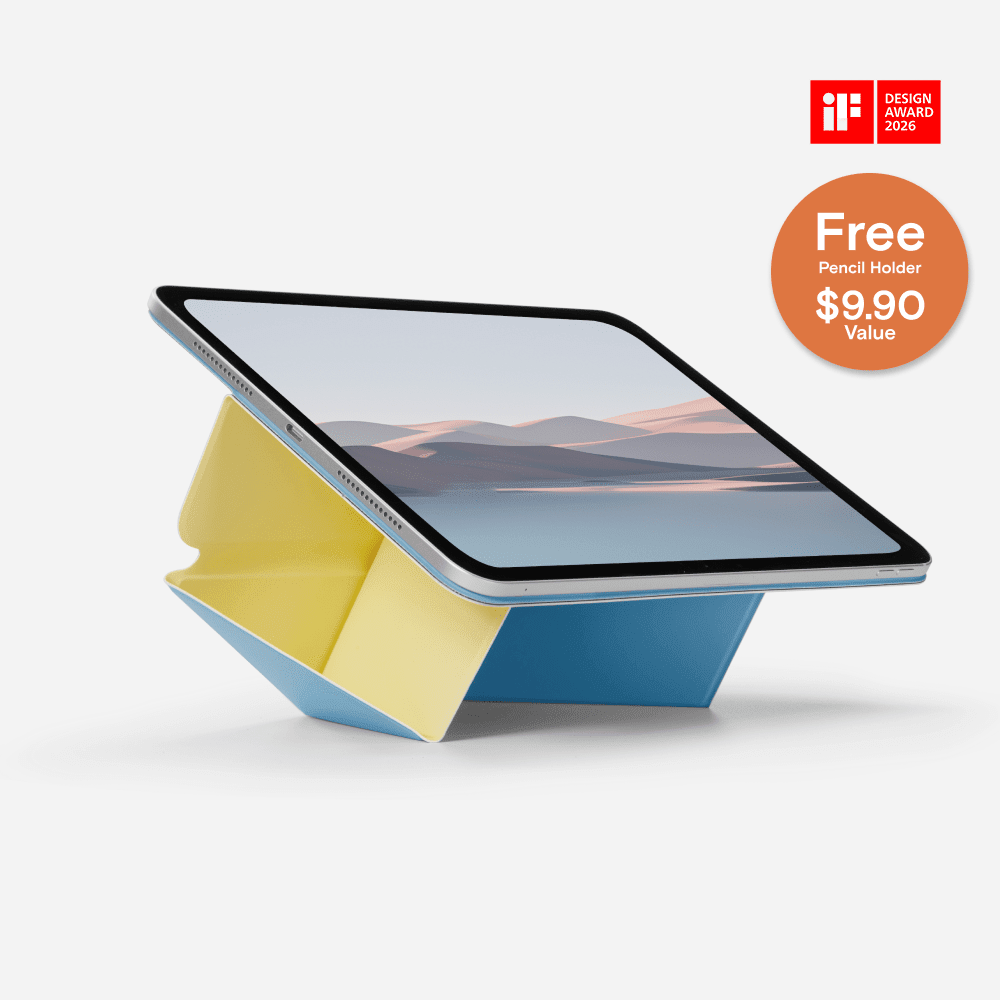
What MOFT actually sells is the ability to set up a comfortable workspace in ten seconds, anywhere, without carrying a bag full of gear. The laptop stand was the proof of concept. Once people trusted that a folded object could replace a bulky one, MOFT applied the same folding principle to the next annoyance, and the next. A stand for phones and tablets (MOFT X). A sit-stand desk that collapses flat (MOFT Z). A cooling stand. A desk mat that snaps together. An iPad folio that floats at twenty-plus angles for creators.
Each launch follows a recognizable loop: find a physical friction point, fold a solution thin, validate it on Kickstarter, ship, then move to the adjacent friction. It is a product-led growth strategy that happens to run on cardboard and fabric instead of code.
The discipline is in the constraint. Because every product has to be thin, light, and disappear when idle, MOFT cannot bolt on features the way a rival might. A stand cannot grow a battery; a wallet cannot add a bulky kickstand. That limit forces the interesting engineering - how to get twenty viewing angles out of a folio that still slips into a bag, or a full sit-stand desk that flattens to the thickness of a notebook. The origami is not decoration. It is the only way to keep the promise the name makes.
02 / The HabitWhy MOFT never left Kickstarter
Here is the detail that rewards attention. MOFT could self-fund its product launches - it has been selling profitably for years. Yet it keeps going back to Kickstarter and Indiegogo, campaign after campaign: MOFT X raised around $703,000, MOFT Z about $1.14 million, and later products like the Snap Flow notepad hit 400% of goal within a day.
Crowdfunding here is not a financing tool. It is market research with a pre-order attached. Before MOFT commits to a production run, it knows exactly how many people want the thing and at what price. The backers become the first wave of reviewers and word-of-mouth. For a company that competes on design taste rather than patents alone, that early signal is the cheapest insurance it can buy. Anyone building physical products can copy this: launch to validate, not just to fund.
03 / The Second CategoryThe MagSafe wallet nobody else had shipped
In 2020, when Apple added MagSafe magnets to the iPhone 12, MOFT was ready with something odd: a snap-on wallet that unfolded into a phone stand. It combined two things people already carried into one magnetic slab. MOFT credits itself with pioneering the hybrid wallet-and-stand category, and the timing backs that up - Peak Design, Apple's own accessories, and a wave of competitors arrived later.
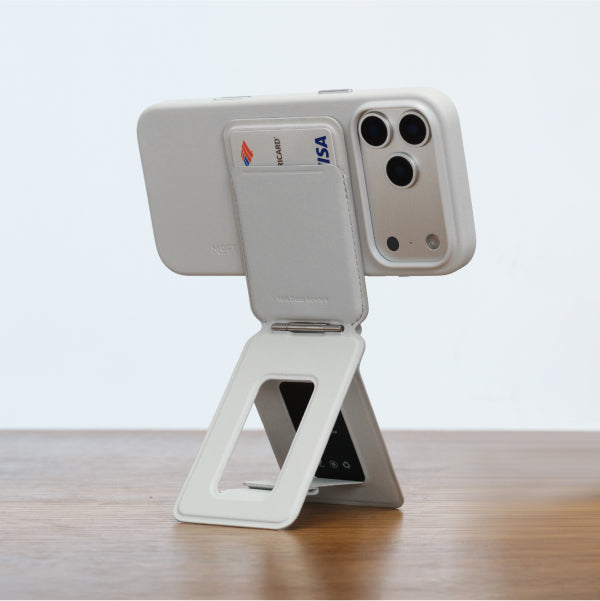
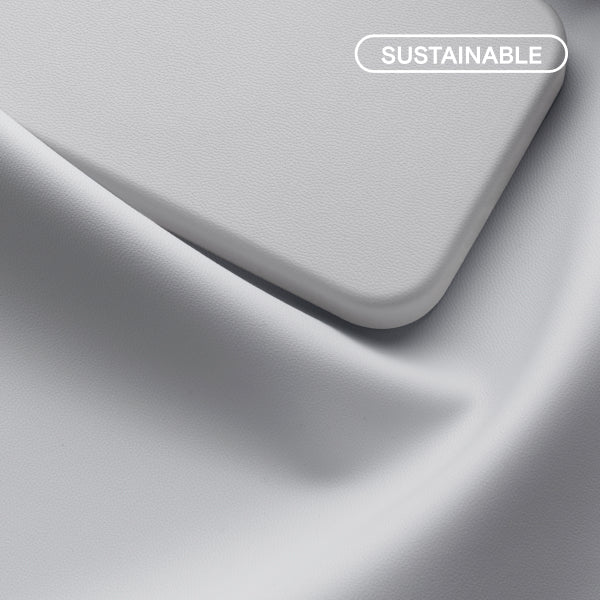
Being first is not a moat by itself - magnets and folds are easy to imitate. So MOFT stacked defenses. It filed nearly 300 patents, mostly design patents, across around 20 countries. It developed a proprietary vegan leather called MOVAS, later adding a variant that incorporates recycled coffee grounds, which gives the premium price a sustainability story competitors cannot casually match.
04 / The NumbersWho buys folded objects
MOFT's customers started as digital nomads and remote workers and have widened toward content creators. The company reports growing from about 100,000 users to more than a million within three years, across roughly 38 countries, with the majority of sales overseas - the US, Japan, South Korea, and Southeast Asia leading. It sells direct through its own storefront and Amazon, with crowdfunding launches feeding the top of the funnel.
What you can actually do with it
- Raise a laptop to eye level from a bag that already holds the laptop.
- Carry cards and prop up a phone for video calls with one magnetic accessory.
- Turn an iPad into a floating drawing station at a range of angles.
- Build a fold-flat sit-stand setup on a kitchen table, then pack it away.
05 / The CompanySmall team, long shadow
MOFT runs lean - roughly 40 to 50 people - with industrial design and engineering rooted in Shenzhen and a US operation associated with Sunnyvale, California. The brand skews creative and playful rather than corporate: artist collaborations with Shantell Martin and designer Tommy Bogo (TOMBOGO), and a late-2024 campaign called "Living My Flow" that traded gadget specs for mini-documentaries about working artists. In 2024 it hosted a "Work Create Anywhere Cafe" during LA Tech Week.
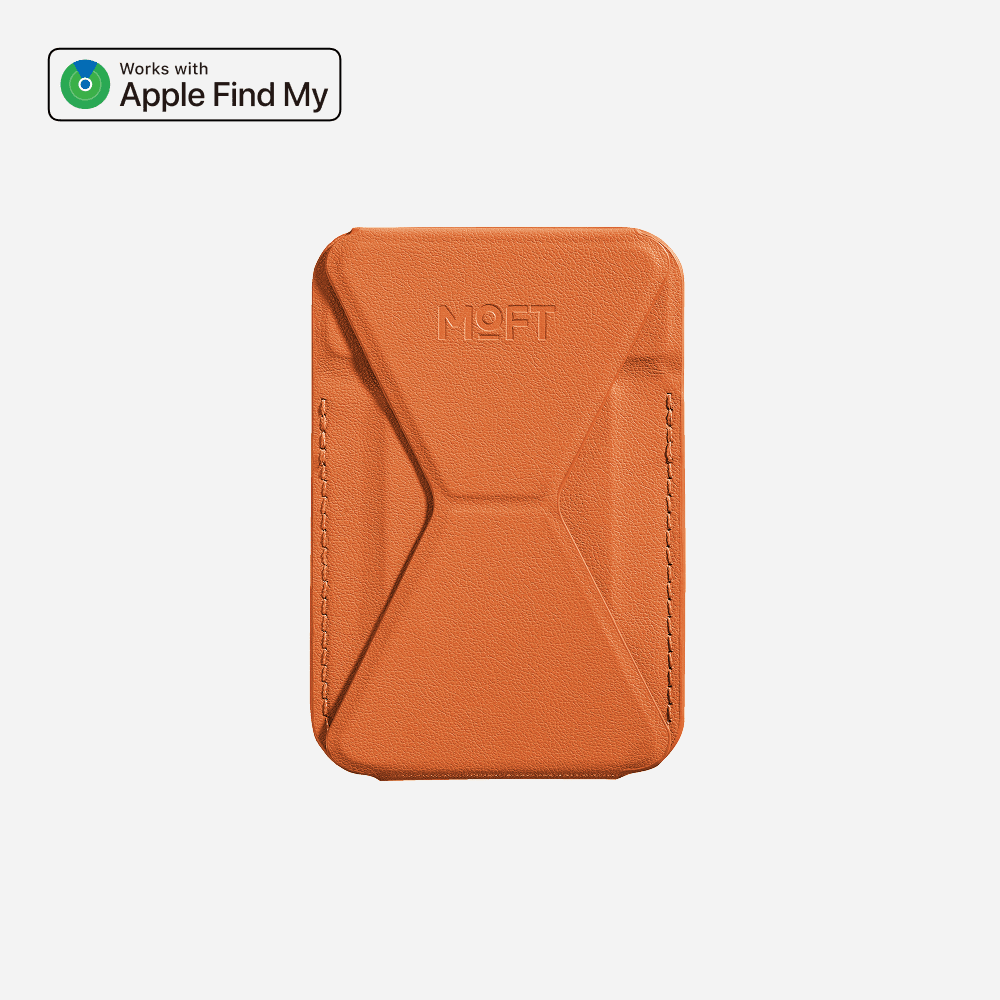
The recognition has followed the design work rather than the marketing budget. The MOFT Z won a Red Dot Design Award in 2020, and the company has become a regular CES exhibitor. At CES 2026 it moved into ecosystem territory, unveiling MagSafe wallets and stands with Apple Find My built in, priced at $49 - a bet that being woven into Apple's tracking network beats winning a price war on magnets.
06 / The LedgerWhere it could break
The honest read is that none of this is impossible to copy. A fold is a fold; a magnet is a magnet. MOFT competes against Peak Design, Twelve South, ESR, Spigen, MagBak, and Apple itself, in an accessories aisle where today's clever product is next season's commodity. Its defenses - design taste, a wall of patents, a proprietary material, and the habit of being early - have held so far, but they are the kind of moat you have to keep digging.
There is also the dependency question. A brand built on iPhone and MacBook accessories lives partly at Apple's mercy; a change to MagSafe or the laptop chassis ripples straight through the catalog. MOFT's answer has been to diversify across laptops, phones, tablets, and desks, and to move up the value chain into materials and the Find My ecosystem rather than down into price. Whether that holds as bigger players crowd in is the open question worth watching.
For all the design-award polish, the core of MOFT stays refreshingly plain. It found one small, universal annoyance - the ache of working hunched over a flat laptop - and refused to accept that the fix had to be bulky. Everything since is the same move, folded into a new shape.