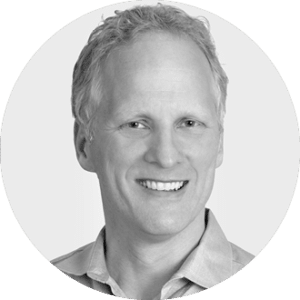
From a San Francisco Apartment to the Backbone of Clinical Research
In 2005, Mike Novotny sat in his San Francisco apartment and asked a question that the clinical research industry had been quietly ignoring for years: why does software for life-saving clinical trials have to be so hard to use? Competitors like Medidata and Oracle had built platforms premised on complexity - the kind of software that required weeks of training and armies of consultants. Novotny thought that was backwards.
He built Medrio to be the Easy Button. Not a dumbed-down version of enterprise software, but a genuinely user-friendly platform that let study managers configure their own trials without custom development. No IT department required. No six-month implementation. Just a cloud-based system that worked.
What followed was one of the more unusual startup trajectories in health tech. Medrio grew steadily, profitably, and without venture capital for its first 12 years. No Silicon Valley hype cycle. No unicorn press releases. Just a company that kept its customers - and let those customers do the selling.
"Building a company is all about the customer flywheel. Retain them. Listen to them. Let them refer others. Everything else follows."- Mike Novotny, Founder & CEO, Medrio
By the time Medrio raised its first institutional round - $30 million from Questa Capital in 2017, when the company was already 12 years old - it had built something most VC-backed startups spend years chasing: a real flywheel. Customers stayed. They referred others. They provided the feedback loop that made the product better. Revenue funded product. Product retained customers. Round and round.
Novotny stepped down as CEO in 2020 after 15 years. He didn't leave quietly - he wrote what amounted to a public letter on Medium, walking through every principle he'd learned building a nine-figure healthcare company from scratch. The post reads like someone who had genuinely thought hard about what worked and what didn't, and wanted to leave the record straight before walking out the door.
He took a sabbatical. Researched organizational development. Focused on human health - not just as a product category, but as a subject of genuine inquiry. It was the kind of break that most founders never take.
And then, in 2025, he came back.
Why He Came Back: The AI Bet
Novotny's return wasn't nostalgia. It was a calculated read on a technology inflection point. The message he sent when he came back was direct: AI accelerates everything. In clinical trials, where speed has historically meant more treatments reaching more patients sooner, that's not a small claim.
Clinical trials are expensive, slow, and fail at a remarkable rate - Novotny himself has noted that they fail 90% of the time. The industry has been trying to fix this with decentralized trial models, direct data capture, and remote monitoring. Medrio had been building tools for exactly these use cases for years. AI, in Novotny's view, is the catalyst that makes all of it dramatically more effective.
Back as CEO with the title of Founder & Chief Executive Officer, he rejoined a company that had matured significantly since his departure - a full C-suite, approximately 180 employees, $43M in annual revenue, and a platform covering EDC, eConsent, CTMS, RTSM, and ePRO. The technical surface area had expanded. So had the opportunity.
"I'm back in the saddle as CEO because AI accelerates everything."- Mike Novotny, LinkedIn, 2025
His return signals something about the nature of founder-led companies. There's a pattern - common enough to have a name in startup circles - where founders step back, a professional CEO takes over, and then market conditions shift in a way that requires the founder's original conviction to navigate. Novotny appears to see AI's impact on clinical research as exactly that kind of shift.
What makes Medrio's position interesting is the combination of deep regulatory knowledge (FDA 21 CFR Part 11 compliance, audit trails, HIPAA requirements) and a cloud-native, easy-to-configure platform. AI tools that make clinical trial data capture faster or smarter need a compliant, flexible foundation to run on. Medrio built that foundation over 20 years.
The Customer Flywheel That Built a Nine-Figure Company
Novotny's central philosophy at Medrio can be summarized in a single phrase he used repeatedly: the customer flywheel. It's not a complicated idea, but executing it is harder than it sounds. Most software companies - especially those chasing enterprise clinical trial contracts - focus on winning new clients. Novotny focused on keeping the ones they had.
The Medrio Customer Flywheel
This framework shaped Medrio's product strategy too. While competitors added features to demonstrate value to procurement committees, Novotny kept the focus on making existing features genuinely better. The "Easy Button" positioning wasn't just marketing - it was a product and organizational discipline. Don't promise what you can't deliver. Serve paying customers first. Build something different, not just better.
The result: Medrio became particularly strong in early-phase trials - Phase 1 and Phase 2 studies, diagnostic trials, device studies - where sponsors needed speed and flexibility more than raw feature count. A startup biotech running its first clinical trial doesn't need the same infrastructure as a top-5 pharma company. Medrio gave them a platform sized right for where they actually were.
By 2020, when Novotny stepped down, Medrio had contributed to regulatory approvals for more than 100 treatments. That number - 100 treatments - is the kind of metric that doesn't appear on most SaaS dashboards. It's the one that actually matters when the product in question supports trials that determine whether drugs reach patients.
Visa Fraud, the UN, and Two EDC Companies Before Medrio
Mike Novotny's career before Medrio doesn't follow a template. He managed Visa's fraud database at a time when the company was still learning how to think about data at scale. He worked as a research associate at the United Nations. He earned a bachelor's degree from Stanford, a master's from Pontificia Universidad Católica de Chile (PUC), and an MBA from Columbia.
The career path through three countries and multiple disciplines - finance, international research, software - produced a founder who understood both the scientific rigor that clinical research demands and the product sensibility that enterprise software often lacks. Before launching Medrio, he had already served as President of Ninaza, an EDC company, and CEO of Telosa. He'd been in the clinical data space long enough to see exactly what was broken.
The decision to start Medrio wasn't a leap from an unrelated field. It was the third act of a career that had been pointing at this problem for years. The San Francisco apartment origin story is genuine - but the expertise behind it wasn't improvised.
Stanford + Columbia + PUC Chile
BA, MA, and MBA spanning three countries and two decades of education. Rare combination of quantitative rigor and international perspective.
Visa Fraud Database
Early career in financial data security - managing fraud detection systems before most of Silicon Valley thought about data as a strategic asset.
United Nations
Research associate role that shaped his orientation toward public health and global impact - themes that run directly through Medrio's mission.
Ninaza & Telosa
President of Ninaza, CEO of Telosa - two EDC software companies before Medrio. He came to the apartment with the domain expertise already in hand.