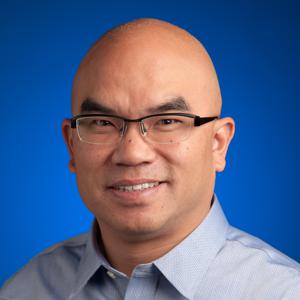
The Oncologist Who Rebuilt the Machine
Somewhere between running a Phase III trial at Genentech and watching community oncologists drown in paperwork, Mark Lee made a decision that surprised exactly no one who'd been paying attention. Clinical trial infrastructure was built for academic medical centers. Most cancer patients don't go to academic medical centers. So he founded a company to fix the gap - and named it N-Power Medicine, because statistical power comes from bigger, more inclusive populations, and he wasn't being subtle about it.
That's the punchline. The story behind it takes about three decades. Lee earned a BS in Biological Sciences from Stanford in 1991, a PhD in Biological Chemistry and Molecular Pharmacology from Harvard in 1996, and then went back to Stanford for his MD, followed by an internal medicine residency and medical oncology fellowship. By the time he was done training, he was the rare person who could equally fluently speak the languages of the bench, the bedside, and the boardroom.
The Genomic Health Chapter
Lee spent the better part of a decade at Genomic Health, where he rose to Vice President of Oncology Development. The work that defined that era: leading development and clinical validation of the Oncotype DX Colon and Prostate Cancer Assays. These weren't minor projects. Oncotype DX became a standard of care diagnostic - the kind of test that reshapes clinical decision-making for tens of thousands of patients. Lee wasn't just watching that happen; he was the one building the evidence base that made it credible.
The through-line across his career is a specific kind of ambition: not building drugs, but building the infrastructure that makes drugs (and diagnostics, and trials) work at scale. That orientation - toward systems, platforms, and population-level impact - became clearer with every move.
Reducing reliance on traditional randomized trials is critical to accelerating and de-risking drug development.
- Mark Lee, PMWC Precision Medicine World Conference, 2026The Moonshot Years: Google X and GRAIL
In 2014, Lee made a move that raised eyebrows. He left a senior leadership role to join Google[x] Life Sciences - not as a clinical advisor, but as Lead for Oncology Clinical Sciences. This was the group that would eventually become Verily. It was speculative by design, and that was the point. Lee wanted proximity to how technology companies thought about hard problems - the willingness to prototype fast, discard fast, and not be constrained by how things had always been done in medicine.
The Google[x] stint lasted two years, but the thinking it produced shaped everything that followed. From there, he joined GRAIL as a founding team member, becoming Head of Clinical Development and Medical Affairs. GRAIL's ambition was singular: use genomic sequencing to detect cancer from a blood draw, years before symptoms. Lee's team built one of the largest clinical genomics research programs in history to generate the evidence for that vision. The scale was staggering; the timeline was aggressive; the science was genuinely frontier. He was learning how to run major clinical research programs in entirely new territory.
The Genentech Summit
Genentech came calling in 2017. Lee became Senior Vice President and Global Head for Personalized Healthcare, Product Development - effectively the executive responsible for the intersection of data, technology, and drug development at one of biotech's most storied companies. The mandate was broad: spearhead how Genentech transformed care delivery through data at scale. Four years of that, at that level, with those resources, creates a very particular kind of clarity about what's possible and what isn't.
What became clear to Lee was a structural problem baked into clinical research. Most cancer trials recruit from major academic centers - the Mayo Clinics, the Memorial Sloan Ketterings, the MDAndersons. But most cancer patients receive care at community oncology practices. The result: trials that enroll slowly, skew demographically toward certain populations, and generate evidence that may not reflect how drugs actually perform in the real world. The fix wasn't incremental. It required rebuilding how research infrastructure attaches to routine care.
We are proud to collaborate with Merck, a company that is leading innovation in the clinical development process and the acceleration of transformative medicines to people living with cancer.
- Mark Lee, on N-Power's collaboration with Merck, July 2024N-Power Medicine: The Infrastructure Bet
In May 2021, Lee co-founded N-Power Medicine with Christer Svedman. The premise: embed research infrastructure directly into community oncology clinics. Not send coordinators occasionally. Not ask practices to change their workflows to accommodate trials. Build a platform - combining AI, embedded virtual and remote research staff, real-time registries, and EHR integration - that makes research a natural extension of routine care, invisible to the clinician, seamless for the patient.
The ProECA (Prospective External Control Arms) platform is the clearest expression of this vision. Standard drug development often requires randomized controlled trials, which means some patients get a placebo or standard-of-care arm. ProECA generates prospectively collected, trial-compatible data from community oncology practices - data with the rigor of a trial arm, collected during routine care - which can serve as external controls for pharmaceutical studies. Fewer patients need to be randomized to placebo. Trials move faster. Development costs drop.
Pharma noticed. In July 2024, Merck's Global Health Innovation Fund led N-Power's Series B, bringing total funding to $72 million. Simultaneously, Merck announced a multi-trial collaboration with N-Power for non-small cell lung cancer and other oncology programs. This wasn't a research partnership - it was a commercial bet on N-Power's model as a durable part of drug development infrastructure.
The Syapse Move
December 2024. N-Power announced the acquisition of Syapse Holdings Inc. in a stock-for-stock transaction. Syapse had built one of the most extensive networks of community-based health systems in precision oncology - more than 1,000 oncologists, a rich data and technology stack, and deep expertise in real-world evidence generation for cancer care. The deal didn't just expand N-Power's network; it created, in a single transaction, the largest community-based prospective clinical research network in oncology.
The logic was characteristically Lee: don't build what you can acquire and integrate. Move fast. The goal - research-ready data for every cancer patient as part of their routine care - just got a lot closer to achievable. He called it "underscoring our commitment to dramatically accelerating drug development and improving the probability of success." Which is understated, for someone who has been systematically building toward this for thirty years.
The Bigger Pattern
Look at the career arc and a shape emerges. Stanford. Harvard. Stanford again. Genomic Health - building diagnostics. Boreal Genomics - CMO. Google X - moonshots. GRAIL - the biggest genomics trial program ever assembled. Genentech - SVP, data at scale. N-Power - founder, from scratch. Every move has been toward the intersection of clinical science and infrastructure at scale. He isn't chasing titles; he's been following a specific problem across different organizations until he could control enough of the variables to solve it himself.
Lee also sits on the board of Foresight Diagnostics, a precision oncology company working on minimal residual disease detection. The advisory work follows the same thread: genomics, early detection, better data for better decisions. He's not diversifying his interests. He's deepening them.
The company he built is 130 people, growing, with a revenue run rate north of $20 million and a network of over a thousand oncologists now generating prospective, research-ready data. The clinical trial model that he decided was broken in the community oncology setting? He's mid-replacement. And he's only just getting started.