A mentor with an impressive title can still be the wrong person to call. Mike Bergelson has spent a substantial part of his career working on that apparently modest problem: how to get someone to the person, information or experience that will actually help. The industries have changed. He has built software for telephone interactions, co-founded a business that matched employees with mentors, and become an investor in apartment buildings. Each business puts an ordinary encounter under a magnifying glass.
At Everwise, the encounter was a conversation. An employee needed help with a career, and somewhere beyond the office walls was an executive willing to give it. Getting the two together required more than an introduction. There were questionnaires, matching software, relationship managers and the rather unfashionable expectation that the learner would do some work. Even the cleverest algorithm could not attend the meeting on your behalf.
Bergelson co-founded Everwise in 2012, and the service launched publicly in 2013. Today he is a managing partner at Glencrest Group, the apartment investment business founded in 2019. The distance between those two ventures looks considerable on a business card. Look at the everyday experiences each is meant to improve, though, and the move becomes easier to follow.
The telephone came first
Before there were protégés to match, there were callers to serve. Bergelson studied operations research at Cornell, earning an engineering degree with honors, then worked at First Manhattan Consulting Group. His consulting work involved customer contact, profitability and product development. It was an education in the difference between counting customers and understanding what happened to them.
In 1999, he co-founded Audium. The company made tools for developing and managing voice applications. Its field was VoiceXML, the technology behind automated telephone interactions. Such systems occupy an awkward place in daily life: people generally encounter them while trying to accomplish something else. Nobody calls a company for the pleasure of becoming better acquainted with its menu.
Audium's tools let developers create applications through a visual, drag-and-drop environment. Cisco completed its acquisition of the company in June 2006, alongside a separate acquisition of Metreos. The purpose was practical: make it easier to build communications applications that connected with business systems. A caller's request and a company's information needed a usable way to meet.
Bergelson went with the business. He managed customer care products at Cisco and later worked on strategy for its enterprise collaboration division. He had moved from creating a company to working inside a much larger organization, where a product decision was part of a wider conversation about people, priorities and how work got done.
- 1999Co-founds Audium
- 2006Audium joins Cisco
- 2013Everwise launches publicly
- 2019Glencrest Group is founded
The expense nobody puts on the invoice
His writing from the Cisco period contains a useful clue to his approach. In 2010, discussing meeting transcription, Bergelson considered accuracy, turnaround time and cost. He also included the complexity imposed on the person using the technology. A tool could be available and still place an unreasonable burden on its intended beneficiary.
He called this the “total burden of ownership.” It extended the usual accounting beyond the price paid for a service. If people had to wrestle with it, that difficulty belonged in the calculation too. He even referred to himself and his fellow technology practitioners as “widgeteers,” a pleasantly undignified word for an industry rather fond of dignified titles.
That older argument makes a good companion to the later mentoring business. An employer could announce a program and consider the job finished. The employee still had to find a suitable adviser, explain the problem, arrange a conversation and keep the relationship alive. The announcement was the easy part. The work lived in everything that followed.
A professional match needs a chaperone
Everwise brought Bergelson together with Maynard Webb, the former eBay chief operating officer. Their company treated mentoring as something that could be organized with care rather than left entirely to proximity or luck. It connected employees with volunteer mentors, including people outside their own organizations.
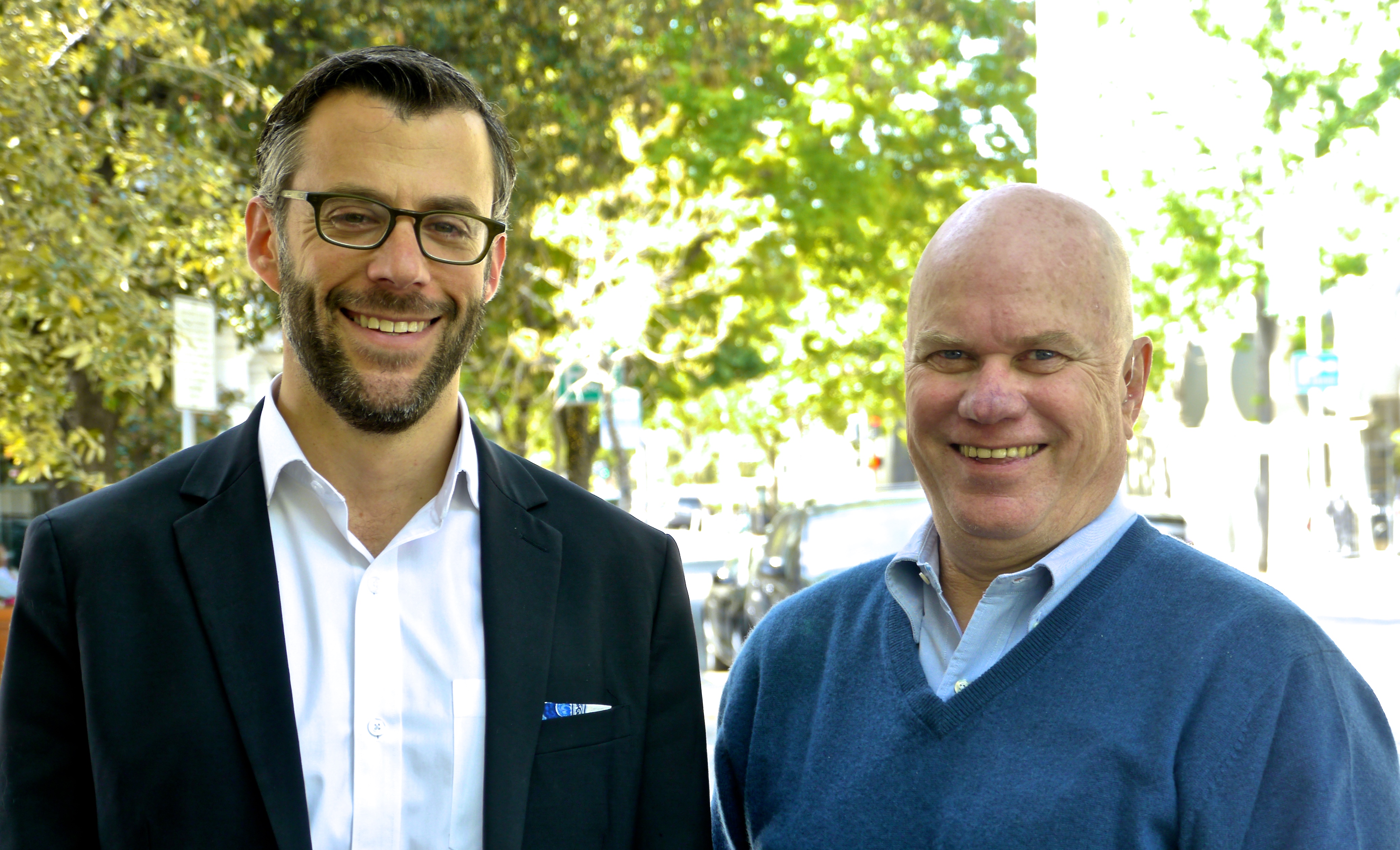
The process used LinkedIn information and questionnaires to understand participants. Relationship managers stayed involved after the match. The human assistance mattered because a relationship has more opportunities to stall than a database record. Somebody has to make time, answer a message and arrive with something worth discussing.
Bergelson identified several weaknesses in conventional internal programs. The assigned mentor might have little interest in the role. The learner might choose a famous title instead of relevant experience. Both people might need help figuring out what a useful relationship should look like. Seniority alone was a rather blunt matching instrument.
Looking outside the company also changed the conversation. An employee could encounter different practices and perspectives without expecting a manager down the corridor to supply them all. An outside adviser could offer room to discuss an uncomfortable question. The organizational boundary, so prominent on an org chart, became much less important to the act of learning.
The learner has to bring something
For all the infrastructure Everwise supplied, Bergelson placed responsibility on the person seeking help. In 2015, he said the learner should drive the relationship. Engagement mattered. So did choosing goals and making progress measurable. A mentor was there to help someone think, rather than issue instructions for unquestioning execution.
His advice about the conversation itself was unusually specific: roughly two-thirds of the talking should come from the protégé. The experienced person with the generous calendar invitation was expected to listen. This is a demanding arrangement for anyone who regards mentoring as a complimentary audience for accumulated wisdom.
“The learner should drive the relationship.”
Mike Bergelson, 2015
He distinguished a mentor's relevant experience from a coach's use of a process, while arguing that the two approaches could come closer together. The ambition was to help managers coach in their everyday work. A useful relationship would leave the learner better able to decide, with goals that provided some way to judge whether the conversations were helping.
A library is only part of an education
As Everwise developed, Bergelson described three ways people learned: encountering ideas, receiving guidance and trying things. Books and videos belonged in that first group. Employers often supplied those resources when someone moved into management, leaving the other two forms of learning less deliberately supported.
Everwise's answer combined content, mentors and experience. By December 2015, the company had raised an $8 million financing round. Bergelson described a service that required effort from its participants; the company paid attention to engagement during onboarding. Access to advice would have little value if the person receiving it never acted.
In October 2016, Everwise announced a $16 million Series B led by Sequoia Capital, with Canvas Ventures and Webb Investment Network participating. Its expanded Enterprise Social Learning Platform incorporated mentoring, coaching, assessments and other development experiences. The company reported more than 250 enterprise customers. The business had grown beyond arranging an initial introduction.
The underlying ambition remained personal. Bergelson argued that employers should be able to offer individualized learning at scale. More software would have to support the relationships that made learning useful. The company was asking buyers to consider the experience of development as a whole.
He also took that discussion onto a conference stage. At the 2018 ASU+GSV Summit, he moderated a panel on the future of work and talent development with William Tincup, Jeff Diana and Mark Newcomer. The session put an employee-focused survey alongside perspectives from people working in talent, company leadership and agency strategy. Its title paired myth with reality, a useful distinction in a field where purchasing training and learning something can be separate events. Bergelson's role was to lead a conversation about how development should change as work changed around it.
The next customer has a front door
Glencrest puts Bergelson's technology background beside a different kind of expertise. His fellow managing partner, John Adair, came from multifamily real estate and capital transactions. The firm owns and operates apartment communities and offers separate investment programs for individual and institutional investors.
Here, the customer experience is physical. Glencrest's stated approach considers residents alongside investors, colleagues and the community. The objects of attention include the buildings people live in and the work of operating them. A resident's experience cannot be completed by a good interface alone; the building and the service around it have to function.
There is a recent, concrete example. On March 12, 2026, a joint venture between Glencrest and Sky Alps Capital was announced as the buyer of Cedar Square, a 155-unit apartment community in Beaverton, Oregon, in a $29.85 million transaction. It was Glencrest's eighth sponsored acquisition in the Portland metropolitan area.
Bergelson's comments emphasized the construction and location, with plans to improve the resident experience and modernize the property. The announcement described Glencrest's portfolio at that point as 19 properties across four states. These were buildings to operate, with residents whose assessment would take place in daily life.
Across his career, the recurring question has been concrete: what does this system ask of the person using it? A caller needs an answer. An employee needs guidance that survives beyond the introduction. A resident needs a place that works. Bergelson's businesses have addressed those encounters in different ways. Their common ground is the small, consequential distance between offering a service and making it useful.