Michael Shaulov once described a curious ritual in the business of digital money. Before sending a substantial amount of cryptocurrency, an institution would send a tiny test payment. Then came a telephone call to check that it had arrived. Only after that reassurance would the real transfer follow. Money designed for the internet was waiting for someone to pick up the phone.
The ritual had a purpose. A wrong address, an impersonated counterparty or a compromised machine could send assets somewhere entirely unintended. The blockchain could faithfully execute the instruction while the people giving it made a costly mistake. Shaulov’s interest settled on that gap between the strength of the underlying technology and the fragility of the daily work around it.
He had arrived at the problem through cybersecurity. An investigation into South Korean exchange hacks in 2017 helped inspire Fireblocks, which he co-founded the following year. The losses he was examining ran to roughly $200 million. For a security specialist, here was a consequence that needed little explaining. A stolen document might require a discussion about its value. Missing money brought its own arithmetic.
The tiny transfer and the telephone
Shaulov’s account of those early transfer procedures is revealing because it keeps the people in the picture. Institutions needed to trade, settle and shift funds between systems. Their employees had to verify recipients while protecting the credentials that authorized transactions. The work had to happen repeatedly, rather than being a one-time exercise in hiding something valuable.
It is easy to understand the appeal of a secure vault. Understanding a busy door requires more patience. Who may open it? Which instructions count? How does the recipient prove that the destination is correct? The phone call was an improvised answer to one part of that puzzle. Fireblocks would attempt to build a more usable process around the whole transaction.
That explains why Shaulov’s career now runs through finance as well as security. The customer’s task determines the business. A trading firm buying software to move assets has different needs from a company buying another defensive tool for its IT department. His new company would have to understand both the attacker and the person trying to finish a day’s work.
A room before the boardroom
Long before Fireblocks, there was an apartment room in north Tel Aviv. In his account of Lacoon Mobile Security’s 2013 launch, Shaulov recalled the first four months working there with co-founder Ohad Bobrov. He remembered recruiting researchers, finding early customers and feeling nervous before investor meetings. The beginnings were domestic; the subject was how enterprises could use mobile devices without exposing themselves to espionage and cybercrime.
His technical education had begun much earlier. After moving from Ukraine to Israel with his mother at six, he grew up in Haifa. A computer engineer in the family taught him programming at seven. He started a web development business at thirteen. An award-winning online watch store website followed in his teenage years. The future security entrepreneur had an early encounter with commerce, complete with watches.
He served in Israel’s Unit 8200 and studied computer science and physics at Ben-Gurion University. At NICE Systems, he led mobile-security researchers. His Black Hat USA appearance in 2013 concerned a practical attack against mobile device management solutions. The work examined what could happen when a system intended to bring order to business devices failed to protect them as expected.
Check Point announced its acquisition of Lacoon in April 2015. Shaulov subsequently led products for mobile and cloud security there. This put him inside an established security company when the exchange investigations arrived. The apartment startup had become an acquisition, then a corporate role. Another unsolved problem would take him back to founding.
Listen before building
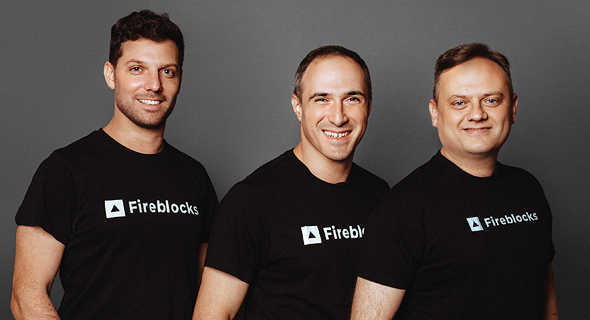
Shaulov founded Fireblocks with Pavel Berengoltz and Idan Ofrat in 2018. Berengoltz had also worked at Lacoon. Ofrat brought experience from C4 Security. Their backgrounds made security a starting point, but the product still needed a specific customer and a task that customer would pay to improve.
By the public launch in June 2019, the team had interviewed more than 100 institutional customers, including hedge funds, broker-dealers, exchanges and banks. The announcement named Galaxy Digital and Genesis Global Trading among customers. Fireblocks supported transfers across exchanges, counterparties and different storage arrangements. It emerged from stealth with $16 million in announced funding.
“Moving digital assets is a nightmare,” Shaulov said at the launch. It was a plain description for a technically complicated business. The interviews had exposed slow processes vulnerable to attacks and human error. His proposed remedy was software that made the operation easier as it secured it. A complicated defense that nobody could conveniently use would leave the original problem alive.
In later conversations, he continued to emphasize customer understanding. The narrowness of an early product can look modest beside the eventual ambition of its founder. Yet a well-defined group of users gives a team something concrete to learn from. Fireblocks’ first customers needed frequent institutional transfers. Starting there gave the founders a business problem they could observe, rather than an entire financial system to redesign at once.
“Everything was solvable, and you had to solve it.”Michael Shaulov, on the mindset he took from military service
A key nobody has to hold whole
The phrase multi-party computation is unlikely to brighten a dinner party. Its relevance becomes clearer when money is involved. Fireblocks uses MPC to distribute key shares and have parties cooperate in signing transactions. In ordinary wallet creation and signing, the complete private key need not be assembled in a single place. An attacker faces a more demanding problem than stealing one convenient secret.
The distribution of responsibility matters as much as the mathematics. Institutions need rules about which people or systems can authorize movement. Fireblocks describes a direct-custody model in which it does not possess enough key shares to sign a transaction unilaterally. The client participates in the process. Security and control therefore become features of the workflow itself.
A simplified explanation of the workflow, not a guarantee about any individual transaction.
Shaulov’s earlier security experience helps explain his attention to these details. Understanding an attacker’s methods changes the questions a builder asks about a system. But a financial institution also needs permissions, records and repeatable procedures. In his interviews, the product increasingly appears as financial infrastructure built by people with security experience. Both parts are necessary to understand his work.
When the bank actually sent the money
The fundraising headlines became larger. In January 2022, Fireblocks announced a $550 million Series E round at an $8 billion valuation. At that point, it reported growth from 150 customers to more than 800 during 2021, with over $2 trillion in assets transferred. These were company figures from that period, useful for understanding its expansion rather than measuring the founder’s personal fortune.
Series E financing at an $8 billion company valuation.
A more concrete illustration arrived in March 2022. ANZ announced an Australian-dollar stablecoin payment involving Victor Smorgon Group and Zerocap. The bank minted 30 million A$DC using an ANZ-built smart contract deployed through Fireblocks. The coins moved between the parties and were later redeemed into fiat currency.
The episode gave shape to Shaulov’s argument about infrastructure. A bank could issue a digital asset, transfer it and bring it back into conventional money. Fireblocks played a part alongside other providers. The result was a particular transaction with named participants and an operational sequence. For anyone exhausted by grand predictions about finance, an actual payment has considerable charm.
It also widened the meaning of the business he was building. Tools developed around securing cryptocurrency operations could help established institutions work with blockchain-based money. That brought new requirements and new users. A company serving trading desks was learning to serve the institutions whose everyday business already involved moving value on behalf of others.
The network gets a checkout
In September 2025, Shaulov announced the Fireblocks Network for Payments. It connected stablecoin providers, banks and services that move between fiat and digital assets through purpose-built APIs. The launch described more than 40 providers across over 100 countries. The intended uses included cross-border treasury, payouts, remittances and merchant settlement.
The difficulties he described were familiar: separate integrations, fragmented liquidity and inconsistent compliance processes. A business could adopt a fast payment technology and still spend too long connecting the services around it. Here again, the journey mattered. A transfer depends on the institutions at either end as well as the mechanism in between.
Fireblocks added Flow in June 2026 for payment providers and fintechs integrating stablecoin acceptance into checkout and deposit flows. Customers could pay from external wallets while the business settled in its chosen stablecoin. Shaulov discussed the launch at Money20/20 Europe. The product brought his long-running infrastructure concern closer to a recognizable commercial moment: someone trying to pay.
Back to the country where the question began
By July 2026, Shaulov was discussing South Korea as a market for expansion. Fireblocks had hired a local team after serving the country from Singapore, and was working with institutions including NongHyup Bank and Shinhan Bank. He linked Korea to the exchange investigations that had helped produce the original idea. The geography connected two very different stages of the same career.
His next scheduled stop is Money20/20 USA in Las Vegas, where an October 19 keynote will examine what stablecoin transaction data says about the market. The subject suits the trajectory of his work: the more companies use the infrastructure, the more the discussion turns to actual operations. It is another opportunity to explain what the technology is doing inside businesses, rather than simply what it might someday become.
His ambition is to help institutions adopt internet-compatible finance securely and simply. The practical work includes stablecoins, tokenized assets and on-chain settlement. It is a substantial undertaking, but its appeal can be expressed without a prediction about replacing every bank. Businesses have payments to make. Someone has to make the systems fit together.
Shaulov’s story keeps returning to that ordinary demand. A mobile device must be usable at work. An institution must be able to move an asset. A merchant must be able to receive a payment. Behind each task sits an uncomfortable collection of technical details. His career has been spent making a business out of taking those details seriously. The tiny transfer and the telephone explain why.
More of the conversation
Follow Shaulov’s work and hear him explain the decisions behind it.
- Fireblocks website · Michael Shaulov on LinkedIn
- Watch: Money20/20 interview with The Paypers
- Watch: ParaFi fireside conversation
- Watch: Shaulov discusses Flow with Bloomberg
- Listen: The Archive, April 2026
- Read: Shaulov’s 2013 Lacoon launch post
- Read: His payments-network announcement
- Upcoming: Money20/20 USA keynote, October 19
- Read: His July 2026 Korea interview