Before Mo Ali Yusuf was trying to change how money crosses a border, he was irritated by the money needed to answer a doorbell. In a 2015 essay about Middle Eastern ecommerce, he brought the argument down to the doorstep: finding change for pizza, or visiting an ATM to pay for designer shoes. Online shopping had arrived. The final act still required a pocketful of notes.
It was a small indignity with a large business attached. Cash-on-delivery had helped merchants reach customers, Yusuf argued, but its costs and abandoned purchases were holding the market back. His examples were cheerfully domestic. His concern was structural. A purchase could begin on a screen and end with someone hunting for change beneath the sofa cushions. Progress had acquired a rather peculiar closing ceremony.
A decade later, the co-founder and CEO of Fuze is working on another mismatch between a digital experience and the machinery behind it. A bank can give its customers a polished app while still facing difficult questions about moving, holding and settling digital assets. Yusuf's business sits in those questions. The customer may never encounter its name. That is part of the proposition.
Pizza, shoes and the payments habit
Yusuf's public writing predates Fuze by years. His Wamda author biography described him as a director of Emerging Products & Innovation at Visa in Dubai, a startup advisor and investor, and a co-founder of O2Pay. He wrote about online travel, daily-deal businesses and social media strategy before turning his attention to the mechanics of paying.
That range matters. His route into digital assets passes through the practical concerns of commerce: getting a customer to buy, helping a merchant accept payment, and making the transaction work. A technology earns its place in that world when somebody can use it. An impressive demonstration leaves a different sort of impression when the customer still cannot finish the purchase.
For his December 2015 ecommerce predictions, Yusuf said he had drawn on more than 100 conversations with investors, banks, payment processors, website owners and app makers. He also credited a crystal ball in his desk drawer. The joke provides a useful glimpse of his writing voice: willing to make forecasts, willing to acknowledge that forecasting involves rather more uncertainty than the forecast usually admits.
His education paired computer science at Concordia University with an MBA at London Business School, listed for 2009-2010. Those are two ways of approaching the same awkward meeting: one asks whether a system can work, the other whether an organisation will buy it. In Fuze's case, both questions have to survive the scrutiny of a financial institution.
“my crystal ball I keep in my bottom right desk drawer”Mo Ali Yusuf, on his 2016 ecommerce predictions
A familiar customer, a different set of rails
At Checkout.com, Yusuf became regional manager for the Middle East, North Africa and Pakistan. The role is recorded from November 2020 to December 2022. LinkedIn included him in its 2020 Top Voices in the Gulf list, identifying him by that Checkout.com title. His public presence was already growing alongside his operating career.
A 2021 video interview at Seamless Middle East placed him in the payments conversation before his Fuze chapter. Checkout.com's business connected merchants with payment methods through an API. The relevance to his later work is straightforward: a business can offer a service through its own interface while relying on another company's infrastructure underneath.
When he announced his departure from Checkout.com, Yusuf credited colleagues, clients, mentors and leaders. He singled out business growth, market expansion and fintech licensing as team efforts. The farewell contained a small teaser about what was cooking. It also recorded a useful continuity. Licensing was already part of the job before it became central to his own company.
Fuze brought him together with Arpit Mehta and Srijan Shetty. Mehta's background included leadership roles at Simpl and Clear. Shetty had built algorithmic trading systems at Goldman Sachs and worked at Microsoft. The three founders combined payments, financial operations and engineering experience. It is an assembly well suited to a buyer who wants the product, the transaction and the controls to arrive together.
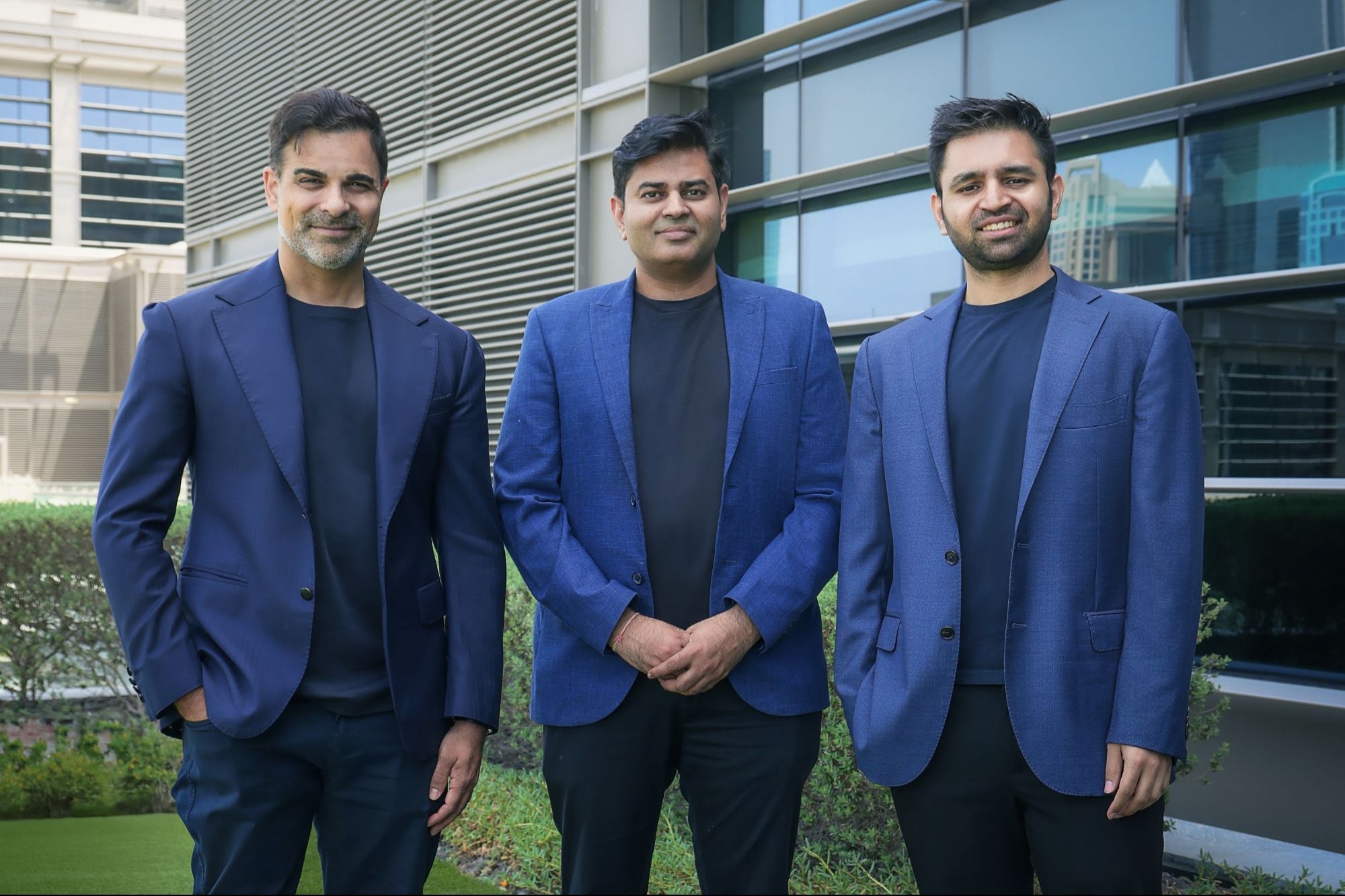
The company was established in 2022 and publicly announced its $14 million seed round in September 2023. Further Ventures led the round, with Liberty City Ventures participating. The money backed a business offering banks, fintechs and enterprises the ability to introduce digital asset products inside their existing apps. Yusuf had moved into a new asset class while keeping a familiar kind of customer.
The bank app gets to keep its face
The word infrastructure can sound like an excuse to postpone the explanation. Fuze's proposition is fairly concrete. A financial institution can use its APIs to offer access to cryptocurrencies, stablecoins and tokenised assets, while Fuze provides underlying services. The institution retains the customer interface. The work underneath includes technical integration and the requirements associated with regulated financial activity.
That arrangement gives Yusuf a particular position in the crypto conversation. His customer is an organisation with existing users, existing obligations and a reputation to preserve. Offering a new financial product means more than adding a button. It brings questions about custody, security, liquidity and permissions. Each is a separate item on the agenda; together, they decide whether the button ever appears.
A conceptual service map, rather than a transaction or legal entity diagram.
In December 2023, Circle and Fuze signed a memorandum of understanding to explore digital asset initiatives across the Middle East, Africa and Turkey. Its scope included expanding the adoption of USDC and piloting relevant uses. The wording matters: an agreement to explore and develop possibilities is a step in a relationship, rather than evidence that every proposed service has already launched.
The connection also put Yusuf alongside Miriam Kiwan, then Circle's vice president for partnerships and business development in MENA. Earlier that year, the MENA Fintech Association had appointed them co-chairs of its Digital Assets Working Group. The association's stated objectives included clearer regulatory frameworks and wider adoption. His work was extending into the conversations around the market as well as the business serving it.
For an infrastructure founder, those conversations are part of the product's surroundings. A service that crosses jurisdictions must fit the rules in each place it operates. The code may travel readily; permissions require their own itinerary. Yusuf's repeated involvement in industry groups makes sense against that practical background, without needing to turn every panel appearance into a milestone.
Capital arrives. The homework remains.
Yusuf has described raising Fuze's early money during the crypto winter as a difficult undertaking. He has also acknowledged underestimating the complexity of establishing a regulated business, which left the company unable to meet growing demand. It is a revealing admission: having prospective customers and being ready to serve them can be two different stages of a startup's life. He identifies resilience as a leadership quality, including attention to employees' concerns and recognition of small successes.
“Securing funding is just the starting point”Mo Ali Yusuf, reflecting on fundraising in 2024
By May 2025, Fuze announced a $12.2 million Series A co-led by Galaxy and e& capital, with participation from Further Ventures. The company reported more than $2 billion in digital asset volume processed since launch. Those figures describe company financing and activity at that point in time. They do not measure Yusuf's personal wealth, and transaction volume is a different number from revenue.
Round sizes in US dollars. Combined announced funding: $26.2 million. Bars share the same scale.
The stated uses of the new capital included expanding the team, developing the platform, pursuing licensing and entering additional markets. Each returns the fundraising headline to a working task. More capital can support more activity, but it also gives a founder more promises to fulfil. The announcement occupies one day; the engineering, hiring and operating decisions occupy the days that follow.
India was among the markets Fuze was exploring. Mehta said the company was speaking with policymakers and regulators while waiting for a clear framework. That is a specific example of the approach Yusuf represents: interest in a large opportunity accompanied by a willingness to wait for the conditions needed to operate. Ambition, in this business, comes with a calendar someone else may help determine.
The next technology still needs a person
In June 2026, Fuze announced a partnership with cybersecurity firm Halborn to help institutions introduce digital asset services. The proposed collaboration included security expertise, regulatory and industry policy work, commercial implementation and joint content. Yusuf emphasised the connection between trusted infrastructure, cybersecurity and regulatory alignment. The buyer's questions were becoming a shared brief for more than one specialist.
His public views on AI show a related concern for what happens after a new tool arrives. In October 2026, he described practical AI use as becoming a basic workplace skill, comparable to using the internet or a keyboard. He saw applications in compliance, risk management and operational oversight, while keeping experienced people responsible for context and decisions.
That is a recognisable continuation of the payments career. The interesting question is how a technology enters ordinary work: who uses it, where it helps, and who remains answerable. A faster process still needs somebody to understand what the process has done. Giving the machine a new capability does not settle the organisation's questions about responsibility.
Yusuf's earlier pizza example makes a useful bookend. He was arguing about the gap between a convenient promise and an inconvenient transaction. Fuze tackles that gap at an institutional level, where the loose change has become liquidity, the doorstep has become a border, and the list of people involved has grown considerably. The scale changes. His attention keeps returning to the machinery that lets the promised experience happen.
In 2024, Yusuf described Fuze as a commitment for the next decade and beyond, with an ambition to change financial infrastructure through blockchain. That horizon gives the company's shorter milestones a context: a funding round, a partnership or a product introduction is one stage in a longer undertaking.
It is an unusually consistent subject for a career that has moved from ecommerce commentary to digital assets. The glamour of finance tends to gather around the screen. Yusuf has made a business of the work behind it. Somewhere beyond the polished interface, a transaction still has to finish.