The founding story of Fireblocks begins not with a white paper, a token or a bull market, but with a crime scene. In 2017, the Lazarus Group attacked four South Korean cryptocurrency exchanges and stole roughly $200 million in bitcoin. Michael Shaulov, Pavel Berengoltz and Idan Ofrat were cybersecurity specialists at Check Point, where members of the future founding team helped investigate the breach. What they saw was an operational paradox: the assets were digital, but the defenses around moving them were often clumsy, fragmented and dangerously dependent on complete private keys.
They founded Fireblocks in 2018 and emerged from stealth the next June with $16 million. The first pitch was narrow and concrete: protect digital assets while they moved between exchanges, trading desks, counterparties and wallets. That distinction mattered. Cold storage was built to make assets hard to touch. Institutional markets needed assets to move repeatedly, at speed, without turning every transfer into a security exception.
Fireblocks now describes itself as digital-asset and stablecoin infrastructure. That broad label covers a surprisingly practical job. Its software creates and manages wallets, governs transaction approvals, connects institutions to counterparties, issues tokens, orchestrates payments, reaches decentralized applications and produces financial records. The company says more than 2,400 institutions use its infrastructure across over 150 blockchains, with more than $10 trillion in digital-asset transactions secured. Its named customers include BNY, Worldpay, Revolut, Galaxy, eToro and major regional banks.
The key that is never quite a key
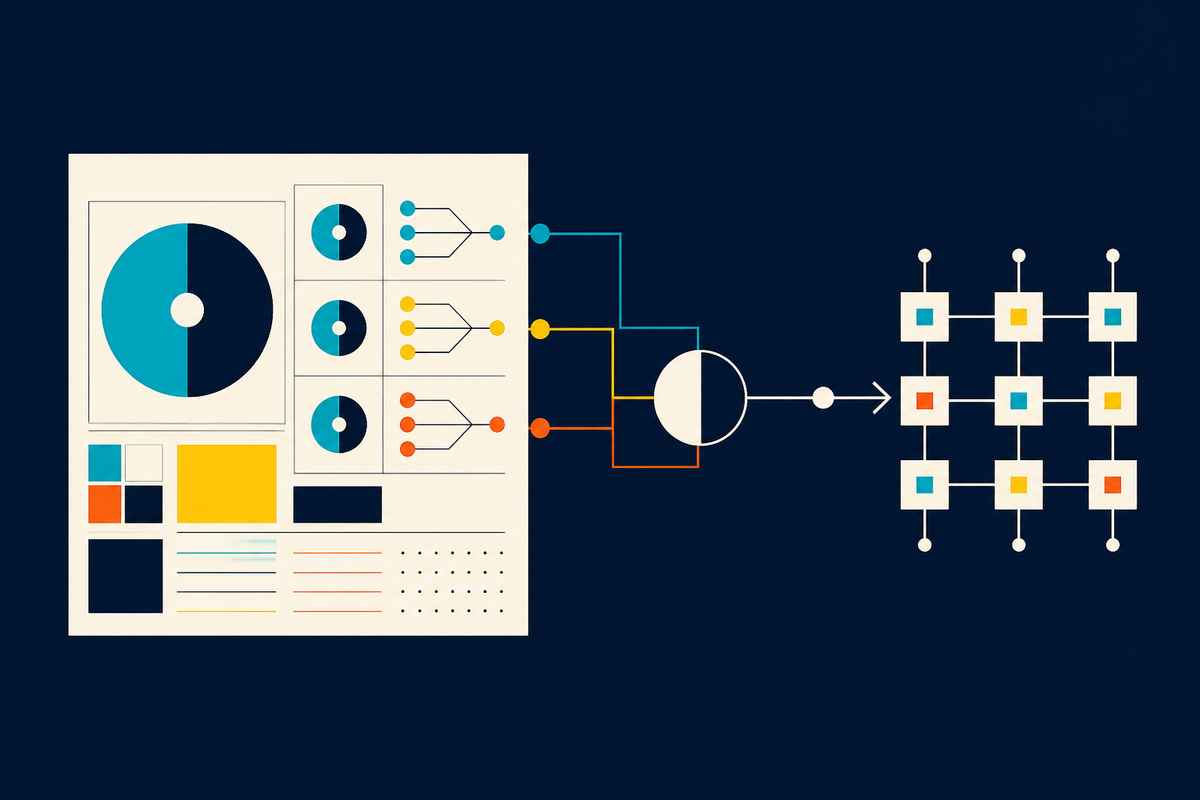
The technical center is multi-party computation, or MPC. Instead of storing one complete private key in one place, Fireblocks’ MPC-CMP protocol distributes shares among protected environments. Those shares cooperate to create a signature without assembling the full key. A stolen device or compromised server is therefore not supposed to be enough on its own. Fireblocks layers that system with trusted execution environments - isolated hardware areas for sensitive code - and recovery mechanisms for continuity.
Cryptography, however, only answers who can sign. A financial institution also needs to decide whether a transaction should happen. Fireblocks’ Policy Engine lets a business encode rules by user, asset, amount, source, destination and transaction type. A routine treasury sweep might pass automatically. A transfer to a new address might require several approvals. A high-risk destination flagged through an integrated compliance provider might be blocked. The policy travels with the workflow rather than living in a document that an operator must remember at 2 a.m.
Then there is the Fireblocks Network. It connects businesses to exchanges, liquidity providers, payment companies and one another while authenticating destinations. That sounds administrative, which is precisely the point. Digital-asset losses do not require a breakthrough in mathematics. They can begin with a pasted address, an overpowered employee account or a workflow that treats a large withdrawal like an ordinary click. Fireblocks packages the unglamorous safeguards around the signature.
“With Fireblocks, you’re always the owner and controller of your assets.”Fireblocks developer documentation
A product for the gap between demo and production
A developer can make a token move in an afternoon. A bank has to know who requested the move, who approved it, whether the recipient passed screening, how the event appears in an audit, what happens if a device fails and whether the system can process the next thousand transfers. Fireblocks sells into that gap between a successful demonstration and a durable operation.
The customer categories reflect the problem. Banks use the platform for direct custody, qualified custody, tokenized deposits and new asset products. Trading firms use it to move collateral and settle with venues. Payment providers use stablecoins for cross-border flows and merchant settlement. Fintechs and consumer applications use its APIs and embedded wallets to place blockchain functions behind familiar interfaces. Token issuers can mint, burn and distribute assets while keeping sensitive smart-contract actions under policy.
Worldpay offers a clean example. Fireblocks infrastructure helps it settle merchant funds in USDC on Solana, operating beyond banking hours and giving merchants faster access to money. Elsewhere, the platform supports trading, staking, DeFi access, treasury rebalancing and the issuance of assets ranging from stablecoins to tokenized securities. Fireblocks is not the consumer brand at checkout. It is the layer trying to make the checkout, treasury and ledger agree.
The bundle is the strategy
Fireblocks raised aggressively during the market’s exuberant years: $30 million in 2020, $133 million and $310 million in 2021, then $550 million in January 2022 at an $8 billion valuation. The more revealing moves came after the boom. In 2023 it acquired BlockFold, adding smart-contract and tokenization expertise. In 2025 it bought Dynamic, a developer-first embedded-wallet company that had powered more than 50 million accounts. In January 2026 it acquired TRES Finance, bringing accounting, reconciliation and audit-ready data into the platform.
Those acquisitions turn the company’s scope into a stack. Dynamic handles the customer-facing entrance: authentication, onboarding and wallets inside an app. Fireblocks governs and moves the assets. BlockFold deepens the design of tokenized products. TRES translates blockchain activity into the records finance teams and auditors expect. A customer can still buy a specific capability, but the strategic argument is that fewer seams mean fewer integrations, fewer inconsistent policy models and fewer places for operational errors to hide.
The 2026 launches follow the same logic. Fireblocks Flow lets a payment provider accept assets from hundreds of wallet types, screen the transaction, convert what the customer sends into the stablecoin a merchant wants, and reconcile the result. Earn puts access to Aave markets and curated Morpho vaults inside existing approval workflows. The returns come from third-party protocols, remain variable and carry DeFi risks; Fireblocks is providing governed access, not guaranteeing yield. Its Agentic Payments Suite applies wallets and transaction policies to software agents that can initiate purchases or payouts.
Where it wins - and where it has to prove itself
Fireblocks competes with BitGo, Copper, Anchorage Digital, Taurus, Ripple Custody, Fordefi and a long list of specialized wallet and custody providers. It also competes with the instinct of a large institution to build. A homegrown stack may combine cloud key management, blockchain nodes, compliance screening, settlement connections, smart-contract tooling and separate accounting software. That can deliver control, but it creates an integration and maintenance burden that grows with every chain and product.
Its difference is breadth around a common control layer. MPC-CMP and secure enclaves protect signing; the policy engine governs intent; the network supplies institutional connectivity; APIs make the platform programmable; newer modules cover the customer experience and finance back office. Competitors offer portions of the same map, and some institutions will prefer regulated third-party custody or a narrower specialist. Fireblocks’ bet is that customers value optionality - direct control when they want it, qualified custody when rules require it, and one operating model across both.
That breadth also raises the stakes. Digital-asset infrastructure sits where software defects, human mistakes, cyberattacks, protocol failures and changing regulation meet. A platform can reduce some risks without erasing the market, smart-contract or counterparty risks around the assets themselves. Institutions still have to design good policies, segregate duties, assess third-party protocols and decide when direct custody is appropriate. Fireblocks provides controls; customers provide judgment.
From vault to financial operating system
The culture behind the product still carries its security-company origins. Fireblocks talks about curiosity, collaboration, ownership and simplifying complex systems. Its three founders remain in operating roles: Shaulov as chief executive, Berengoltz as chief technology officer and Ofrat as chief product officer. The organization has grown to roughly 1,100 employees, according to company-record estimates, with offices around the world and teams spanning cryptography, financial services, compliance and developer infrastructure.
There is something fitting about the company’s trajectory. It began by asking how to stop a thief from getting a key. It grew by noticing that institutions had many more questions: Who may use the key? Which assets can move? Which counterparty is genuine? How does a merchant receive the currency it wants? How does accounting close the books? How can a customer recover access? Every answer became another part of the product.
Fireblocks now sits in the infrastructure layer between blockchains and the businesses trying to use them. If the company succeeds, much of its work will remain invisible. A consumer will tap “pay,” a treasury team will see a reconciled balance, a bank will issue a token and an auditor will find a clean trail. Behind those ordinary outcomes will be a system built on an unusual premise: digital money can move constantly, but control should never move casually.