A company needs an engineer who understands a technology that barely exists. The job description is precise; the available people are inconveniently imprecise. Somewhere, someone has most of the right abilities, acquired in a different field. Finding that person is only half the task. The other half is teaching them to make the leap. Metabyte’s history begins with this ordinary, expensive mismatch between what a business wants and what a résumé happens to say.
- Buy capability: staffing, outsourced projects and software engineering under one roof.
- Follow the inventions: stereoscopic gaming, cable-box software and websites with human help.
- Watch the new bet: Metabyte SP organizes skills so hiring can look beyond job titles.
The vacancy that became a company
Manu Mehta founded Metabyte in 1993 after working in marketing and engineering management at Texas Instruments. The company describes an early recruiting model that brought engineers from India and Russia to the United States, then cross-trained and mentored them. Its account of assembling a graphics team is particularly revealing: Russian Linux specialists worked alongside Silicon Valley professionals who understood 3D. The required team was assembled from people whose existing specialties did not perfectly match.
Staffing subsequently became a service in its own right. Metabyte says clients already buying development and outsourcing wanted help hiring, too. That progression matters. A recruiter can introduce a candidate; an engineering provider must also understand what the candidate will have to build. Metabyte’s proposition connects those responsibilities. Today its staffing page names high technology and life sciences among its markets, offers an assigned account manager, and lists relationships with Manpower, Kelly and Adecco.
The company also describes a route for employees to run small business units and obtain backing for commercially promising ideas. Mehta’s message to employees places mentoring beside candid conversations about earnings. “It’s ability that counts,” he writes. The implied bargain is practical: learn something useful, take responsibility for it, and make the work worth paying for. That is the company’s stated philosophy, rather than a claim that every employee experiences the same career.
A television company without a television brand
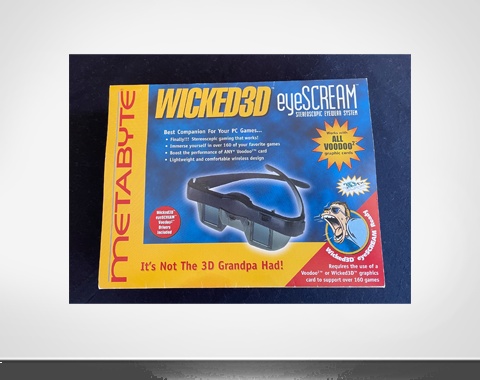
The product portfolio makes this staffing story rather less predictable. Metabyte backed Wicked3D and eyeSCREAM, graphics and stereoscopic gaming products sold through distributors in several countries. It also incubated MbTV, personalization and digital video recorder software commercialized through Metabyte Networks. The company reports roughly $20 million in investment in that separate venture from Seagate, Thomson, Canal Plus Technologies and Scientific-Atlanta. That figure belongs to the television venture, not to an undifferentiated pot of funding for today’s services business.
In 2002, Forbes described the distinction between Metabyte Networks and TiVo. TiVo sold a recognizable consumer proposition. Metabyte supplied software for Scientific-Atlanta boxes that cable operators could distribute. The report identified installations in Rochester, Green Bay and Austin. A viewer could receive the recording functionality through the cable company without having made Metabyte a household name. The person enjoying the feature and the organization choosing its supplier were different customers.
That distribution choice offers a useful lesson for software founders: identify who already reaches the user. Licensing through a manufacturer can put a feature into an established channel. It also places access to the customer in someone else’s hands. The arrangement requires a product that fits the partner’s equipment and commercial plans. A clever standalone application would face a different set of obligations.
The work between the applications
Metabyte’s everyday offer is more prosaic and easier to buy. It develops custom applications, integrates enterprise packages, tests software and supports implementations. A client can arrive with a rough concept or outsource a particular module. Outsourcing can take place on premises, off premises or offshore. These options suit different constraints: a missing specialist, an unfinished product, or a department that needs another organization to carry part of the workload.
Its client page displays names including IBM, Cisco, Salesforce, Nike, Visa and Genentech. The list spans technology, consumer businesses, financial services and life sciences. It establishes the breadth of the company’s claimed relationships, without telling us the size or present status of each contract. Metabyte positions itself between specialist staffing and broader technology delivery, offering several ways to engage the same provider.
The integration work explains why such breadth can be useful. Its B2B and managed file transfer practice connects data flows across internal applications and trading partners, drawing on technologies from IBM, Axway and GXS. The supply chain practice addresses orders, warehouse inventory and transportation. Analytics services cover migration, data quality, warehousing and master data management. Cloud services connect new infrastructure to existing applications while seeking to preserve security and service levels.
Consider a retailer connecting orders to warehouses and carriers. Buying software leaves questions about data formats, existing systems and operational responsibility. Metabyte offers engineering for those joins. The sensible buying exercise is to specify the troublesome handoff, the acceptance criteria and who runs it afterward. Breadth becomes valuable when responsibilities are clear; an expansive service menu alone cannot settle them.
Giving a skill a better address
HotDoodle applies a related approach to small-business websites. It combines editable website technology with personal design services, domains, hosting, backups and support. The business owner purchases help completing and maintaining the task, rather than having to assemble every ingredient separately. It is a modest cousin of the enterprise integration offer: someone takes responsibility for the pieces fitting together.
Metabyte SP brings the company back to hiring. Operated by affiliate Teamanics, Inc., the platform identifies skills from a résumé and maps them into a normalized structure. Candidates can edit and rate their skills and invite peers or managers to validate them. Employers receive ranked matches; the service supports both direct hiring and contingent roles. Its proposition is a profile that accumulates useful evidence across employers.
“It’s ability that counts.”Manu Mehta, President’s Message
The company presents reliable skills data as a prerequisite for useful AI matching. That is a more interesting proposition than simply adding AI to recruitment. Its usefulness depends on the accuracy of skill definitions and the credibility of validations. For a hiring manager, the practical test is whether a shortlist reveals relevant ability that a title search would miss. For a candidate, it is whether yesterday’s work can make tomorrow’s opportunity easier to recognize.