Consider the distance between handing money to a shopkeeper and having a relative collect it across an ocean. The first act is ordinary. The second requires a chain of businesses, software and permissions that the customer may never see. MaxiSend makes its living connecting those two moments. Its most revealing feature is the person standing at the beginning of the chain.
- Independent agents connect US senders to overseas payout partners.
- Retailers earn commissions while families gain a local place to transact.
- A new transfer app adds another way into the same business.
The first mile is a relationship
MaxiSend is the public-facing brand of Maxitransfers LLC, a Texas money-services business. Its familiar territory is the US-to-Latin America remittance corridor. Customers send support to people living elsewhere: money that can become a household bill, school expense or contribution toward a family project. Vietnam and the Philippines also figure in its services.
The company asks a prospective agent to see a store differently. A customer who comes in to send money might also need to pay a bill or recharge a phone. MaxiSend supplies training and tools; the retailer supplies a location and customer contact. Commissions give the retailer a reason to make the service work. The business serves families and recruits businesses to reach them.
This explains its position among alternatives such as Western Union, MoneyGram and Remitly. Customers have choices across physical and digital channels. MaxiSend’s pitch gives neighborhood retailers a central role in delivering financial services. The useful comparison is practical: where can someone send, where can their relative collect, and how much arrives?
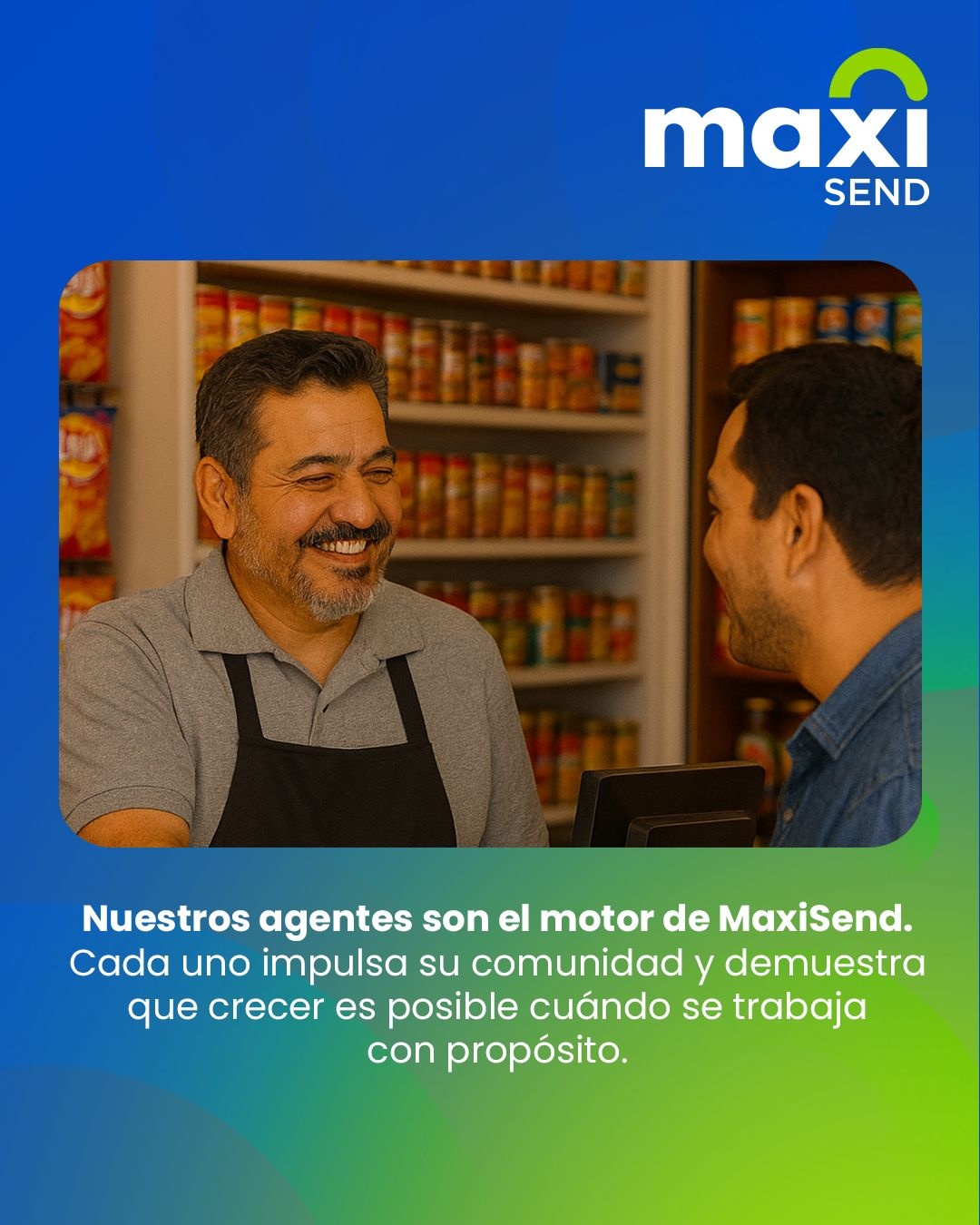
There are several errands available at that counter. MaxiSend advertises international transfers, bill payments and mobile top-ups, plus check cashing in Texas and New Mexico. Its bill-payment offering lists more than 10,000 services. Availability matters: one location or destination need not support every option. For a customer, the attraction is getting familiar financial chores handled through one local relationship.
One corridor, almost 100 counters
The Vietnam business gives this model a human scale. In June 2026, MaxiSend reported nearly 100 agent locations serving that corridor after three years of development. Van Anh Grande, its business development manager for international corridors, recruited agents, established a direct payout partnership in Vietnam and helped create dedicated customer service.
Some recruits had never processed a money transfer. They needed compliance instruction and practical onboarding before they could offer one confidently. Grande described a particular agent growing from one or two monthly transactions to 500 over two years. That is a company-reported example, rather than a typical result. Still, it identifies the work: give a shop the ability to perform a new service reliably.
The same distribution logic helped inform expansion into Nigeria, Ghana and Senegal in March 2026. MaxiSend said diaspora size and concentration shaped its choices. Houston and Dallas already had agents and substantial Nigerian communities. Geography supplied a starting point. Adding countries required receiving partners as well as people willing to send.
“We serve immigrants’ financial needs. That’s what we do.”Gabriel Manjarrez · CEO · March 2026
The receiving end deserves attention. MaxiSend’s payout directory includes banks, stores and other partners. A sender’s convenient counter means little if the recipient cannot conveniently collect. For domestic transfers, the company advertises a particularly concrete endpoint: participating 7-Eleven ATMs using Mastercard Cash Pick-Up. Collection is cardless, with transaction details and codes doing the work a bank card usually performs.
The money behind the money
There is substantial financing behind these small transactions. Housatonic Partners invested in 2020, when MaxiTransfers reported more than 2,800 active agents across 44 states. Gabriel Manjarrez joined as CEO; Luis Cerrilla, CEO since 2008, remained president. By its September 2026 app announcement, the company described more than 4,500 authorized agent locations across 47 states.
Facility sizes describe borrowing arrangements. They do not measure revenue or company value.
The March 2025 financing announcement described a recapitalization supported by Overland Advantage, with Wells Fargo continuing its revolving facility. Manjarrez connected the arrangements to the company’s capital structure and future growth. For readers studying the business, the distinction matters: access to credit and operating income answer different questions.
At the customer level, the relevant number is the amount the recipient gets. Compare a specific transfer’s fee, exchange rate and collection method before choosing a provider. At the retailer level, the calculation includes commissions and the work involved in serving each transaction. A busy counter alone does not establish the profitability of an agency.
The app keeps a place at the counter
In September 2026, MaxiSend announced a nationwide app for sending and tracking transfers, following two and a half years of development. Chief Revenue Officer Alejandro Tapia attributed the timing to customers increasingly preferring an app. The company said people could choose either channel and retain their agent relationship, with agent tools and training to follow.
The decision makes a useful lesson for other businesses: watch which part of the service customers want to change. A phone can remove a trip while human support remains valuable. Preserving both choices requires work. Agents need training, recipients need functioning payout options, and transactions need compliance checks whether they begin at a counter or on a screen.
Compliance is part of that customer experience. In its public explanation of security, MaxiSend describes monitoring transactions and training agents, staff and customers. It says its team spent months studying the legal and regulatory environment before entering its first African markets. A new destination therefore represents preparation behind the scenes, well before an agent can promise a customer that money will arrive.
That also sets the conditions for copying the approach. A retailer needs enough demand to justify the effort; a sender needs a suitable destination and collection method. Digital convenience will appeal differently across customers. MaxiSend’s experiment is to let the same relationship accommodate those differences. The next transfer can begin wherever the customer happens to be.