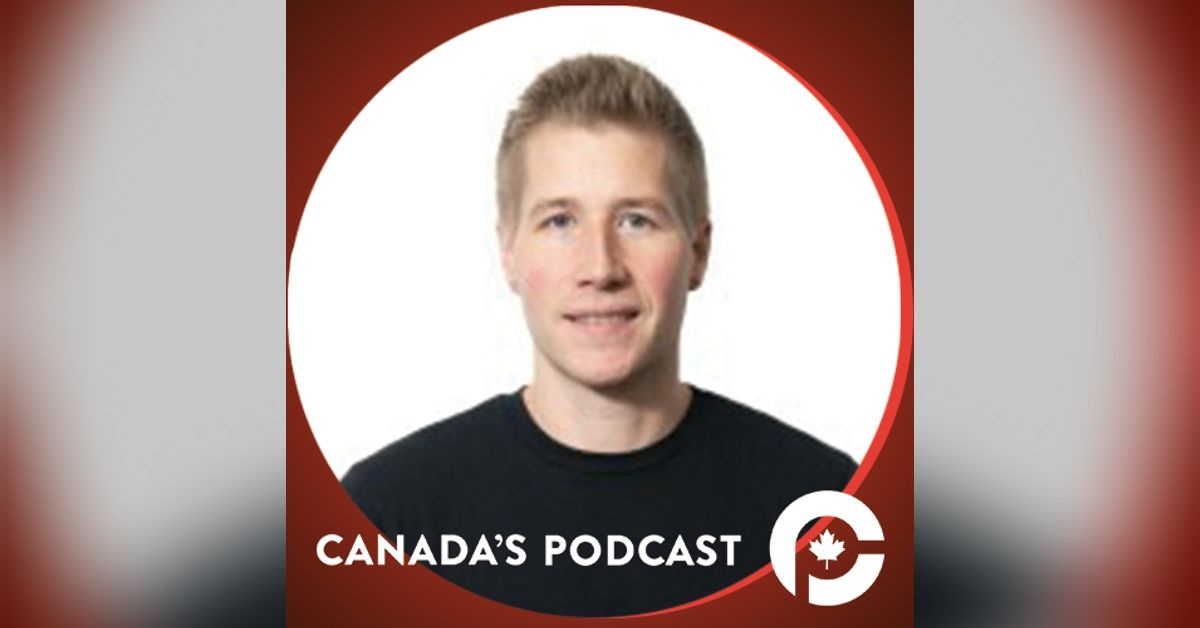
Max Braden remembers late arrivals in Toronto, a kitchen table, and his grandmother’s pasta and meatballs. His grandfather supplied the stories. What stayed with Braden was the attention: the older man made people feel that they mattered. Sales ran through the family. His uncles John and Jimmy went into it; John became his business partner. Braden calls his grandfather a hero. In a career now concerned with payments, software, and small businesses, this is a pleasingly human place to begin. Before a transaction comes the business of paying attention.
Today, Braden is the Ottawa founder and CEO of CPOS. His company sells the means of getting paid, from payment terminals to an app that lets a compatible phone accept contactless cards and digital wallets. The latest proposition removes a piece of equipment from the transaction. The phone the merchant already carries becomes the checkout. There is something rather satisfying about a technology company giving its customers one fewer thing to carry.
At twenty, a different sort of classroom
Braden began selling at twenty while enrolled at university. He has described feeling that university was failing to give him what he needed, and turning to sales of heating and cooling equipment. He attended the University of Ottawa. Selling heating and cooling equipment put a practical product in front of a customer with a specific need. Long before payment software, he was learning how to explain something a customer might actually buy.
That beginning matters because it puts selling ahead of the founder title in his career. The sequence runs through conversations with buyers, responsibility for a territory, and eventually responsibility for a company. He worked as a territory sales manager at Collective Point of Sale Solutions from September 2011 to April 2014. By then, the subject of the conversation had moved from equipment for a building to equipment for a business.
CPOS dates its beginning to 2014. Its business incorporation is recorded as April 16 of that year. Merchant services gave Braden a specific constituency: owners who need to take a payment and get on with their work. An owner has little reason to admire the machinery for its own sake. At a checkout, even a fascinating piece of technology is generally expected to behave like a very boring one.
The trouble with a menu of a hundred features
In April 2024, Braden described a recurring problem among the hundreds of small-business owners he had met. They wanted an easier way to conduct and track sales. Some bought technology intended for much larger organisations. The result, in his account, was higher monthly spending, too many choices, and hours spent getting started. A purchase meant to save time had arrived with homework.
His argument was for technology that grows with the business. It is an argument about proportion. A small company’s next useful tool need not be the one with the longest feature list. The question is what the owner needs to do now, and how much work the purchase creates before it begins to help. A dashboard can be wonderfully comprehensive while still being a nuisance at five minutes to closing.
Braden’s criticism is also a useful way to judge his own company. CPOS offers payments, receipts, invoicing, refunds, and terminals. The value of that collection depends on whether the owner can use it without acquiring a second occupation as the company’s unofficial systems administrator. Braden has chosen a demanding promise: make the everyday operation easier. Every additional screen and instruction then has to earn its place.
A growing company has to learn to hire
The business did grow. CPOS reported making The Globe and Mail’s 2022 ranking of Canada’s Top Growing Companies with three-year revenue growth of 123 percent. That figure describes a particular period, rather than a permanent growth rate. It also gives some scale to the management problem behind the sales pitch. More business brings more people, more handoffs, and more opportunities for a poor decision to travel.
Three-year revenue growth reported by CPOS when it announced its inclusion in the 2022 Canada’s Top Growing Companies ranking.
In June 2023, Braden publicly addressed one such decision: accepting a lower standard when hiring. He said the consequences spread through the organisation. It is an admission with rather more use than the customary account of a founder’s impeccable instincts. Recruiting someone does not finish the problem; it introduces that person into other people’s working days. A rushed appointment can become a shared inconvenience.
His willingness to discuss the mistake gives the advice a practical footing. The lesson comes from a choice he says he made himself. It asks a manager to consider what happens after the vacancy is filled, when the new colleague starts taking calls, making promises, and depending on the rest of the team. An empty chair is conspicuous. The cost of filling it badly can take longer to announce itself.
Two calls, two different jobs
Braden’s description of coaching salespeople is unusually specific. In June 2023, he outlined a routine of two calls a week. One concentrated on sales training, including reviewing calls and giving feedback to improve closing performance. The other made room for individual challenges, personal goals, and suggestions for improvement. The arrangement gave the work and the person separate time on the calendar.
There is a sensible distinction here. A review of a sales call can examine what was said, where the conversation changed, and what the representative might try next. A conversation about the individual can address the difficulties that a recording does not explain. Combining everything into a single discussion risks leaving one of those jobs undone. Keeping two appointments makes the intention more concrete than a general invitation to speak up.
It also makes learning reciprocal. Braden explicitly described learning from the sales team as part of establishing trust. That detail complicates the familiar image of a founder distributing wisdom from the head of the table. The people speaking with customers have information management needs. A training routine is most useful when those observations can travel back into decisions about the company.
Braden has also worked with Coach Kaviani at Tandem Growth Studio. He has described valuing Kaviani’s curiosity about entrepreneurs and the respect that comes from having been through the experience himself. That gives another dimension to the coaching routine Braden describes inside CPOS. The founder providing feedback to his own team also seeks an experienced person to work with. Advice travels in both directions through this part of his working life, rather than stopping at the founder’s desk.
“I started in sales at the age of 20.”
Max Braden, December 2023
The sale still needs a signature
For all that attention to coaching, Braden’s advice remains commercially direct. In a December 2022 sales post, he reminded representatives that a prospect remains in negotiation until the documents are signed. A promising conversation can feel like a completed deal, particularly to the person who has worked hard to create it. The paperwork retains a tiresome ability to disagree.
This is the less glamorous side of building a sales organisation: distinguish enthusiasm from commitment, review the conversation, and help the representative improve. Those activities resist the heroic version of entrepreneurship in which conviction does all the work. Braden’s public sales advice repeatedly returns to the mechanics. For someone who began with equipment and moved into payments, the attention to finishing the transaction is consistent with the job.
A smaller checkout, a larger ambition
On August 11, 2025, Braden announced that CPOS Pay had rolled out on July 1. His examples were microbusinesses and small businesses taking payments without extra hardware and getting started quickly. He credited colleagues Patrick Leckey and Brij Depani. The audience included creators, people running side businesses, and established small-business owners. The ambition was to make payment acceptance available to entrepreneurs around the world.
The current CPOS offering makes that idea tangible. On a compatible device, the merchant enters an amount and the customer taps a contactless card or digital wallet. A receipt can go by text or email. CPOS markets the service to tradespeople, mobile service operators, and market sellers. These are businesses whose place of work may change between one customer and the next. A fixed counter would be an eccentric requirement.
The company now says it serves more than 6,000 businesses and processes over $1 billion annually. Those are CPOS’s figures. The larger point in Braden’s career is the change in what he is asking an owner to buy: the early salesperson sold equipment; the payments founder now offers a way to dispense with a separate reader. The practical test remains whether the customer can finish the job and collect the money.
His grandfather’s gift was making someone feel heard. Braden’s working life has taken that family memory into a business full of less sentimental objects: contracts, terminals, transaction records. His own advice provides a reasonable standard for what comes next. Listen to the people doing the selling. Hire carefully. Match the tool to the task. Then make sure the transaction is actually finished. The customer has other things to do.