Ruth Handler noticed something the men around her had missed. Her daughter Barbara liked playing with paper dolls who had adult lives. The available three-dimensional dolls mostly offered a different assignment: look after a baby. Handler saw room for a toy that let a child rehearse becoming someone, rather than caring for someone.
- Mattel sells play through brands including Barbie, Hot Wheels, Fisher-Price and UNO.
- Films, licensing and mobile games give those brands more ways to earn.
- Recognition helps. It cannot guarantee that the next doll, film or game will sell.
Mattel’s executives initially rejected Handler’s proposal as expensive and commercially doubtful. A European doll called Lilli helped her develop the idea further. Barbie arrived in 1959 at $3. The interesting part is the original mistake: the company’s understanding of its product was narrower than a child’s understanding of what that product could do.
That disagreement still runs through Mattel. How much business can fit inside a toy?
01 A toy box with several doors
Founded in 1945 by Ruth and Elliot Handler and Harold Matson, Mattel now serves several overlapping audiences. Children want something to play with. Parents and gift buyers want an appealing choice. Adult collectors want objects connected to their interests, memories and communities. Retailers want products that move off shelves.
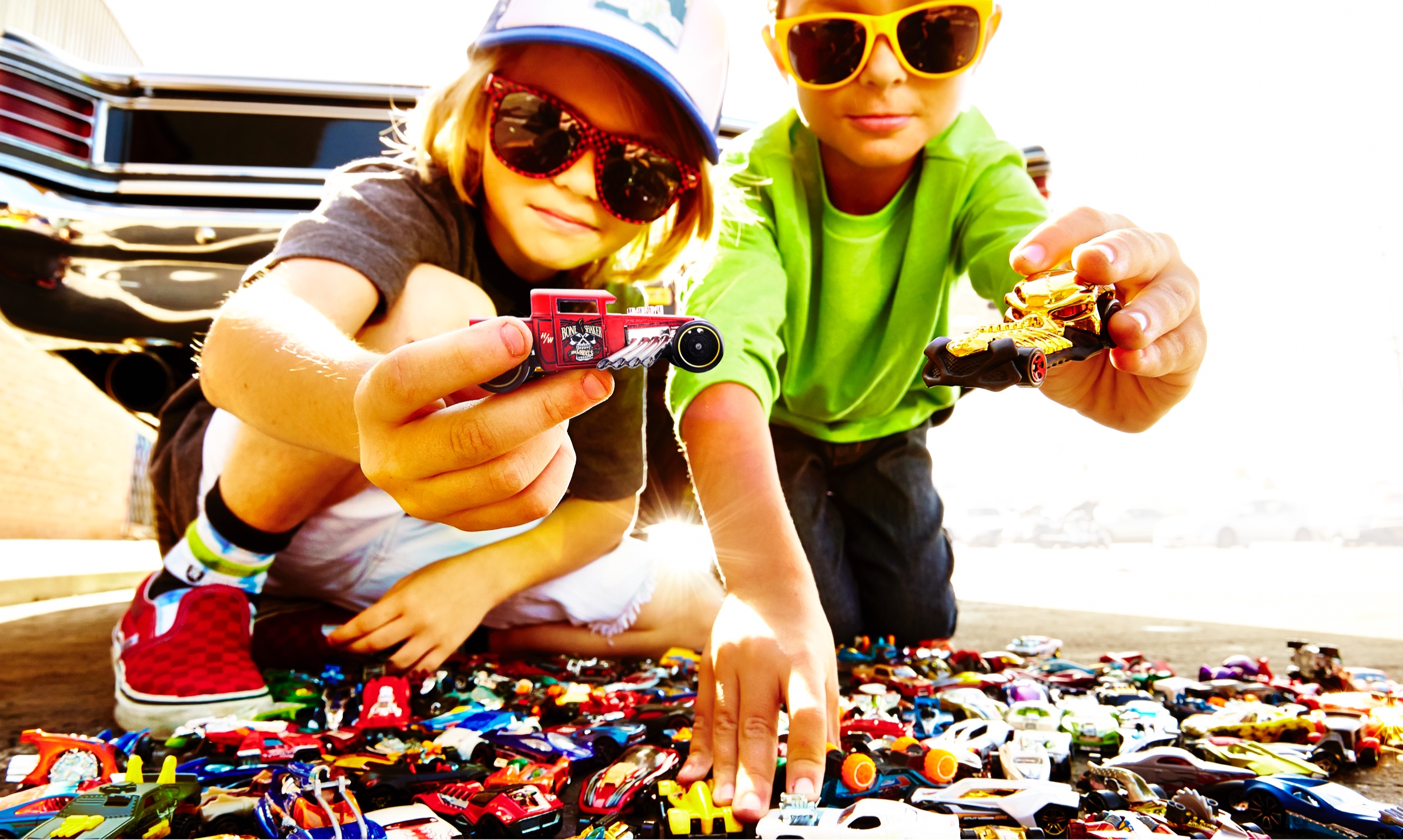
The range reflects those different jobs. Barbie supplies characters and imagined lives. Fisher-Price serves early childhood. Hot Wheels, introduced in 1968, combines vehicles with tracks and experiments in motion. UNO gives a group an activity with rules they can learn together. American Girl connects dolls with stories and accessories.
Behind that variety sits expertise less visible than the packaging: product design, safety, tooling, sourcing and distribution. At the end of 2025, Mattel employed approximately 31,000 people, including temporary and seasonal workers, across 34 countries. About 22,000 worked in its global manufacturing workforce. That makes collaboration a practical requirement. The company describes training through Mattel University and an annual employee engagement survey. A promising character still needs people who can turn an idea into a reliable object, make enough of it and get it to the buyer.
For a buyer, the useful question is the kind of play wanted: storytelling, building a race, a shared card game or collecting. For Mattel, the advantage is a portfolio of recognizable names serving different occasions. Against LEGO, Hasbro, Spin Master and MGA Entertainment, that breadth gives it several places to compete. It also gives management several businesses to keep healthy.
02 Before Hollywood, the repair bill
The entertainment story becomes less tidy when you start with the factory floor. In 2017, Mattel began a simplification program targeting $650 million in savings. The work included reducing manufacturing complexity, streamlining the organization and changing advertising spending.
In July 2018, after Ynon Kreiz became CEO, Mattel announced reductions of more than 2,200 positions, representing 22% of its global workforce outside manufacturing. It also planned to sell manufacturing sites in Mexico. The liquidation of Toys “R” Us was hurting sales. The retail system that carried the toys could fail even when individual brands had momentum.
This matters because a brand strategy needs an operating business that can pay for it. The $650 million was a savings target, not the cost of making a movie. The workforce reductions were a human cost of the reset. Neither belongs behind a curtain of pink publicity.
03 Give the audience a reason to watch
Mattel established Mattel Films in 2018. The creative proposition was more demanding than putting a familiar logo on a script. Asked about entertainment in a 2022 TIME interview, Kreiz described the aim in plain language:
“Make great content that people want to watch.”
Ynon Kreiz · TIME · 2022
Greta Gerwig’s 2023 Barbie, made with Warner Bros. and LuckyChap, put that principle to a public test. Its jokes included the company behind the doll. A brand with decades of arguments attached to it became material for a story, with room for affection and criticism.
The interpretation worth copying is specific: work with the audience’s existing feelings about a product, including the inconvenient ones. Those feelings can give a story texture. A company that insists on universal admiration leaves its creative partners with very little to say.
04 Fame has a separate income statement
Then comes the awkward number. Mattel’s 2025 net sales were $5.348 billion, down 1%. Barbie’s worldwide gross billings fell 11%. Hot Wheels’ rose 11%. Gross billings measure business before certain deductions and should not be confused with net sales. The divergence nevertheless makes the point: brands under the same roof can have very different years.
Same company. Opposite directions.
Mattel makes money mainly by selling physical products through retailers, with direct sales, royalties, entertainment and digital games adding other routes. It also pays to use other companies’ characters. Its Disney Princess and Frozen agreement, announced in 2022, brought new doll lines to stores in 2023.
Distribution remains a constraint. Walmart, Target and Amazon together represented approximately 42% of Mattel’s 2025 net sales. A cinema audience does not remove dependence on purchasing decisions, inventory levels or shelf space.
05 UNO finds another table
Digital games make the expansion concrete. In February 2026, Mattel announced a $159 million agreement to buy NetEase’s half of Mattel163. The March acquisition filing reported $178.6 million including working capital and other adjustments. It bought full control of a studio with development, publishing and customer acquisition capabilities.
At announcement, Mattel163 reported approximately 20 million monthly active users across four games, including UNO! and Phase 10. Here was an audience already playing, rather than an audience a new venture still needed to assemble. Mattel could invest around demonstrated behavior.
06 The next person opens the box
Second-quarter 2026 net sales rose 10% as reported, to $1.125 billion. Roger Lynch became CEO on October 12, succeeding Kreiz. The next chapter therefore starts with both evidence of growth and an unfinished question about how reliably the brands can travel.
For other businesses, the transferable lesson is to identify the activity customers already love, then test another place for it. The conditions matter. Without distinctive characters, willing partners or enough cash to fund development, extending a brand can become expensive distraction. Mattel’s opportunity begins with something unusually durable: people who remember the toy after they have stopped playing with it.
Keep playing
Explore the products, follow the company, or hear the thinking behind the toy box.