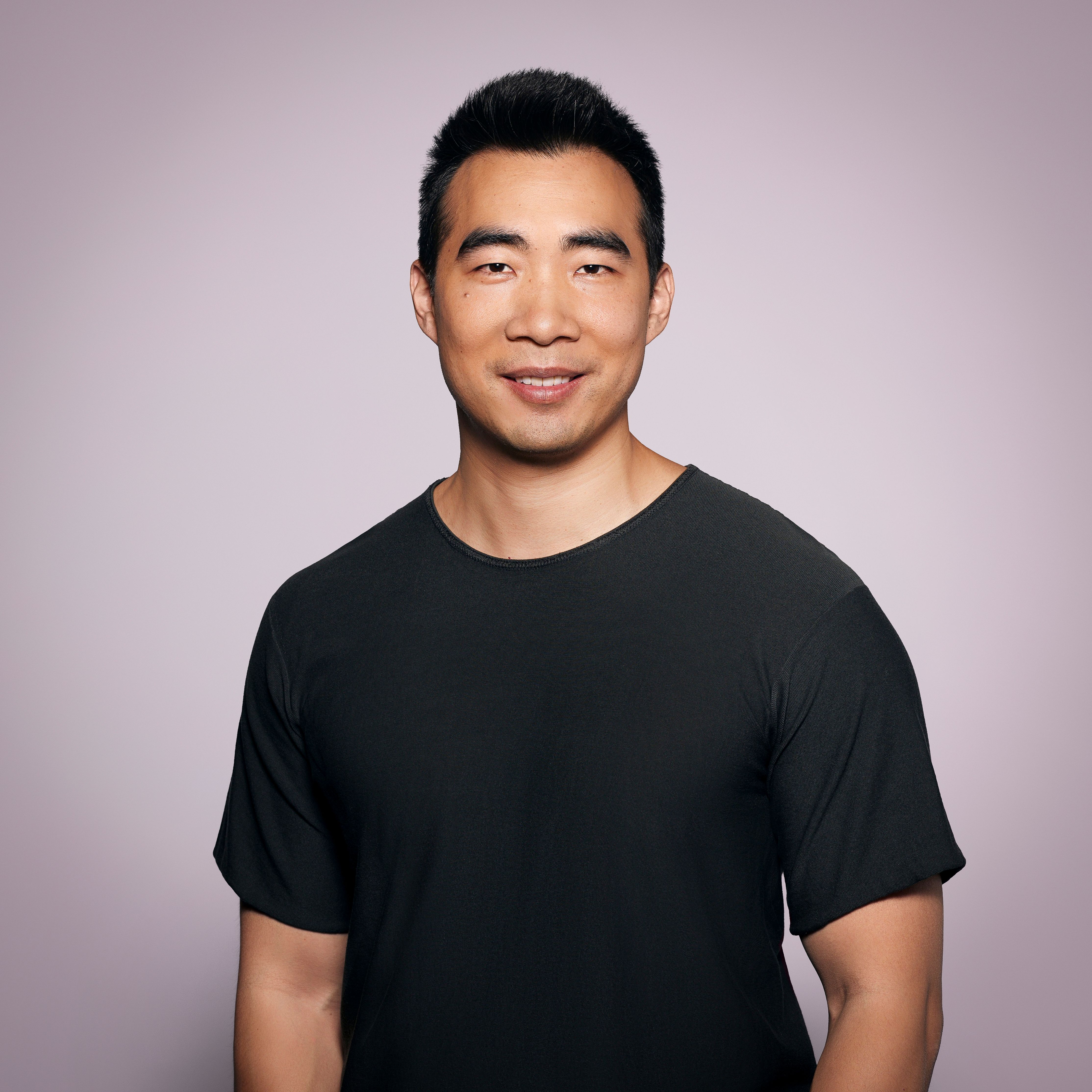
He couldn't understand a word Zhang Yiming said. He invested anyway.
Beijing, 2012. Matt Huang, 23 years old and on a week-long vacation, sits across from a founder in a dusty apartment. They don't share a language. Huang doesn't like the business idea - a personalized news app for the Chinese market. But something about the person pitches him anyway. He wires the money at a $20-30 million valuation. That founder is Zhang Yiming. That company becomes ByteDance. That bet turns into an estimated $500 million.
This is how Matt Huang operates. Not by finding the right slides, the right market, the right metrics - but by finding the right person, early, when everyone else either can't see it or can't be bothered to look. He built an entire $12.7 billion investment empire on this instinct.
Co-founder of Paradigm, founding CEO of Tempo, board member at Stripe and Kalshi - Huang has quietly assembled one of the most consequential portfolios in technology. His firm's open-source tools (Foundry, Reth) now secure over $100 billion in smart contracts across the Ethereum ecosystem. He backed Uniswap when DeFi was a whitepaper idea. He identified MEV as critical infrastructure before most traders knew the acronym. He left Sequoia Capital voluntarily - something his boss Doug Leone called "the only regrettable loss in Sequoia's history."
The son of a Goldman Sachs derivatives chief who co-founded a hedge fund with Nobel laureate Myron Scholes, and a pioneering computer science professor who was among the first women in the field at Yale - Huang grew up with exceptional minds at the dinner table. He absorbed their discipline and then applied it to the one space they hadn't touched: crypto.
$12.7B
AUM at Paradigm
147+
Portfolio Companies
10,000x
ByteDance Return
$100B+
Secured by Foundry
Born Into Complexity
Matt Huang's family story sounds like a Venn diagram between Finance, Mathematics, and Computing. His father, Chi-fu Huang, left Taiwan alone as a young man with his parents' savings and a one-way ticket to America. He earned a Ph.D. at Stanford, became a full professor at MIT Sloan, ran fixed income derivatives research at Goldman Sachs, co-founded Long-Term Capital Management's Asian office in Tokyo, and then co-founded Platinum Grove Asset Management with Nobel Prize winner Myron Scholes.
His mother, Marina Chen, pioneered parallel computing research at Caltech under Carver Mead - the legendary technologist who coined "VLSI design" - and became one of the first female computer science professors at Yale.
Matt Huang moved internationally as a child, following his father's postings. Around age nine, living in Tokyo for his father's LTCM role, he commuted an hour to school alone through narrow alleys and busy streets - navigating a city where he couldn't read the signs. This is not a metaphor. It's a pattern: move into unfamiliar terrain, figure it out, keep going.
He arrived at MIT for mathematics in 2006 - a normal-seeming outcome for an abnormal family. What he found there changed the trajectory. A classmate named Albert Ni turned down conventional finance careers to join Dropbox as employee number six. The idea that a mathematical mind could build something, rather than just advise something, lodged in Huang's thinking and never left.
"I guess I've always been a little skeptical of authority, so when I see authority exerting influence, I wonder: Is this the way we want the world to work?"
- Matt Huang
"What if Sequoia didn't just back Google, but founded it? VC's future blurs the line between investor and builder."
- Matt Huang on the evolution of venture capital
Sequoia's Biggest Regret
Huang joined Sequoia Capital as a partner in 2014 after Twitter acquired his Y Combinator startup Hotspots, Inc. His interview assignment - when asked to research a young company - was a deep dive on Coinbase. At the time, Coinbase had seven employees. The conviction was already there.
At Sequoia, he led investments across internet, mobile, and - increasingly - crypto. He was methodical, quiet, and effective. His boss, Doug Leone, described him as someone who "operates like a silent killer." Brian Armstrong at Coinbase described the same thing: disciplined, non-showy, taking an unconventional path and making it look obvious in retrospect.
In 2018, Huang left voluntarily. Leone would later describe it as "the only regrettable loss in Sequoia's history" and "the first time in my career that someone voluntarily left Sequoia." That departure wasn't impulsive - it was the most deliberate move of his career. He co-founded Paradigm with Fred Ehrsam, Coinbase's other co-founder, and they launched with a single thesis: crypto would be transformative, but it lacked investor-partners with genuine technical depth.
Research-Driven, Engineer-Led, Venture-Funded
Paradigm launched its first fund in October 2018 - and did something immediately unusual. They called all the committed capital right away, deploying it to buy Bitcoin at $4,000-5,000 per coin during one of crypto's worst bear markets. Institutional investors thought they were reckless. LPs from Harvard, Yale, Stanford, and Sequoia had entrusted them with capital during a period of maximum skepticism.
Fund I grew from $760 million to $8.3 billion in value by end of 2024. It returned over $1 billion to LPs. The bear-market deployment became one of venture's most vindicating contrarian calls.
But the returns are almost the secondary story. The primary story is the firm Huang built. Paradigm describes itself as likely to "collaborate on a research paper or ship code" as to attend a board meeting. Their team has built Foundry, the smart contract development framework that now secures over $100 billion in assets with 90% market penetration in Ethereum development. They built Reth, an Ethereum node client that's 80% smaller and 10x faster than alternatives. They co-authored the mathematical mechanisms that power Uniswap v3's capital efficiency - achieving a 4,000x improvement over v2. These weren't advisory contributions. Paradigm engineers wrote the code.
Huang describes the firm as an "X-Men Academy" - a collection of exceptional, unconventional talent who wouldn't fit anywhere conventional. Charlie Noyes joined as an MIT dropout at 19, identified MEV as critical infrastructure, and led the Flashbots investment. Dan Robinson - Huang's middle school friend, Harvard Law grad, self-taught programmer - invented the mechanisms that make Uniswap v3's concentrated liquidity possible. Georgios Konstantopoulos, a former World of Warcraft devotee, became CTO and created both Foundry and Reth. One contributor, transmissions11, was discovered on Discord while still in high school.
Paradigm Fund History
From $400M seed to $12.7B AUM in six years
Fund I Value (2024)
$8.3B
Paradigm One (2021)
$2.5B
Uniswap
DeFi Protocol
InfrastructureCoinbase
Crypto Exchange
PublicOptimism
L2 Scaling
EthereumFlashbots
MEV Infrastructure
ResearchPhantom
Crypto Wallet
ConsumerKalshi
Prediction Markets
$11B Val.Monad Labs
Parallel L1
$225M 2024Fireblocks
Institutional Custody
EnterpriseByteDance
TikTok Parent
10,000xInstacart
Grocery Delivery
Angel 2012Benchling
Life Sciences R&D
Angel 2012Nous Research
Open-Source AI
$50M 2025Agora
Stablecoin Infra
$50M 2025StarkWare
ZK Proofs
ZK LayerCitadel Securities
Market Making
$1.15B Rd.
Beijing, 2012: A Language Barrier and a $500M Decision
In 2012, Matt Huang was 23 years old and already an early adopter of Bitcoin - having bought his first coins on Mt. Gox, the exchange that would famously collapse two years later. He was in Beijing for a week-long vacation when he met Zhang Yiming, who was building a personalized news app from a small, cluttered apartment.
There was a language barrier. Huang couldn't understand most of what Yiming said. He found the business idea unremarkable - a Chinese news aggregator, not obviously world-conquering. What he saw was a founder of unusual clarity, drive, and capability. He invested at a $20-30 million valuation.
That app became Jinri Toutiao. That company became ByteDance. That product's architecture - personalized algorithmic feeds trained on individual behavior - became the intellectual backbone of TikTok, which reached a billion monthly active users and a $300 billion valuation.
Huang's roughly $500K investment grew an estimated 10,000 times to approximately $500 million. It became one of the greatest early-stage VC returns in the history of the industry - not from a hot deal, not from a warm intro, not from a recognizable pattern. From an instinct about a person in a dusty apartment in a language he couldn't speak.
A viral thread on X in April 2025 by Dom Cooke summarized it simply: "Matt Huang is a rare investor. He could recognize what Zhang Yiming was even when he couldn't understand what Yiming said."
The Bet
$500K at $20-30M valuation
Beijing, 2012. Language barrier. Unclear business. Obvious founder.
The Result
~$500M returned
ByteDance reached a $300B valuation. 10,000x return on a bet he made on a vacation.
The lesson
Bet on the founder, not the idea
He didn't like the business. He couldn't understand the pitch. He wrote the check.
The Investor Who Became the Founder
In August 2025, Fortune reported that Matt Huang would become the founding CEO of Tempo - a new Layer-1 blockchain incubated jointly by Stripe and Paradigm, specifically engineered for global payments. Huang had sat on Stripe's board since November 2021, giving him an inside view of where the payments infrastructure was limited and what crypto could actually solve.
Tempo is not built on Ethereum. It's purpose-built for payments - accepting multiple stablecoins as gas fees, supporting programmable transfers, embedded financial accounts, microtransactions, and agentic payments (AI systems paying other AI systems autonomously). The design partners include OpenAI, Shopify, Visa, Anthropic, Deutsche Bank, Standard Chartered, and Revolut - a list that signals this isn't a crypto experiment, it's infrastructure being built for the mainstream financial system.
In October 2025, Tempo raised $500 million at a $5 billion valuation, led by Greenoaks and Joshua Kushner's Thrive Capital, with Sequoia, Ribbit Capital, and SV Angel also participating. By December 2025, Tempo opened to a public trial.
The Tempo thesis mirrors the broader framework Huang articulated in his 2024 essay "Bitcoin for the Sovereign" - that crypto isn't competing with the existing financial system so much as becoming its next layer. AI agents need programmable money. Robots need wallets. Global remittances need settlement without the correspondent banking system's weekend downtime. Tempo is built for all of it.
What Tempo Does
Payments blockchain for the AI economy
High-performance L1 specialized for payments. Stablecoin-agnostic. AI agents, robots, remittances, embedded finance.
Series A (Oct 2025)
$500M at $5B valuation
Greenoaks + Thrive Capital led. Sequoia, Ribbit Capital, SV Angel participated. Public trial launched December 2025.
Design Partners
OpenAI, Stripe, Visa, Anthropic...
Deutsche Bank, Standard Chartered, Revolut, Nubank, Shopify, Coupang, Mercury, Lead Bank.
Huang's Dual Role
CEO of Tempo + Managing Partner at Paradigm
Running both simultaneously. The investor became the builder - exactly the model he described when he asked "what if Sequoia founded Google?"
The FTX Chapter
Paradigm invested $278 million in FTX during its Series B at an $18 billion valuation. Internal doubts existed: the company had no independent board, was entirely controlled by Sam Bankman-Fried, and showed concerning signs of what Paradigm's team called "value leakage" - structural questions about how FTX's own token, FTT, interacted with affiliated trading firm Alameda Research.
The investment went ahead. Competitive pressure played a role - in 2021, passing on FTX felt like missing the trade of the decade. In November 2022, FTX collapsed spectacularly. The entire $278 million was written to zero.
In October 2023, Huang testified at Sam Bankman-Fried's criminal fraud trial. He said simply: had he known FTX was using customer deposits for trading, he would not have invested. He noted the fundamental misalignment: for SBF, crypto was a means to generate wealth for effective altruism, not a mission-driven frontier. "That was different from our understanding."
Paradigm regrouped. In May 2023, the firm briefly removed the words "crypto" and "Web3" from its website in an ill-received pivot to "research-driven technology" language. The industry backlash was swift. Within days, Paradigm had reversed course with what observers described as a "flashing neon sign" of "CRYPTO CRYPTO CRYPTO" on the homepage. The lesson was absorbed: own it, don't soften it, keep going.
"When you focus too much on your competitors, you become like them. We made a lot of mistakes during that period."
- Matt Huang on the 2021 bull market and FTX
2006
Enrolls at MIT to study Mathematics. Classmate Albert Ni joins Dropbox as employee #6 - lodges the idea that builders beat advisors.
2008
Summer analyst at Goldman Sachs Asset Management in New York. Works on real-time bond price prediction.
2010
Co-founds Hotspots, Inc. - a YC-backed social media trend prediction startup. Graduates MIT with B.S. in Mathematics.
2012
Twitter acquires Hotspots. Joins Twitter ads team. Buys first Bitcoin on Mt. Gox. Vacations in Beijing and invests in ByteDance at $20-30M valuation despite not understanding the pitch.
2014
Joins Sequoia Capital as Partner. Leads internet, mobile, and crypto investments. Sequoia interview assignment: Coinbase, 7 employees.
2018
Leaves Sequoia - Doug Leone's "only regrettable loss." Co-founds Paradigm with Fred Ehrsam. Raises $400M+ Fund I. Deploys immediately into Bitcoin at $4,000-5,000 during bear market.
2021
Paradigm One raises $2.5B - largest crypto fund in history. Joins Stripe board. Invests $278M in FTX Series B. Paradigm grows from 18 to 62 employees (later called this a mistake).
2022
FTX collapses in November. $278M investment written to zero. Huang begins the work of recalibrating Paradigm's culture and focus.
2023
Testifies at SBF fraud trial. Publishes "Casino on Mars" - a nuanced defense of crypto speculation as bootstrapping mechanism. Briefly removes "crypto" from website, then reverses.
2024
Closes $850M Fund III. Publishes "Bitcoin for the Sovereign." Fund I value reaches $8.3B from $760M initial raise. Returns $1B+ to LPs.
2025
Named founding CEO of Tempo (Stripe + Paradigm blockchain). Tempo raises $500M at $5B Series A. Leads Kalshi to $11B valuation. Appears on Invest Like the Best podcast. Co-authors "Ethereum Acceleration."
2026
Raising new $1.5B fund expanding into AI, robotics, and frontier tech. Building prediction markets trading terminal at Paradigm. EVMbench partnership with OpenAI launched.
"Crypto speculation may sometimes be distasteful, but it's part of the bootstrapping mechanism for one of the most important technologies of our time."
"Bitcoin is like gunpowder rather than an iPhone - while people may choose not to adopt an iPhone, once gunpowder was discovered, every sovereign nation was compelled to adopt it."
"Paradigm has never been more dedicated to crypto. What we had was a shared curiosity for the future, deep conviction in crypto, and a desire to advance the frontier of what's possible."
"AI and crypto as zero-sum competition is incorrect. Both are fascinating and will have significant overlap."
"Never been more bullish about what's ahead for builders in crypto."
"Happy 10th birthday to Ethereum. 10 years, 100% uptime, world computer."
⛩️
At age 9, living in Tokyo while his father set up LTCM's Asian office, he commuted an hour to school alone through narrow alleys. His parents sent him. He figured it out.
₿
He bought his first Bitcoin on Mt. Gox in 2012 - the exchange that later collapsed in one of crypto's most catastrophic failures. His conviction in Bitcoin only grew.
🧮
Huang reportedly does not use spreadsheets for investment decisions. His framework is conviction-driven and qualitative - built on founder judgment, not financial models.
🏆
His father co-founded a hedge fund with Nobel laureate Myron Scholes. Matt is arguably the second-most accomplished person who ever sat at his childhood dinner table.
🎮
Paradigm's CTO Georgios Konstantopoulos was a World of Warcraft enthusiast before building Foundry and Reth - tools that now secure $100B+ in assets. Huang hired him.
🃏
At MIT, Huang played online poker competitively. A mathematician who thinks in probabilities, plays long games, and acts decisively when odds are favorable.
👾
One of Paradigm's major contributors, transmissions11, was discovered on Discord while still in high school. Huang described it as discovering someone in the "top 1% of their field."
📋
His Sequoia interview assignment was a writeup on Coinbase - then a seven-employee startup. Four years later he left to co-found one of the world's largest crypto investment firms.
🥇
Huang is listed on Gold House's A100 - the annual list recognizing the most impactful Asian and Pacific Islander Americans in the country across business and technology.
01
Co-founded Paradigm with $12.7B AUM; grew Fund I from $760M to $8.3B in value, returning $1B+ to LPs
02
Invested in ByteDance at $20-30M valuation in 2012; estimated $500M return on ~$500K invested (~10,000x)
03
Named founding CEO of Tempo - the Stripe-Paradigm blockchain for global payments - valued at $5B in October 2025 Series A
04
Paradigm's open-source tool Foundry secures $100B+ in smart contracts with 90% market penetration among Ethereum developers
05
Backed and co-built foundational crypto infrastructure: Uniswap, Optimism, Flashbots, Phantom, Fireblocks, Monad Labs
06
First person to voluntarily leave Sequoia Capital in Doug Leone's career; Leone called it "the only regrettable loss in Sequoia's history"
07
Listed on Gold House A100 - most impactful Asian-Pacific Americans in America
08
Led Paradigm to lead successive Kalshi rounds, taking the prediction markets platform to an $11B valuation (Dec 2025)
09
Co-authored foundational crypto essays including "Bitcoin for the Sovereign," "Casino on Mars," and "Ethereum Acceleration"
10
Partnered with OpenAI to develop EVMbench - a tool evaluating AI models' ability to find smart contract vulnerabilities (2026)
Apr 2026
Paradigm building prediction markets trading terminal targeting professional traders and market makers; leading Kalshi at $11B valuation
Mar 2026
Paradigm raising new fund of up to $1.5B, expanding from crypto into AI, robotics, and frontier technology for the first time
Feb 2026
Paradigm partnered with OpenAI to develop EVMbench, evaluating AI models' ability to identify smart contract vulnerabilities
Dec 2025
Tempo opened to public trial/testnet - Stripe and Paradigm's payments blockchain becomes accessible to developers
Oct 2025
Tempo raises $500M Series A at $5B valuation from Greenoaks, Thrive Capital, Sequoia, and Ribbit Capital
Aug 2025
Named founding CEO of Tempo while maintaining Managing Partner role at Paradigm - investor becomes operator once more