Matt Fairhurst learned to play drums because his friends played music. He wanted to join in. After high school, he moved to Brisbane with friends and the band they had formed, eventually touring Australia. He also became the person interested in recording, websites and the commercial arrangements that kept a band going. Someone had to book the shows. Someone had to make the page look good.
The internet had a particular address for an aspiring band in those days: Myspace. Fairhurst taught himself design while working on the group’s online presence. A musician needed an audience; an audience needed some reason to stop scrolling. It was an education in presenting an idea before anyone had agreed to care about it.
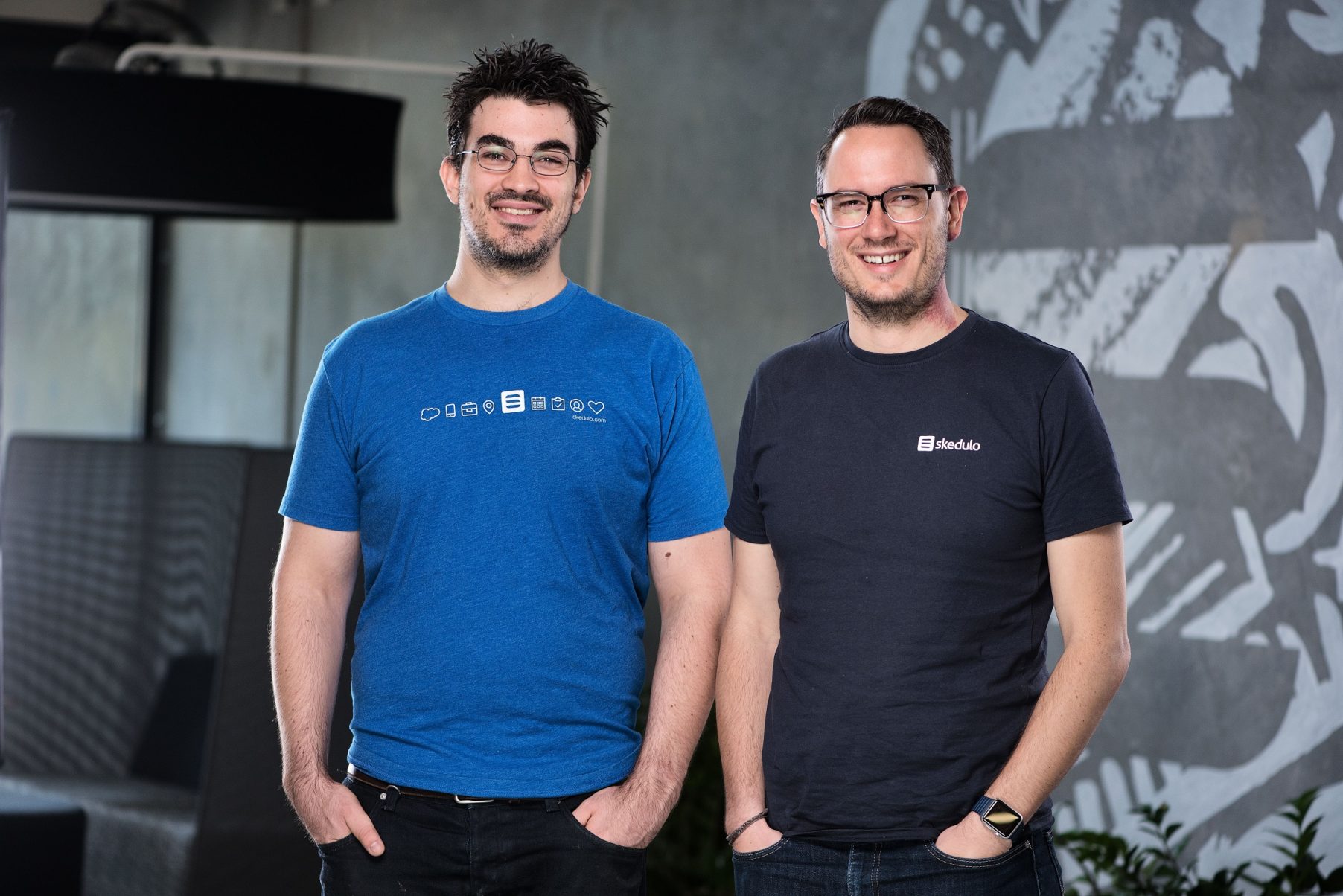
Years later, his work would involve getting people to the right place at the right time on a rather different scale. Fairhurst co-founded Skedulo, where he remains CEO. Its scheduling and workforce software serves people installing equipment, maintaining sites and working out in the field. The drummer had acquired a much larger coordination problem.
The picture before the product
Fairhurst’s route into enterprise software ran through marketing, design and Salesforce consulting. He met future co-founder James Davies in that world. There was an earlier product, an acquisition of the consulting business, and an opportunity for the pair to carry on building outside it. Skedulo’s history reaches back to 2013. The neat founding date conceals a less tidy process of working out which problem customers actually wanted solved.
While Fairhurst was discussing business processes with prospective customers, a recurring frustration emerged: employees had increasingly capable mobile devices, but the people organizing their work were still wrestling with paper, spreadsheets and whiteboards. Different businesses kept describing similar difficulties. A phone could do extraordinary things. Getting tomorrow’s assignments into a useful order remained surprisingly awkward.
He made a product mockup and showed it to four companies across several industries, including solar, hot water and traffic management. The response encouraged him to proceed. By 2021, he said two of those early preview companies were still customers. That is a satisfying detail for a designer: a picture had helped start relationships that survived the arrival of the actual software.
The Photoshop beginning matters because it places a person’s experience at the front of this story. Before there was a platform to expand or a funding round to announce, there was something a prospective customer could look at and understand. Fairhurst’s background in interfaces gave him a practical way to ask whether his idea deserved to exist.
An appointment with a spreadsheet
At Dreamforce in San Francisco in 2015, Fairhurst was already describing the limits of familiar calendar tools. Consulting had brought him into contact with companies organizing work through Google Calendar, Outlook and older systems. Skedulo offered a desktop and mobile way to identify available people, assign tasks and make changes as work moved.
Anyone who has tried arranging a meeting knows that an empty square on a calendar can be deceptive. Field work adds another layer: a worker needs the appropriate skills, the right location and instructions that arrive where they can be used. In Skedulo’s case, the software grew around the relationships between those requirements.
In 2019, the company described its Mastermind engine as matching available, qualified workers to customer needs while taking an employer’s priorities into account. It is an unglamorous sentence with a fairly substantial job inside it. The calendar entry is the visible result; the decisions that make it possible sit underneath.
Fairhurst’s choice of customers also shaped the business he had to learn to run. Enterprise sales involve demonstrations, meetings and relationships. The early design might make a problem legible, but a company buying software still needs time to decide whether it will fit the way its people work.
One job. Several moving parts.
Someone equipped to do the work
Brisbane by day, America after midnight
For Fairhurst, international expansion first arrived as a timetable. He worked a Brisbane day, ate dinner, slept, then started again at one in the morning to speak with customers abroad. He recalled keeping that pattern for eight to ten months. Selling software that organized other people’s time gave him a demanding lesson in the limits of his own.
“I’m not a natural salesperson,” he said. Nevertheless, he was doing the selling. The eventual move to the United States followed the practical difficulty of supporting American customers from Australia. The market had made its opinion of the time difference quite clear.
By March 2019, San Francisco was the headquarters and Brisbane still housed the largest team. Fairhurst spoke about the importance of returning value to Australia and helping its economy build around innovation and education. An American address could open commercial doors while the Australian engineering operation remained central to the company.
He also learned to treat the two places as different environments. Recruiting in Brisbane and recruiting in Silicon Valley came with different conditions. His response was to find the strengths of each location and connect the teams through a shared purpose. International growth required more than forwarding the same office habits to a second time zone.
“I’m not a natural salesperson.”
Matt Fairhurst, 2017
The numbers got bigger. The job stayed specific.
The investment milestones show how that approach developed. In November 2016, Skedulo announced a $9.2 million Series A led by Costanoa, with Blackbird participating. Mark Selcow joined its board. The money was intended to support product development and build teams across San Francisco, Brisbane and Vietnam.
The next named round, in March 2019, brought $28 million led by Microsoft’s venture fund M12, alongside returning investors Blackbird and Costanoa. Plans included advancing the scheduling engine and adding employees in Australia. Fairhurst saw an affinity with Microsoft’s interest in helping people use their working time more productively.
In July 2021, a $75 million Series C led by SoftBank Vision Fund 2 took reported total funding above $115 million. Skedulo also announced that its platform had booked 35 million appointments. It reported a 400 percent increase in annual recurring revenue over the preceding three years.
Those figures describe different things. Investment is money supplied to build a business. Revenue growth describes its commercial progress. Appointments measure activity passing through the product. Keeping the distinctions straight gives a clearer view of Fairhurst’s achievement than allowing a funding number to do all the storytelling.
An appointment is also a useful unit for this particular company. It brings the scale back down to something recognizable: someone expected somewhere, with a job to complete. The larger numbers rest on many repetitions of that small promise.
Capital for the next chapter
A band becomes an organization
Fairhurst has compared the intimacy of a young company to being in a band: travelling together, sharing successes and disagreements, and making something collectively. Growth changes the arrangement. A founder can no longer rely on knowing every conversation. The informal understanding that once passed across a room has to survive distance and new colleagues.
His recollections of connecting offices include March Madness and NFL fantasy competitions, sometimes won by Australians. It is a small, pleasing complication in the business of exporting company culture. Shared activities gave colleagues something to talk about beyond the work queue.
His leadership advice has become equally concerned with the limits of the individual. Hire expertise where you lack it. Be willing to admit when the job has grown beyond your experience. Define responsibilities with the executive team. An organization built around a founder’s strengths eventually needs room for other people’s strengths too.
He has recommended getting an executive coach early and warned against delaying a product until it feels comfortably finished. That combination fits his own beginnings: bring something concrete to customers, learn from the response, and find people who can help with the work you have yet to learn.
“No Shenanagins” appeared among Skedulo’s stated principles. Alongside it were care for colleagues, attention to customers and an insistence on building good products. There was also room for laughter. Enterprise software can accommodate a sense of humour without requiring a compulsory office comedian.
“No Shenanagins”
An early Skedulo company principle.Who gets to make the next decision?
Fairhurst’s writing adds a further ambition to the scheduling business. In a 2022 essay, he argued that deskless workers should have more autonomy. Technology, in his account, should give people enough information and authority to exercise judgement during the working day.
He used an internet cable technician as an example. A schedule and assignment might be determined centrally, yet the person visiting the customer can still recognize a need and act on it. The ability to make a useful decision at the point of work is part of the value he wants software to provide.
That introduces an interesting test for a company selling coordination. A system can make an organization more orderly while leaving its workers little discretion. Fairhurst has publicly argued for tools that give people greater independence. The question becomes how much useful judgement the product puts into the hands of the person carrying it.
The product work has continued in practical increments. In May 2024, Skedulo announced custom forms requiring no coding, scheduling for jobs needing several people with different skills, and changes to how workers manage jobs and availability on mobile. Each addition addresses a piece of the working day rather than an abstract vision of work.
In April 2025, Fairhurst returned to his company’s beginnings on The First podcast. He also discussed a future extending into training, engagement and job satisfaction for deskless employees. It is a wider brief than filling the next slot. The current Skedulo leadership roster still lists him as CEO and board member, alongside a team that includes CTO John McKim.
The thread running from the band to the business is easy to hear. Fairhurst started by helping friends make something together, learned to make the work visible through design, and found customers whose everyday coordination was harder than it needed to be. A drummer spends a great deal of time listening to everyone else. For the person responsible for scheduling their work, that remains a useful place to begin.
Keep the conversation going
Watch Fairhurst on The First podcast ↗, or explore his writing and the company he co-founded.