The most revealing sentence on MasonBaronet's website is not about creativity. It is about money. The Dallas agency says its minimum annual level of client engagement is $150,000 in agency fees, and most clients spend between $200,000 and $500,000 a year. In an industry fond of “contact us for pricing,” this is almost impolite in its clarity. It also tells you exactly what MasonBaronet believes it sells. Not a logo. Not a website. Not a campaign. It sells the agreement that must exist before any of those things can work.
That agreement is hard to see and expensive to reach. A law firm may think it sells courtroom skill; its clients may be buying reassurance. An insurance broker may advertise products while customers remember the advisor who returned a call. A manufacturer assembled through acquisitions may possess one balance sheet and four competing stories. MasonBaronet enters at this awkward moment, when a company is successful enough to have a reputation but no longer certain that the reputation means what leadership thinks it means.
The expensive first question
The agency's opening move is a proprietary assessment called OnPurpose. It compares what people inside a business believe with what customers and outsiders actually perceive. Interviews, research and competitive context are used to isolate a defensible difference. Then comes positioning. Only then does anyone earn the right to discuss color.
This ordering sounds obvious. It is not how many marketing departments operate. A sales team asks for a deck. Recruiting asks for a culture video. A new executive asks for a website. Each request is reasonable; together they can produce a company that introduces itself six different ways before lunch. MasonBaronet's wager is that the waste begins upstream. If the position is fuzzy, every new deliverable merely distributes the fuzz.
“Your brand is the sum of all the experiences someone has with your company.”Holly Mason, president and CEO
What fails first is the shared story
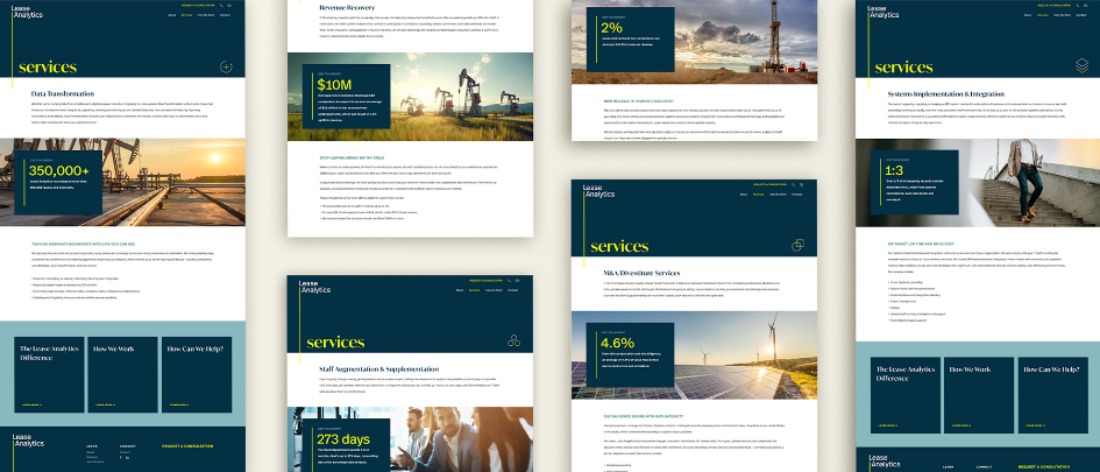
Look across the portfolio and a pattern appears. Hanson, a major building-materials supplier, had marketing fragmented by acquisition and organic growth. Revolution, a sustainable-plastics business, needed several operating groups to sound like one company. Lease Analytics had the opposite problem: a coherent technical service wrapped in language few outsiders could quickly understand. Swingle Collins & Associates operated in the famously commoditized insurance market, where capable firms can look interchangeable.
In each case, the first failure was not visual. It was narrative. The organization had become difficult to explain, or its public presentation flattened the very qualities customers valued. What changed the decision was evidence. Swingle Collins learned through OnPurpose that clients noticed its consultative style, deep insurance knowledge and personable advisors. Those findings became the spine of a new identity, website, photography, stationery, collateral and internal launch.
A balsa airplane beats another brochure
The strategic language may be sober; the artifacts are not. For Payne Mitchell Ramsey, a personal-injury firm known for complex aviation cases, MasonBaronet sent referral sources “Air Mail”: a branded balsa airplane inside a bubble mailer. Another campaign used a matchbox car to make auto-defect expertise physical. A solar-eclipse mailer came with protective glasses. Lease Analytics mailed dowsing rods, an old divining tool, to make a modern point about finding value hidden in messy records.
These are jokes with jobs. Professional-services marketing often fails because the product is invisible: judgment, expertise, risk reduction, a better decision months from now. A strange object crosses the distance between abstraction and memory. The balsa plane says aviation litigation before the recipient has read a paragraph. The dowsing rods make “better data discovery” into a tiny argument you can hold.
The same logic extends to less theatrical work. For Corus Family Wealth Advisors, formerly Schubert & Co., MasonBaronet handled naming, identity, content and a website for a firm serving ultra-wealthy families. For Manorly, previously Dallas Home Management, the agency used its assessment to support a new name, visual identity, website and even foil-stamped cards. The output changes; the sequence does not.
The price is a filter, not a flourish
There are two public views of what the work costs. MasonBaronet's own site frames the relationship annually: a $150,000 floor and a usual range of $200,000 to $500,000. Clutch lists a $10,000 project minimum and an hourly range of $200 to $300; its two verified reviews cluster between $50,000 and $199,999. Those figures can coexist. One describes the agency's preferred continuing relationship. The other records individual reviewed projects and an entry point.
The more important filter is behavioral. MasonBaronet says it is “not a project shop” and works with a limited number of clients. That model suits a leadership team willing to expose internal disagreements, let research challenge a favored story and fund the rollout across more than one channel. It is a poor fit for a buyer who has already chosen the answer and merely needs a logo by Friday. It also becomes difficult when leadership cannot join the discovery, employees will not change their behavior, or the budget covers diagnosis but not implementation. Coherence requires participation.

A company name that remembers the handoff
Public directories date the firm's roots to 1992. The more interesting milestone came in 2006, when Mason purchased GroupBaronet from founder Willie Baronet. She had to move from employee to owner almost overnight, covering her old responsibilities while taking on business development, finance, client relationships and hiring. She kept the inherited name partly intact and made the transition legible: Mason plus Baronet.
Two decades later, the agency remains small, owner-led and concentrated in Dallas, but its case list stretches across law, finance, insurance, energy, manufacturing, healthcare, education and consumer goods. LinkedIn counts 13 employees in the supplied company data; the public profile currently places the team in the small-agency bracket. Awards have accumulated from MarCom, the Communicator Awards, AAF Dallas, AIGA and others. In 2025, Inc. named MasonBaronet a Power Partner, an honor tied to client feedback.
Awards are pleasant. The sharper proof is whether the idea survives the journey from strategy session to sales call. MasonBaronet's work ranges from brand books and websites to hard hats, trucks, office walls, social filters and eclipse glasses. That breadth is the market position: not a specialist hired for one surface, but a strategic agency responsible for making all the surfaces agree.
What a reader can copy on Monday
- List every moment a customer encounters the business, from search result to invoice.
- Ask customers and employees, separately, what makes the company worth choosing.
- Circle the claims supported by both evidence and behavior.
- Choose one position narrow enough to exclude the wrong buyer.
- Before making anything new, test whether each existing touchpoint proves that position.
None of this guarantees a charming mailer or an award. It does something more useful: it separates a design problem from a decision problem. MasonBaronet's $150,000 question is costly because an honest answer can force a company to change its message, its priorities and occasionally its mind. The logo is simply where the answer becomes visible.